
Model Context Protocol (MCP) finally gives AI models a way to access the business data needed to make them really useful at work. CData MCP Servers have the depth and performance to make sure AI has access to all of the answers.
Try them now for free →


DataBind Charts to Adobe Target Data
Use the standard ADO.NET procedures for databinding to provide bidirectional access to Adobe Target data from controls in the Visual Studio toolbox. This article demonstrates a graphical approach using wizards in Visual Studio, as well as how to databind with only a few lines of code.
DataBinding facilitates two-way interaction with data through UI controls. Using the CData ADO.NET Provider for Adobe Target streamlines the process of binding Adobe Target data to Windows Forms and Web controls within Visual Studio. In this article, we will demonstrate using wizards to establish a binding between Adobe Target data and a chart that dynamically updates. Additionally, the code walk-through section will guide you through the creation of a chart using just 10 lines of code.
Binding Data to a Chart
DataBinding to a Chart consists of three steps: Instantiate the control, configure the data source, and databind.
Configure the Connection and Select Database Objects
To create a chart control and establish a connection to Adobe Target, follow the steps outlined below using the Data Source Configuration Wizard. Within the wizard, you'll have the option to choose the specific Adobe Target entities you wish to bind to.
- In a Windows Forms project, drag and drop a Chart control from the toolbox to the form. In the Data section of the Chart properties, select DataSource and then select Add Project Data Source from the menu.
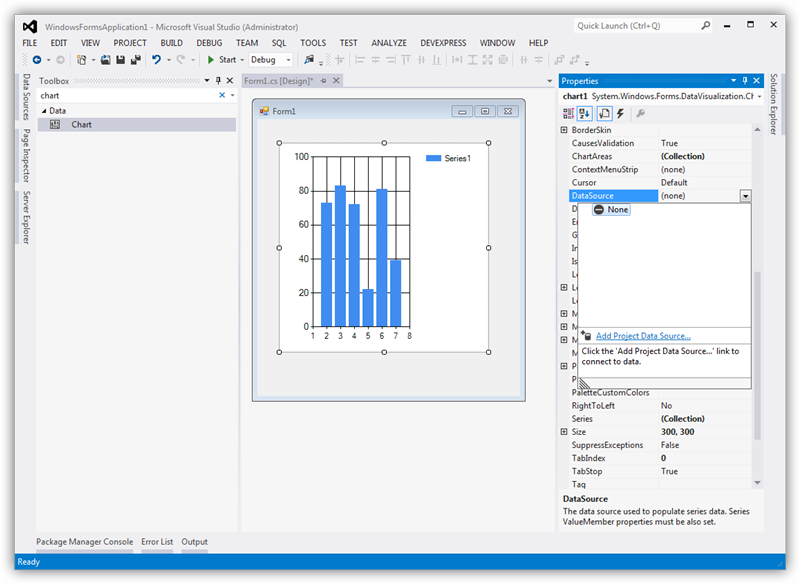
- In the Data Source Configuration Wizard that appears, select Database -> Dataset.
- In the Choose Your Data Connection step, click New Connection.
In the Add Connection dialog, click Change to select the CData Adobe Target Data Source.
Below is a typical connection string:
Tenant=mycompanyname;InitiateOAuth=GETANDREFRESH
To connect to Adobe Target, you must provide the Tenant property along with OAuth connection properties mentioned below. Note that while other connection properties can influence processing behavior, they do not affect the ability to connect.
To determine your Tenant name:
- Log in to Adobe Experience. The URL will look similar to: "https://experience.adobe.com/#/@mycompanyname/preferences/general-section".
- Extract the value after the "/#/@". In this example, it is "mycompanyname".
- Set the Tenant connection property to that value.
User Accounts (OAuth)
You must set AuthScheme to OAuthClient for all user account flows.
Note: Adobe authentication via OAuth requires updating your token every two weeks.
All Applications
CData provides an embedded OAuth application that simplifies OAuth authentication. Alternatively, you can create a custom OAuth application. Review Creating a Custom OAuth App in the Help documentation for more information.Obtaining the OAuth Access Token
Set the following properties to connect:
- InitiateOAuth: Set to GETANDREFRESH to automatically perform the OAuth exchange and refresh the OAuthAccessToken as needed.
- OAuthClientId : Set to the client Id assigned when you registered your app.
- OAuthClientSecret : Set to the client secret assigned when you registered your app.
- CallbackURL : Set to the redirect URI defined when you registered your app. For example: https://localhost:3333
With these settings, the provider obtains an access token from Adobe Target, which it uses to request data. The OAuth values are stored in the location specified by OAuthSettingsLocation, ensuring they persist across connections.
When you configure the connection, you may also want to set the Max Rows connection property. This will limit the number of rows returned, which is especially helpful for improving performance when designing reports and visualizations.
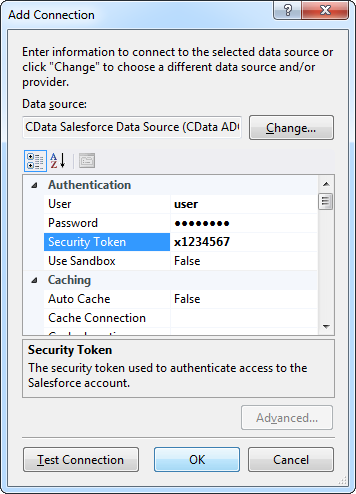
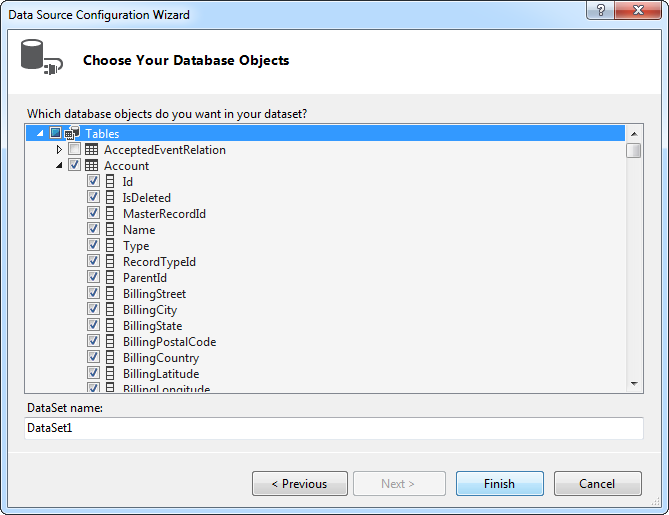
- Choose the database objects you want to work with. This example uses the Activities table.
DataBind
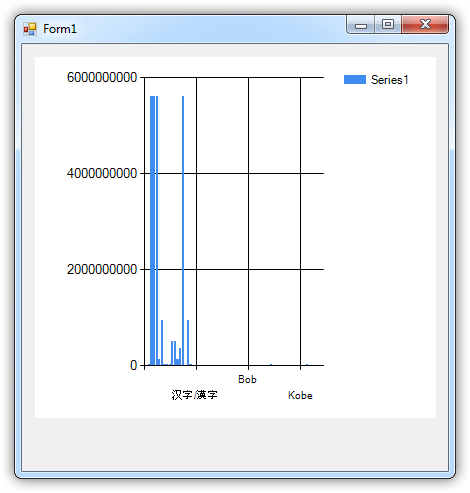
After adding the data source and selecting database objects, you can bind the objects to the chart. This example assigns the x-axis to Id and the y-axis to Name.
- In the Chart properties, click the button in the Series property to open the Series Collection Editor.
- In the Series properties, select the columns you want for the x- and y-axes: Select columns from the menu in the XValueMember and YValueMember properties.
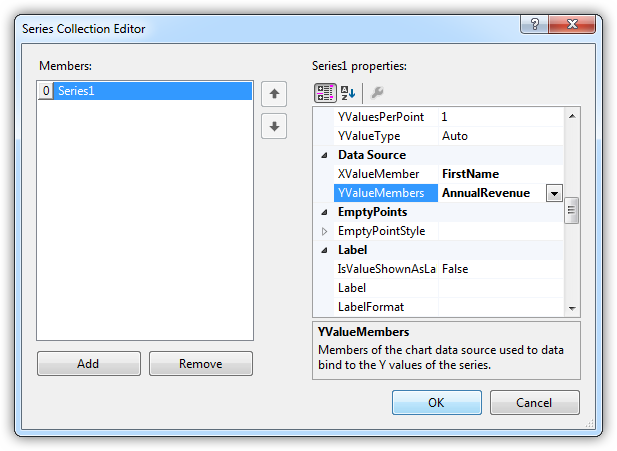
The chart is now databound to the Adobe Target data. Run the chart to display the current data.
Code Walk-through
DataBinding to Adobe Target data requires only a few lines of code and can be completed in three easy steps.
- Connect to Adobe Target.
- Create the AdobeTargetDataAdapter to execute the query and create a DataSet to be filled with its results.
- DataBind the result set to the chart.
Below is the complete code:
AdobeTargetConnection conn = new AdobeTargetConnection("Tenant=mycompanyname;InitiateOAuth=GETANDREFRESH");
AdobeTargetCommand comm = new AdobeTargetCommand("SELECT Id, Name FROM Activities WHERE Type = 'AB'", conn);
AdobeTargetDataAdapter da = new AdobeTargetDataAdapter(comm);
DataSet dataset = new DataSet();
da.Fill(dataset);

chart1.DataSource = dataset;
chart1.Series[0].XValueMember = "Id";
chart1.Series[0].YValueMembers = "Name";
// Insert code for additional chart formatting here.
chart1.DataBind();
Ready to get started?
Download a free trial of the Adobe Target Data Provider to get started:
Download NowLearn more:
 Adobe Target ADO.NET Provider
Easily connect .NET applications with real-time data. Use Adobe Target to manage the data that powers your applications.
