
Model Context Protocol (MCP) finally gives AI models a way to access the business data needed to make them really useful at work. CData MCP Servers have the depth and performance to make sure AI has access to all of the answers.
Try them now for free →


Extract, Transform, and Load Adobe Target Data in Informatica PowerCenter
Create a simple Workflow for Adobe Target data in Informatica PowerCenter.
Informatica provides a powerful, elegant means of transporting and transforming your data. By utilizing the CData ODBC Driver for Adobe Target, you are gaining access to a driver based on industry-proven standards that integrates seamlessly with Informatica's powerful data transportation and manipulation features. This tutorial shows how to create a simple Workflow in Informatica PowerCenter to extract Adobe Target data and load it into a flat file.
Add Adobe Target as an ODBC Data Source
If you have not already, install the driver on the PowerCenter server and client machines. On both machines, specify the connection properties in an ODBC DSN (data source name). This is the last step of the driver installation. You can use the Microsoft ODBC Data Source Administrator to create and configure ODBC DSNs.
To connect to Adobe Target, you must provide the Tenant property along with OAuth connection properties mentioned below. Note that while other connection properties can influence processing behavior, they do not affect the ability to connect.
To determine your Tenant name:
- Log in to Adobe Experience. The URL will look similar to: "https://experience.adobe.com/#/@mycompanyname/preferences/general-section".
- Extract the value after the "/#/@". In this example, it is "mycompanyname".
- Set the Tenant connection property to that value.
User Accounts (OAuth)
You must set AuthScheme to OAuthClient for all user account flows.
Note: Adobe authentication via OAuth requires updating your token every two weeks.
All Applications
CData provides an embedded OAuth application that simplifies OAuth authentication. Alternatively, you can create a custom OAuth application. Review Creating a Custom OAuth App in the Help documentation for more information.Obtaining the OAuth Access Token
Set the following properties to connect:
- InitiateOAuth: Set to GETANDREFRESH to automatically perform the OAuth exchange and refresh the OAuthAccessToken as needed.
- OAuthClientId : Set to the client Id assigned when you registered your app.
- OAuthClientSecret : Set to the client secret assigned when you registered your app.
- CallbackURL : Set to the redirect URI defined when you registered your app. For example: https://localhost:3333
With these settings, the provider obtains an access token from Adobe Target, which it uses to request data. The OAuth values are stored in the location specified by OAuthSettingsLocation, ensuring they persist across connections.
Create an ETL Workflow in PowerCenter
Follow the steps below to create a workflow in PowerCenter to pull Adobe Target data and push it into a flat file.
Create a Source Using the ODBC Driver
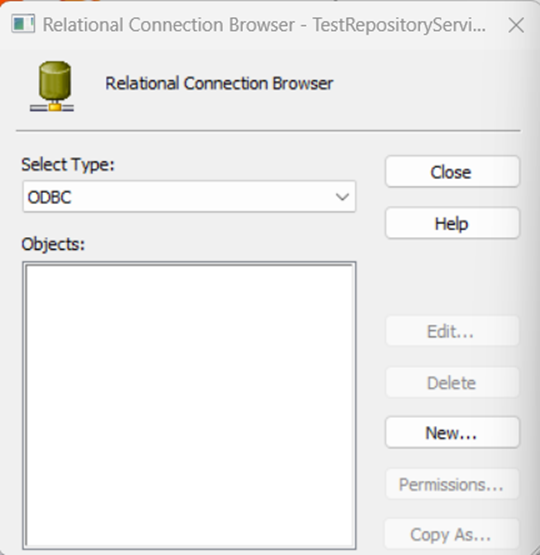
- In PowerCenter Workflow Manager, add a new ODBC relational connection by going to Connections -> Relational, and in the first window select the ODBC type and click New.
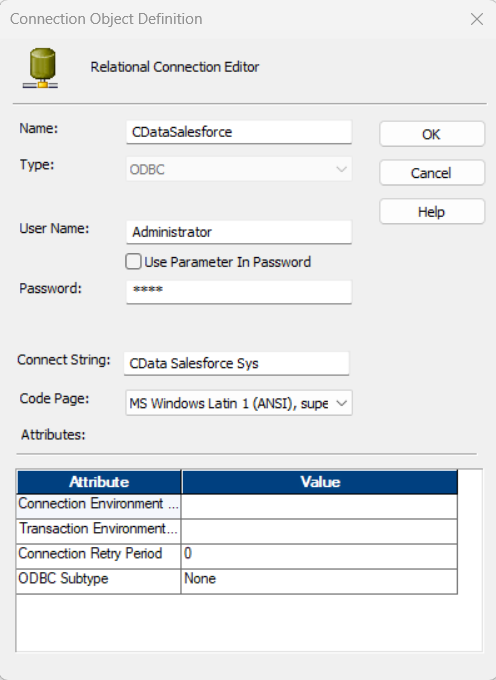
- In the Relational Connection Editor, set the name of the newly created connection and set the User Name and Password based on the credentials utilized to connect to your Repository. Under the Connection String input your System DSN, which by default is called 'CData AdobeTarget Sys'.
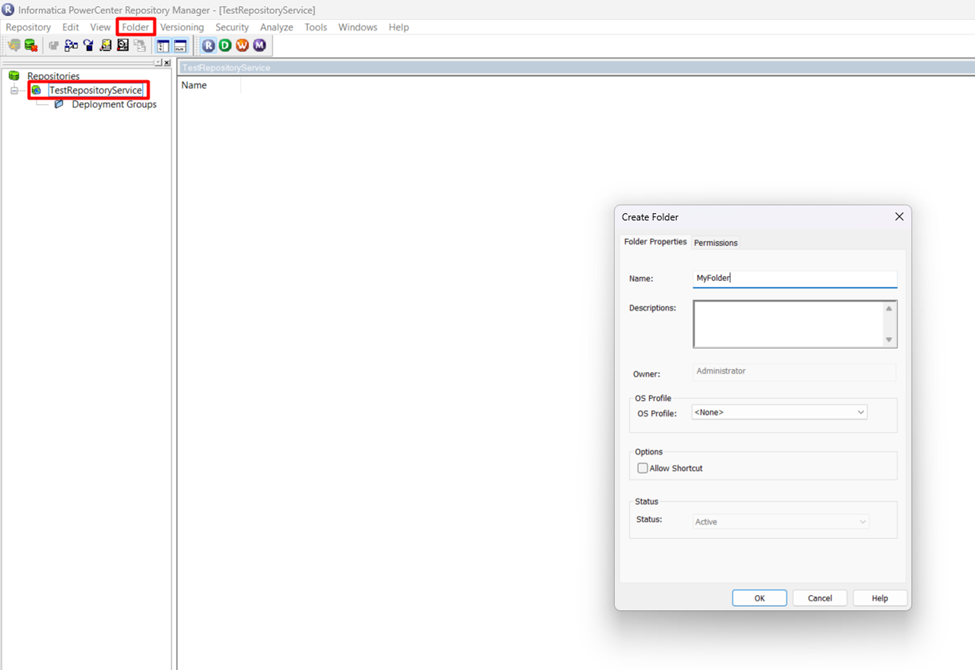
- In PowerCenter Designer, connect to your repository and open your folder. If you do not already have a folder created, you will need to manually create a folder for your repository. To create a folder, open Informatica PowerCenter Repository Manager, connect to your Repository Service and go to Folder -> Create to create a new folder.
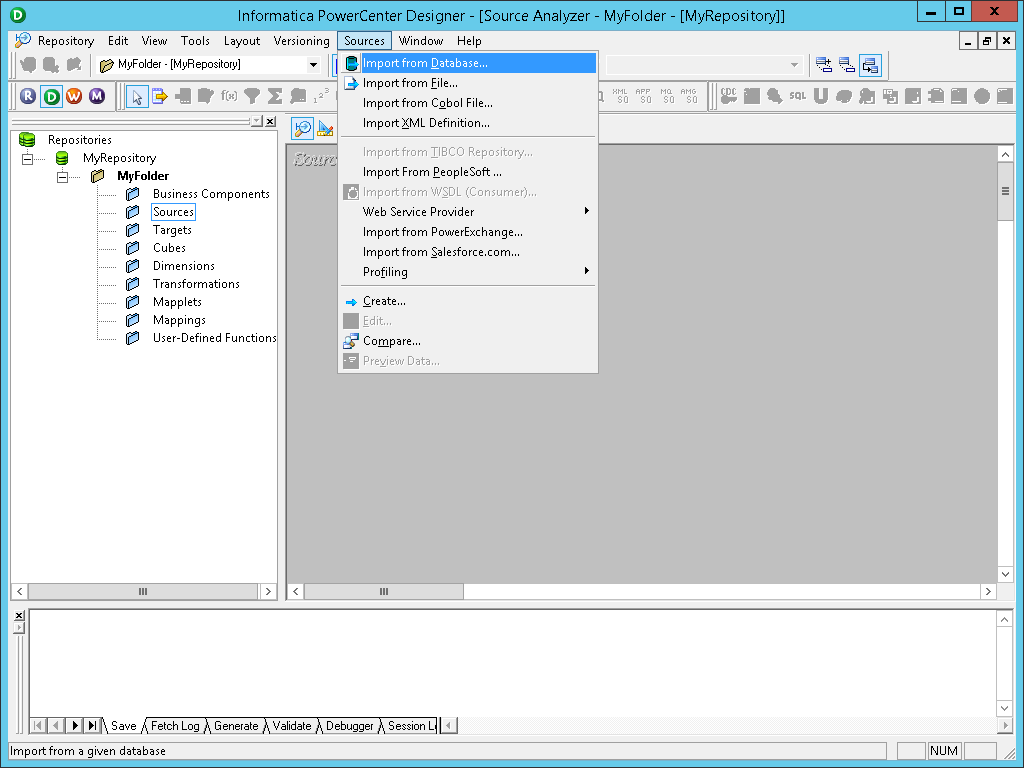
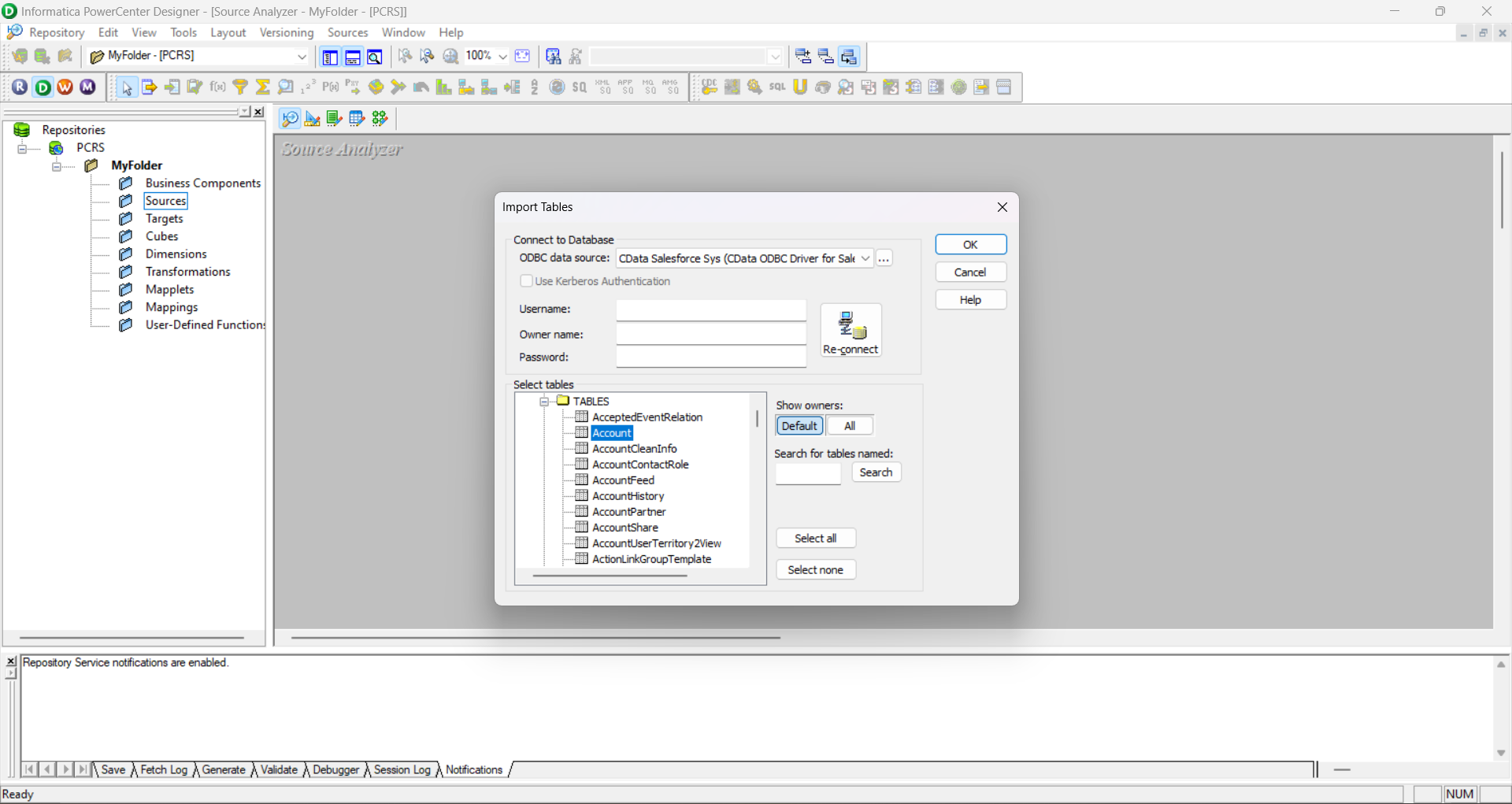
- Select the Source Analyzer, click the sources menu, and select Import from Database...
- In the drop-down menu for ODBC data source, select the DSN you previously configured (CData AdobeTarget Sys).
- Click connect and select the tables and views to include.
- Click OK.
Create a Flat File Target Based on the Source
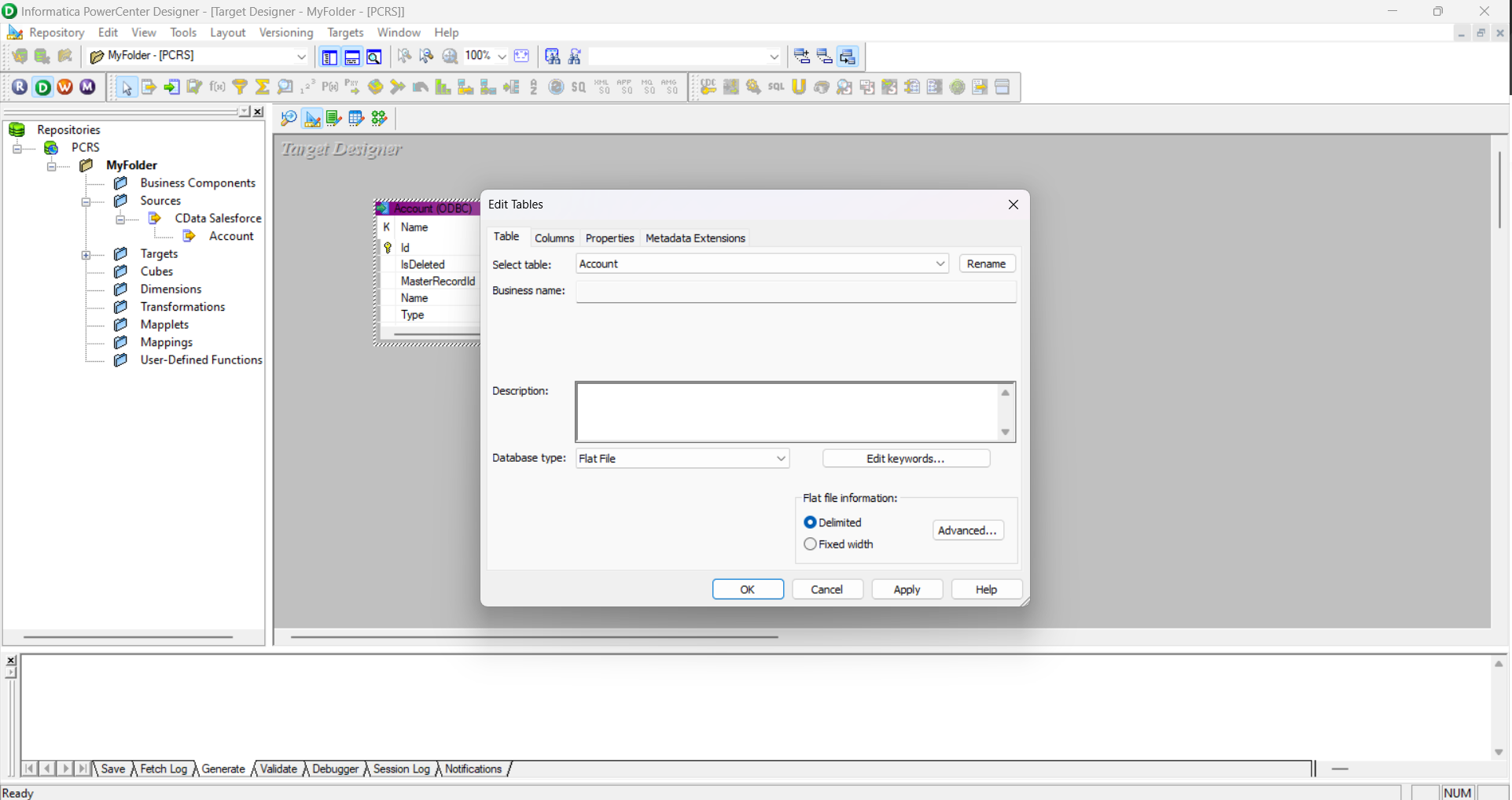
- Select the Target Designer and drag and drop the previously created source onto the workspace. Using the existing source copies the columns into the target.
- Right-click the new target, click edit, and change the database type to flat file.
Create a Mapping to Between Adobe Target Data and a Flat File
- Click on the Mapping Designer.
- Drag the source and target to the workspace (name the new mapping, if prompted).
- Right-click on the workspace and select Autolink by Name.
- Drag the columns from the source qualifier to the target definition.
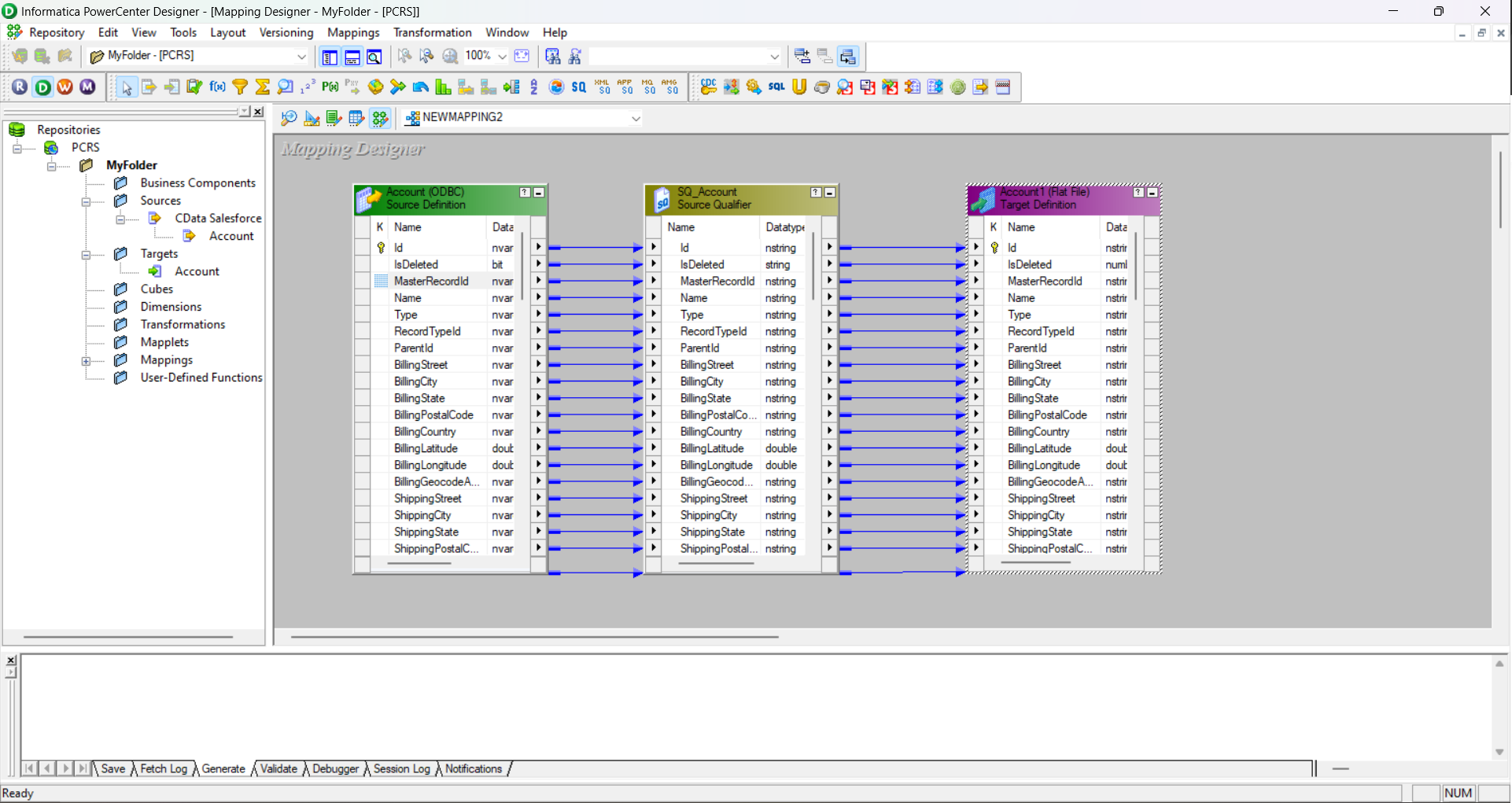
- Save the folder (Ctrl + S).
Create Workflow Based on the Mapping
With the source, target, and mapping created and saved, you are now ready to create the workflow.
- Right-click the mapping and select generate workflow to open the Workflow Generation wizard.
- Create a workflow with a non-reusable session.
- Ensure that you have properly configured the connection object and set the prefixes. If you have not already done so, you will need to create an Integration Service. To create an Integration Service, open your Administrator site, and under Domain, create a new PowerCenter Integration Service. Under the PowerCenter Repository Service, select the Repository you are referring to, and as Username and Password, use your Administrator login information.
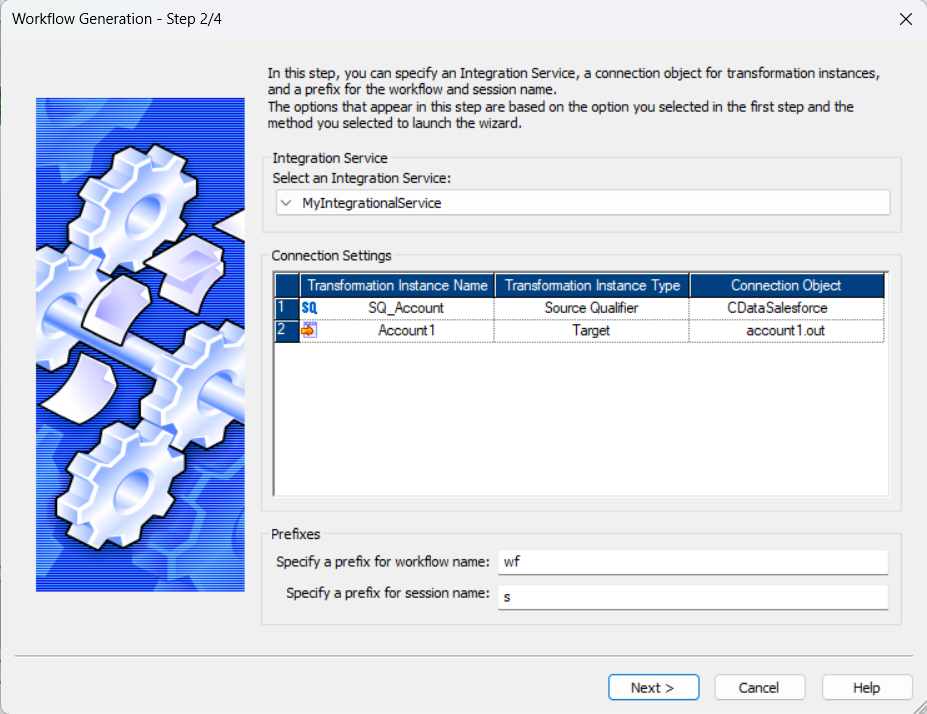
- Configure the Connection as needed.
- Review the Workflow and click Finish.
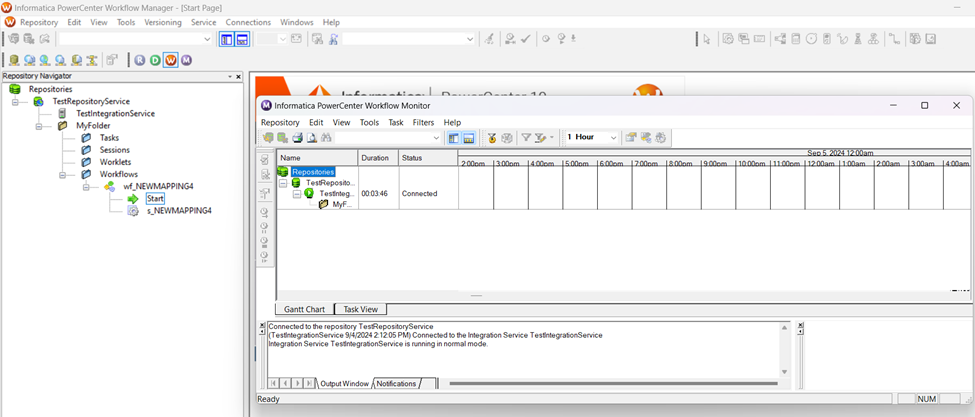
With a workflow created, you can open the PowerCenter Workflow Manager to access and start the workflow, quickly transferring Adobe Target data into a flat file. With the CData ODBC Driver for Adobe Target, you can configure sources and targets in PowerCenter to integrate Adobe Target data into any of the elegant and powerful features in Informatica PowerCenter.
Ready to get started?
Download a free trial of the Adobe Target ODBC Driver to get started:
Download NowLearn more:
 Adobe Target ODBC Driver
The Adobe Target ODBC Driver is a powerful tool that allows you to connect with live data from live Adobe Target, directly from any applications that support ODBC connectivity.
Read, write, and update online sheets through a standard ODBC interface.
