
Model Context Protocol (MCP) finally gives AI models a way to access the business data needed to make them really useful at work. CData MCP Servers have the depth and performance to make sure AI has access to all of the answers.
Try them now for free →


Use the CData API Server in Microsoft Power BI
You can use the CData API Server to feed BigQuery data to Power BI dashboards. Simply drag and drop BigQuery data into data visuals on the Power BI canvas.
The CData API Server enables you to use REST, OData, JSON, or Open APIs to connect to and query BigQuery data. The OData standard enables real-time access to the live data, and support for OData is integrated into Power BI. This article details how to import an OData feed of BigQuery data into Microsoft Power BI.
About BigQuery Data Integration
CData simplifies access and integration of live Google BigQuery data. Our customers leverage CData connectivity to:
- Simplify access to BigQuery with broad out-of-the-box support for authentication schemes, including OAuth, OAuth JWT, and GCP Instance.
- Enhance data workflows with Bi-directional data access between BigQuery and other applications.
- Perform key BigQuery actions like starting, retrieving, and canceling jobs; deleting tables; or insert job loads through SQL stored procedures.
Most CData customers are using Google BigQuery as their data warehouse and so use CData solutions to migrate business data from separate sources into BigQuery for comprehensive analytics. Other customers use our connectivity to analyze and report on their Google BigQuery data, with many customers using both solutions.
For more details on how CData enhances your Google BigQuery experience, check out our blog post: https://www.cdata.com/blog/what-is-bigquery
Getting Started
Set Up the API Server
If you have not already done so, download the CData API Server. Once you have installed the API Server, follow the steps below to begin producing secure BigQuery OData services:
Connect to BigQuery
To work with BigQuery data from Microsoft Power BI, we start by creating and configuring a BigQuery connection. Follow the steps below to configure the API Server to connect to BigQuery data:
- First, navigate to the Connections page.
-
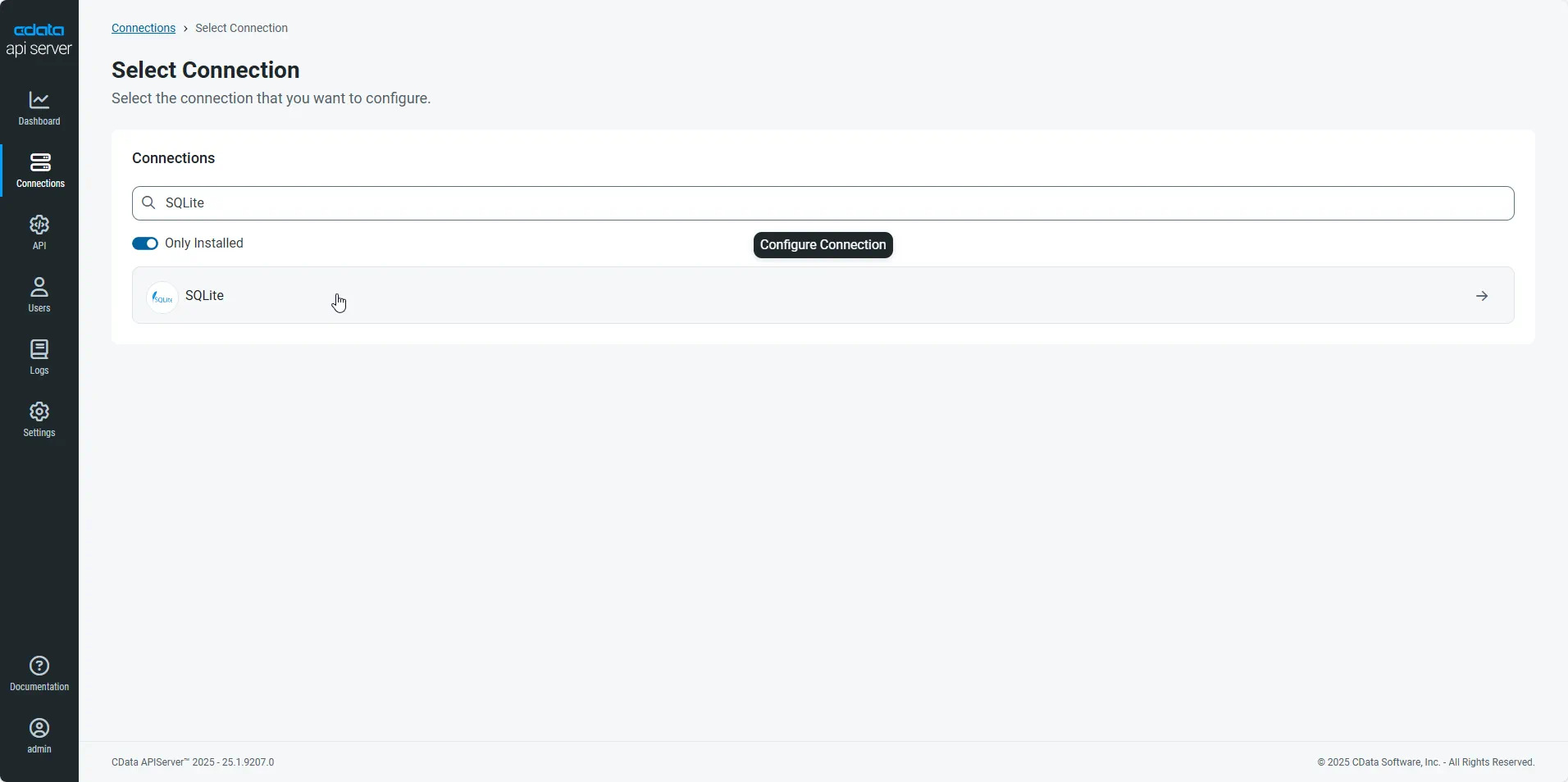
Click Add Connection and then search for and select the BigQuery connection.
-
Enter the necessary authentication properties to connect to BigQuery.
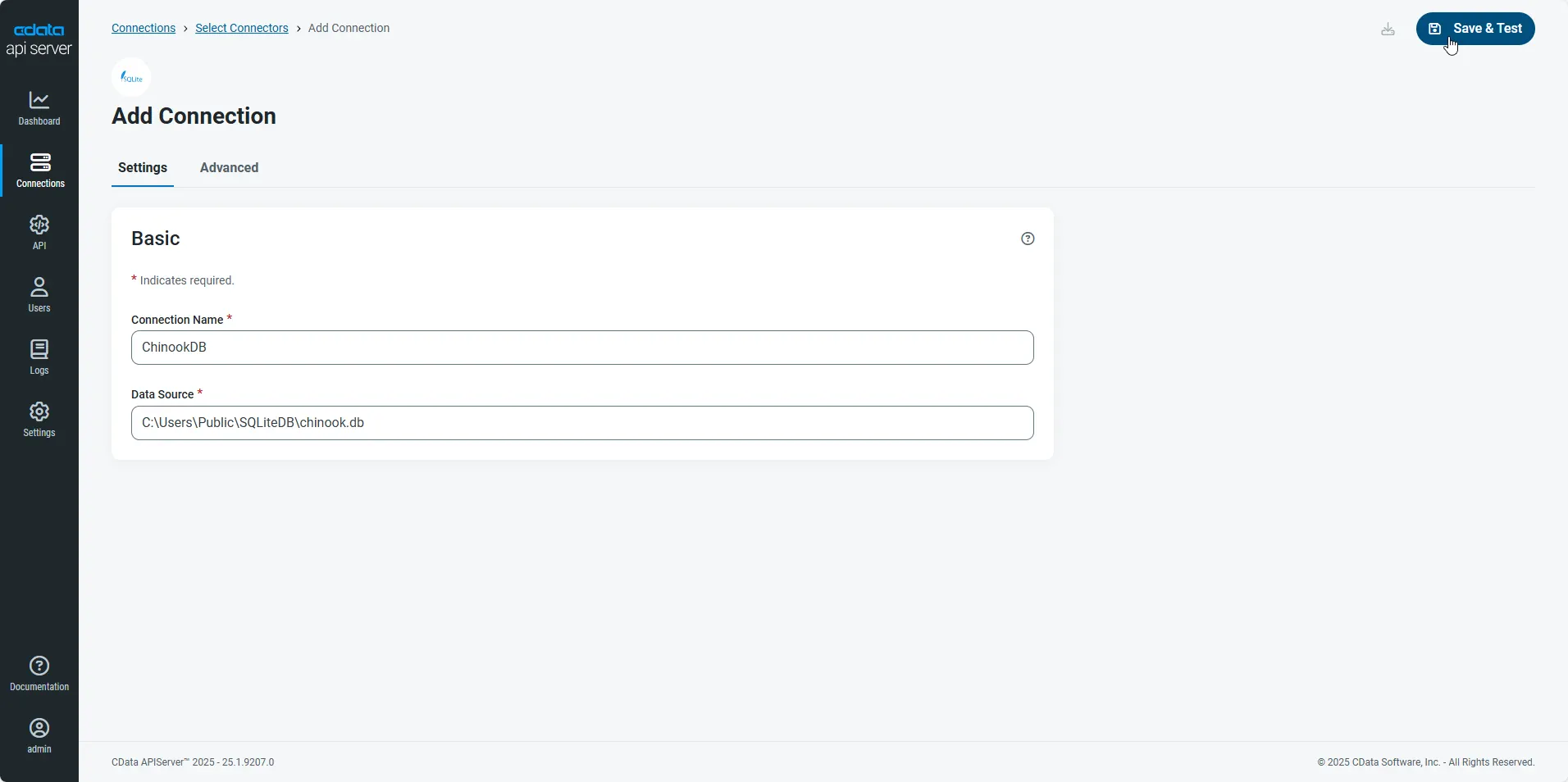
- After configuring the connection, click Save & Test to confirm a successful connection.
Configure API Server Users
Next, create a user to access your BigQuery data through the API Server. You can add and configure users on the Users page. Follow the steps below to configure and create a user:
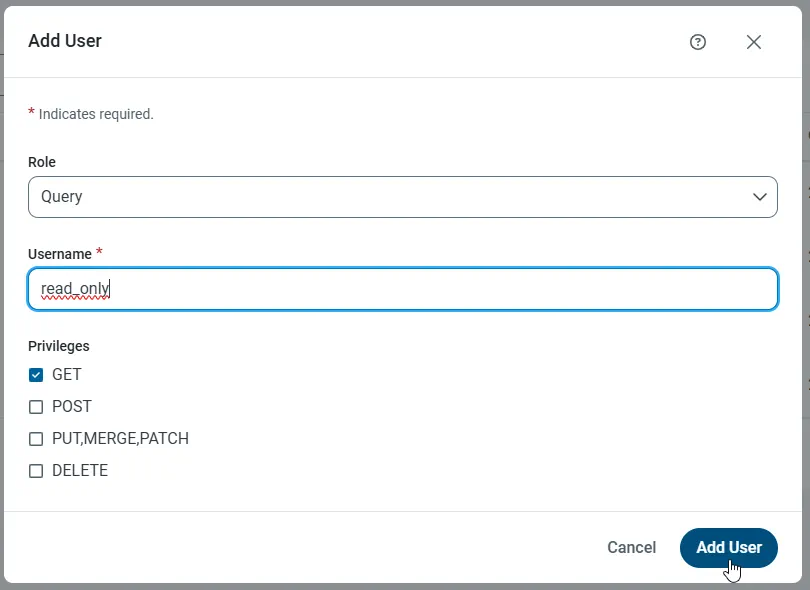
- On the Users page, click Add User to open the Add User dialog.
-
Next, set the Role, Username, and Privileges properties and then click Add User.
-
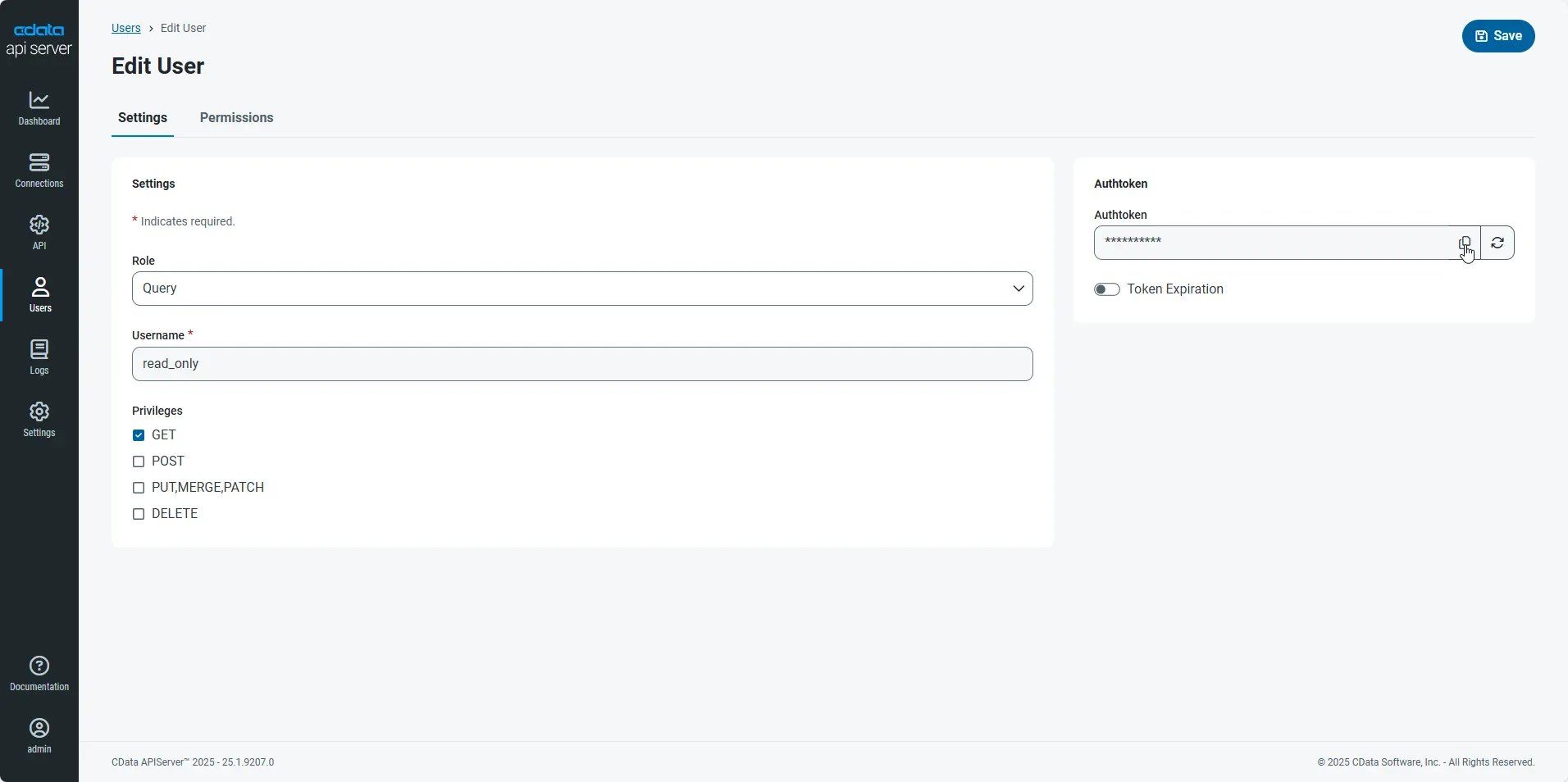
An Authtoken is then generated for the user. You can find the Authtoken and other information for each user on the Users page:
Creating API Endpoints for BigQuery
Having created a user, you are ready to create API endpoints for the BigQuery tables:
-
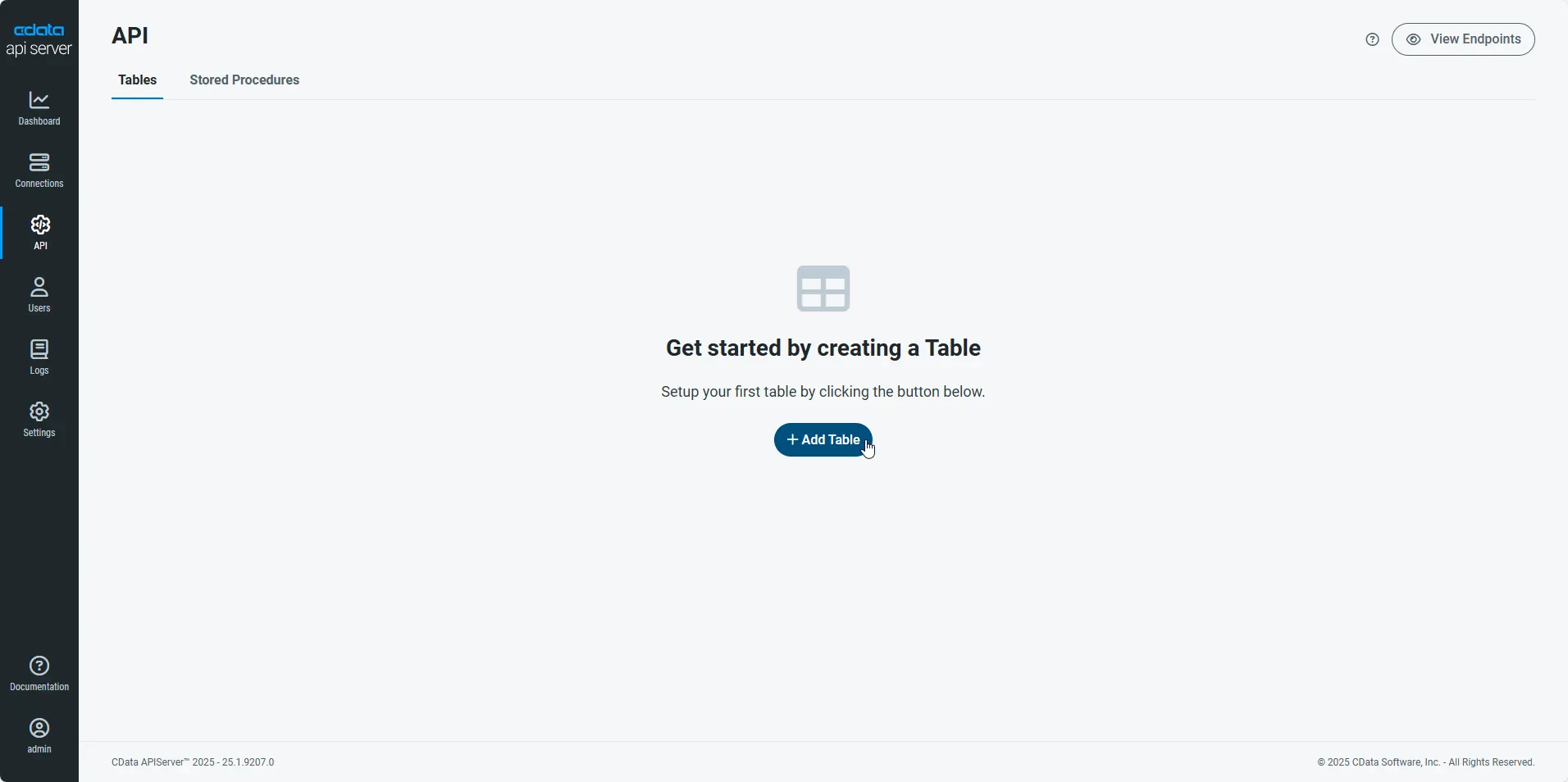
First, navigate to the API page and then click
Add Table
.
-
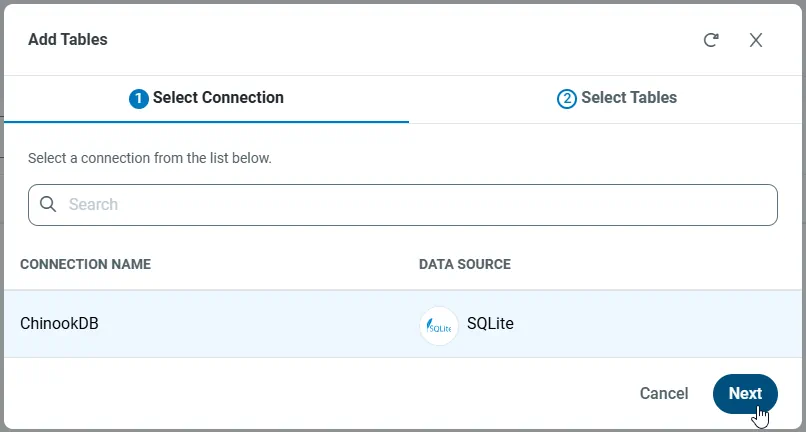
Select the connection you wish to access and click Next.
-
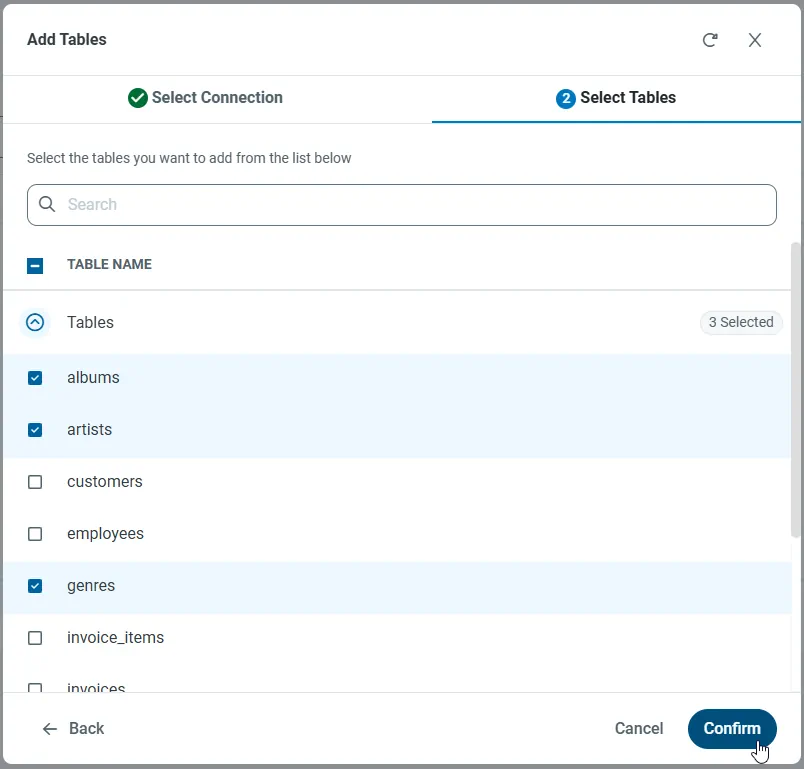
With the connection selected, create endpoints by selecting each table and then clicking Confirm.
Gather the OData Url
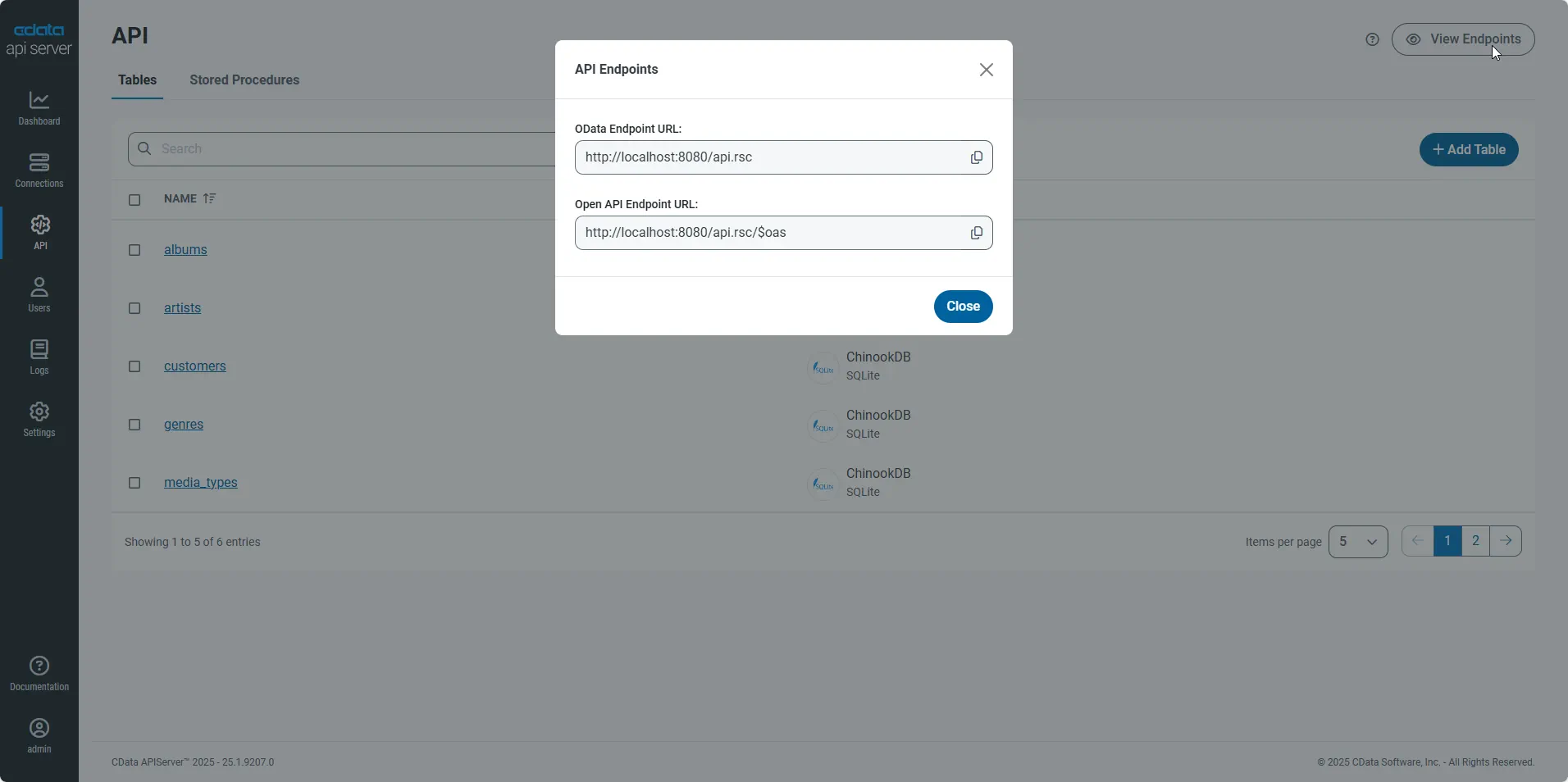
Having configured a connection to BigQuery data, created a user, and added resources to the API Server, you now have an easily accessible REST API based on the OData protocol for those resources. From the API page in API Server, you can view and copy the API Endpoints for the API:
Connect to BigQuery Data from Power BI Desktop
-
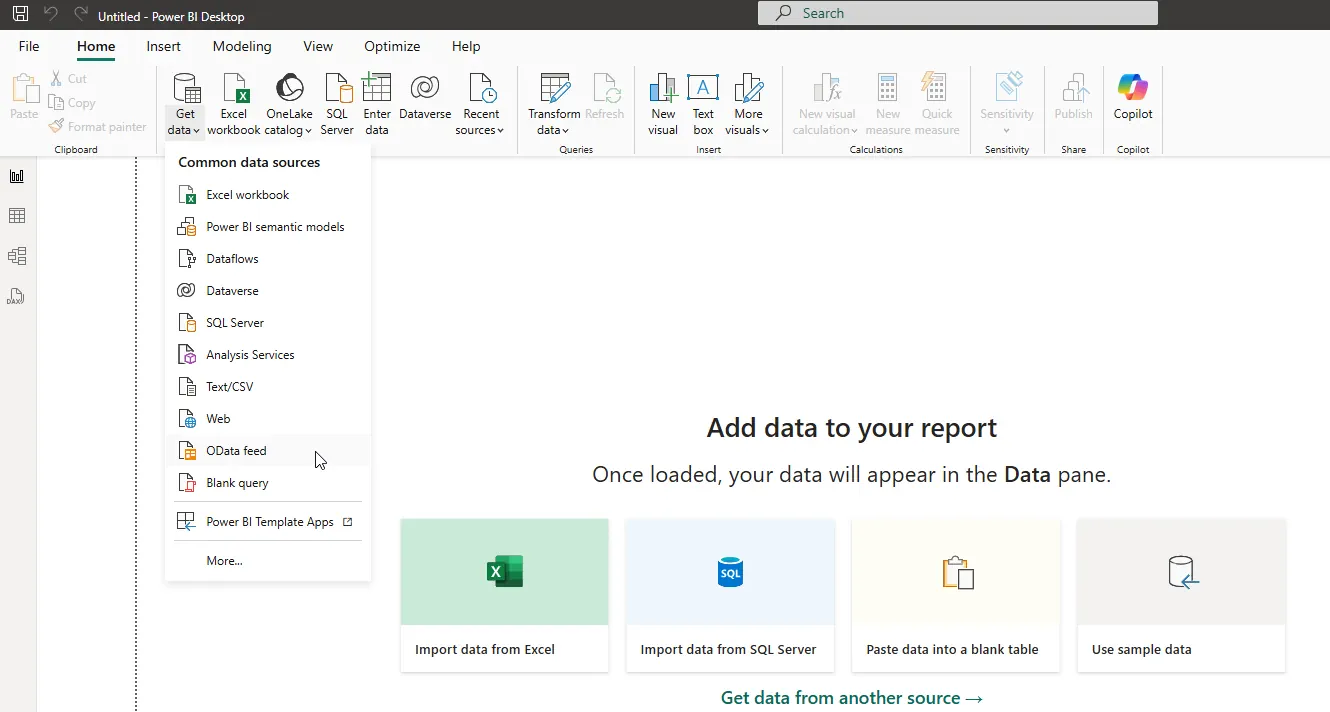
Open Power BI Desktop and click Get Data -> OData feed.
-
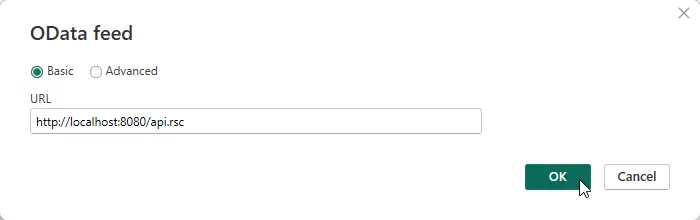
In the OData feed connection, set the URL property to the OData Endpoint URL previously copied and click OK (e.g. "http://localhost:8080/api.rsc"):
-
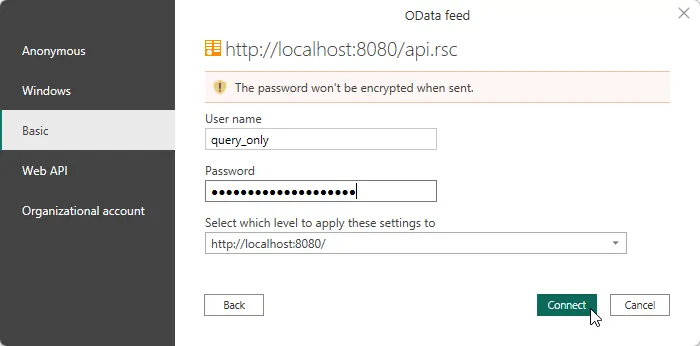
In the next step of the wizard, define the authentication credentials. Select Basic and then enter the credentials for a user authorized to make requests. Specify the User name and enter the user's authtoken in the Password field:
-
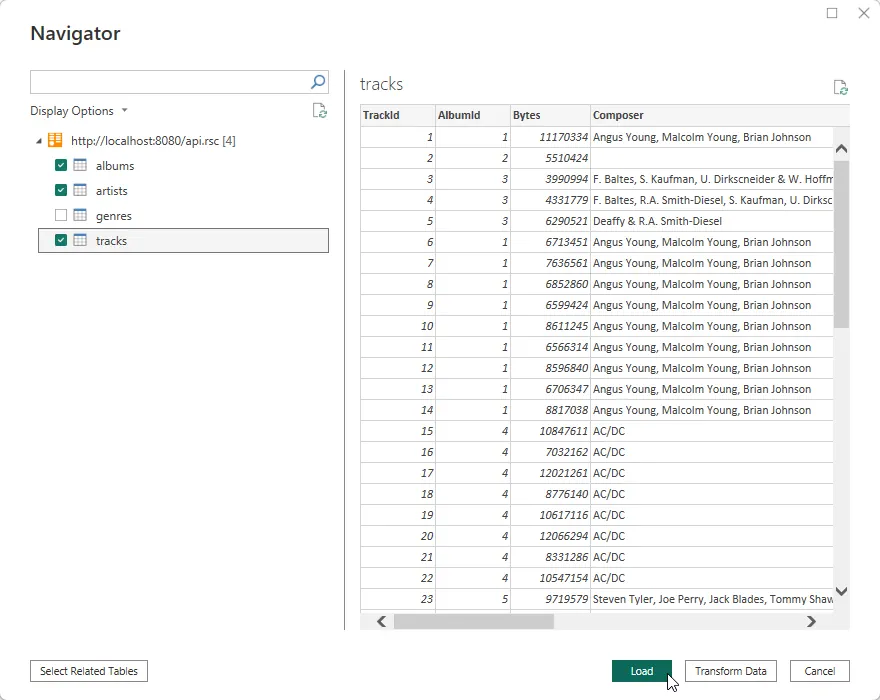
Select the tables that you would like to import into Power BI and click Load
Create Data Visualizations
After pulling the data into Power BI, you can create data visualizations in the Report view. Follow the steps below to create a pie chart:
- Select the pie chart icon in the Visualizations pane.
- Select a dimension in the Fields pane: for example, Genre Name.
- Select a measure in the Fields pane: for example, GenreId.
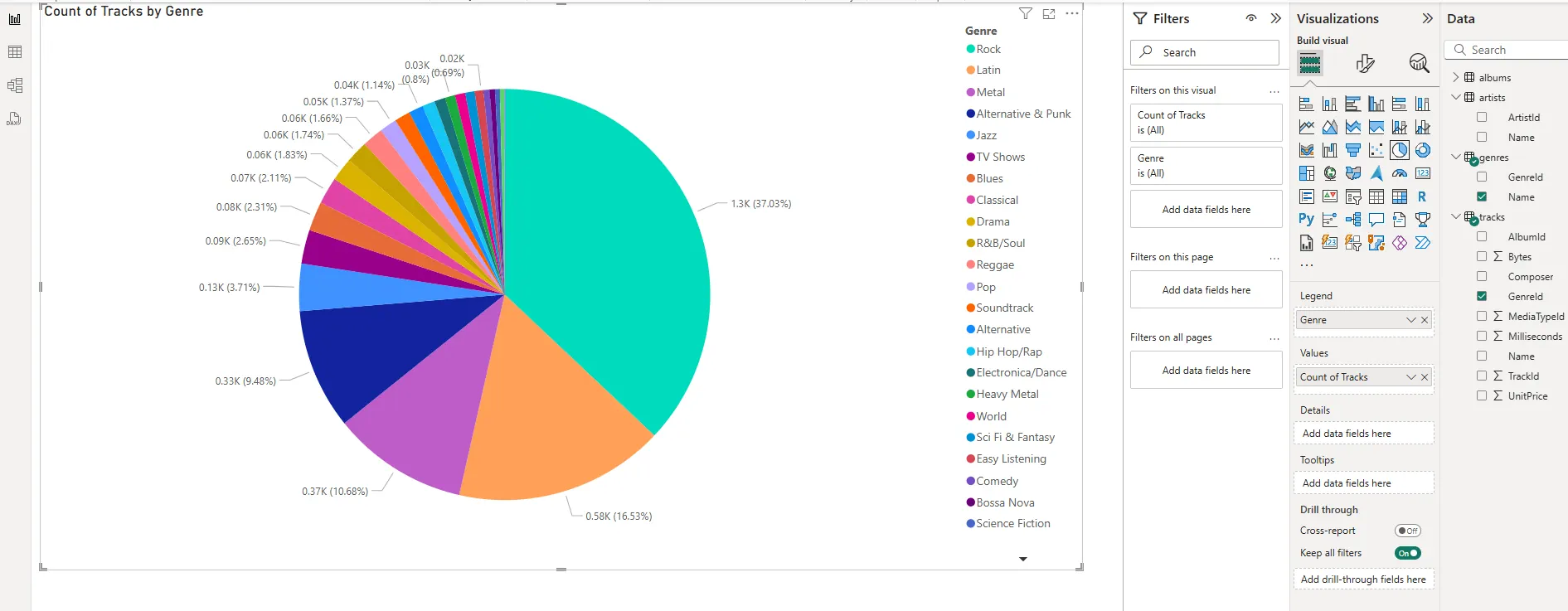
You can change sort options by clicking the ellipsis (...) button for the chart. Options to select the sort column and change the sort order are displayed.
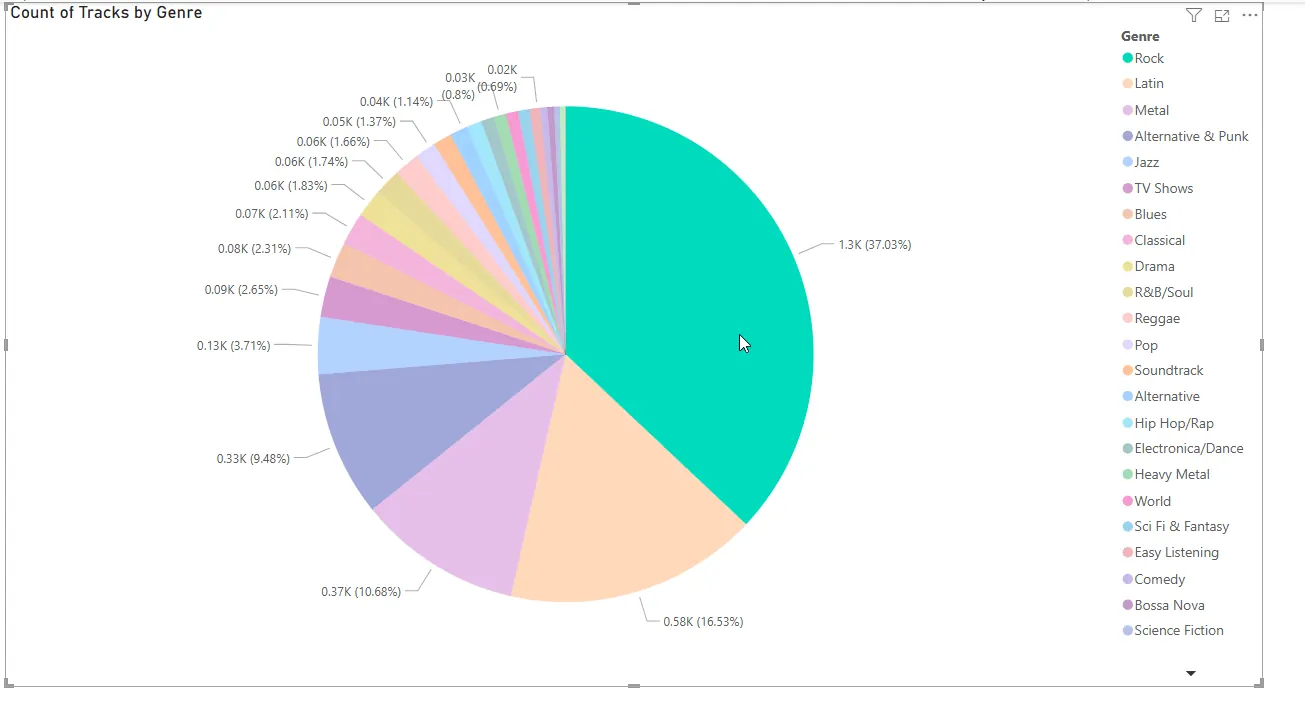
You can use both highlighting and filtering to focus on data. Filtering removes unfocused data from visualizations; highlighting dims unfocused data. You can highlight fields by clicking them:
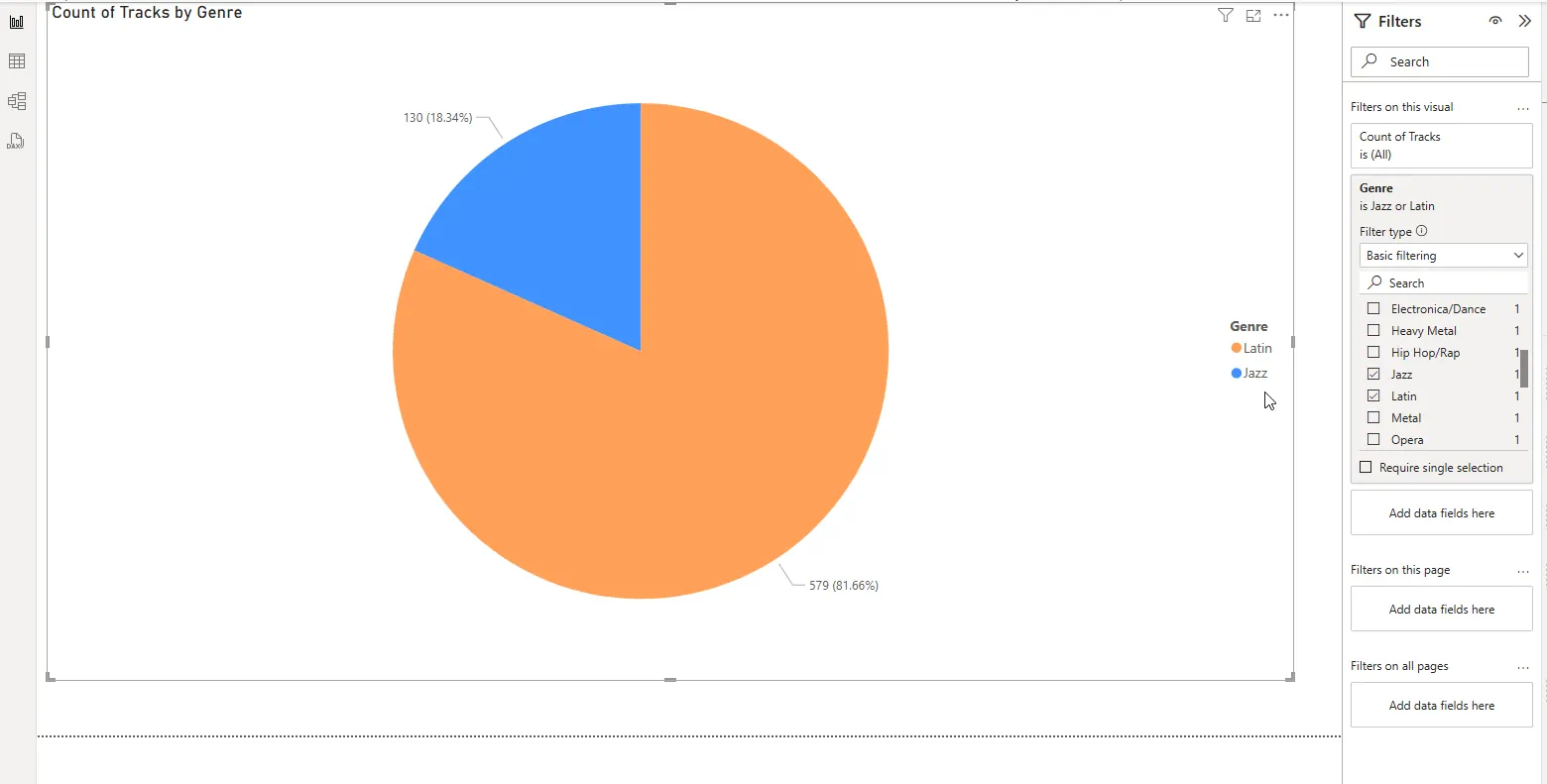
You can apply filters at the page level, at the report level, or to a single visualization by dragging fields onto the Filters pane. To filter on the field's value, select one of the values that are displayed in the Filters pane.
Click Refresh to synchronize your report with any changes to the data.
Free Trial & More Information
If you are interested in connecting to your BigQuery data (or data from any of our other supported data sources) from Microsoft Power BI, download API Server to begin creating flexible and customizable REST, OData, JSON and Open APIs from any database or data store! As always, our world-class support team is ready to answer any questions you may have.
