
Model Context Protocol (MCP) finally gives AI models a way to access the business data needed to make them really useful at work. CData MCP Servers have the depth and performance to make sure AI has access to all of the answers.
Try them now for free →


Create HCL Domino-Connected Dashboards in Grafana
Connect to HCL Domino Data via CData Connect Cloud in Grafana and create custom business dashboards with real-time access to HCL Domino data.
Grafana is an open-source platform that allows users to analyze, monitor, and visualize telemetry from various data sources. When combined with CData Connect Cloud, you gain immediate access to HCL Domino data for business dashboards. This article outlines the process of connecting to HCL Domino using Connect Cloud and creating a basic dashboard from HCL Domino data within Grafana.
CData Connect Cloud offers a pure SQL Server, cloud-to-cloud interface for HCL Domino, enabling the creation of dashboards directly from live HCL Domino data within Grafana, all without the need for data replication to a native database. As you build visualizations, Grafana generates SQL queries to gather data. With its inherent optimized data processing capabilities, CData Connect Cloud efficiently channels all supported SQL operations, including filters and JOINs, directly to HCL Domino. This leverages server-side processing to swiftly deliver the requested HCL Domino data.
Configure HCL Domino Connectivity for Grafana
Connectivity to HCL Domino from Grafana is made possible through CData Connect Cloud. To work with HCL Domino data from Grafana, we start by creating and configuring a HCL Domino connection.
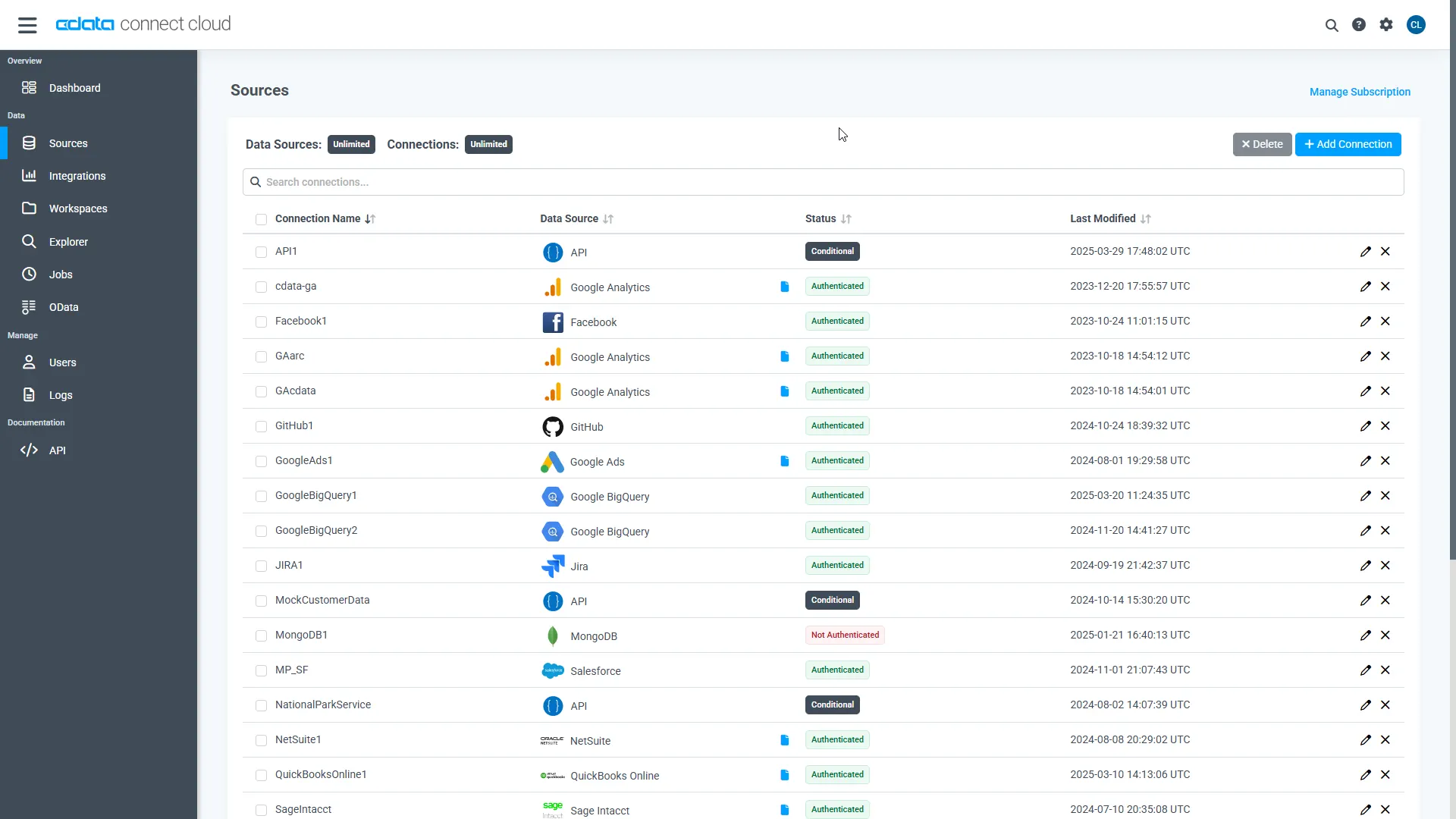
- Log into Connect Cloud, click Sources, and then click Add Connection
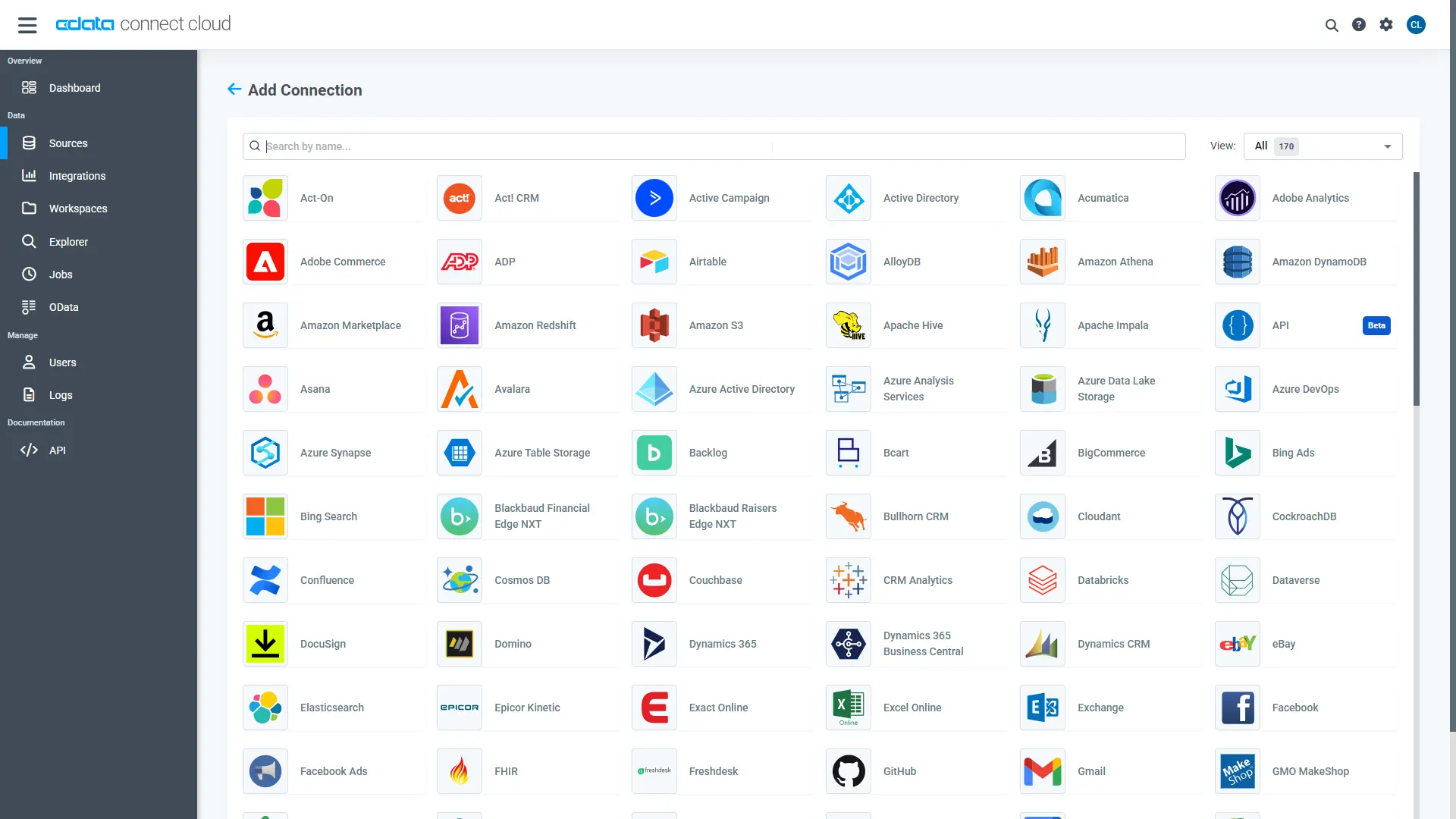
- Select "HCL Domino" from the Add Connection panel
-
Enter the necessary authentication properties to connect to HCL Domino.
Connecting to Domino
To connect to Domino data, set the following properties:
- URL: The host name or IP of the server hosting the Domino database. Include the port of the server hosting the Domino database. For example: http://sampleserver:1234/
- DatabaseScope: The name of a scope in the Domino Web UI. The driver exposes forms and views for the schema governed by the specified scope. In the Domino Admin UI, select the Scopes menu in the sidebar. Set this property to the name of an existing scope.
Authenticating with Domino
Domino supports authenticating via login credentials or an Entra ID (formerly Azure AD) OAuth application:
Login Credentials
To authenticate with login credentials, set the following properties:
- AuthScheme: Set this to "OAuthPassword"
- User: The username of the authenticating Domino user
- Password: The password associated with the authenticating Domino user
The driver uses the login credentials to automatically perform an OAuth token exchange.
EntraID (formerly AzureAD)
This authentication method uses Entra ID (formerly Azure AD) as an IdP to obtain a JWT token. You need to create a custom OAuth application in Entra ID (formerly Azure AD) and configure it as an IdP. To do so, follow the instructions in the Help documentation. Then set the following properties:
- AuthScheme: Set this to "EntraID (formerly AzureAD)"
- InitiateOAuth: Set this to GETANDREFRESH. You can use InitiateOAuth to avoid repeating the OAuth exchange and manually setting the OAuthAccessToken.
- OAuthClientId: The Client ID obtained when setting up the custom OAuth application.
- OAuthClientSecret: The Client secret obtained when setting up the custom OAuth application.
- CallbackURL: The redirect URI defined when you registered your app. For example: https://localhost:33333
- AzureTenant: The Microsoft Online tenant being used to access data. Supply either a value in the form companyname.microsoft.com or the tenant ID.
The tenant ID is the same as the directory ID shown in the Azure Portal's Entra ID (formerly Azure AD) > Properties page.
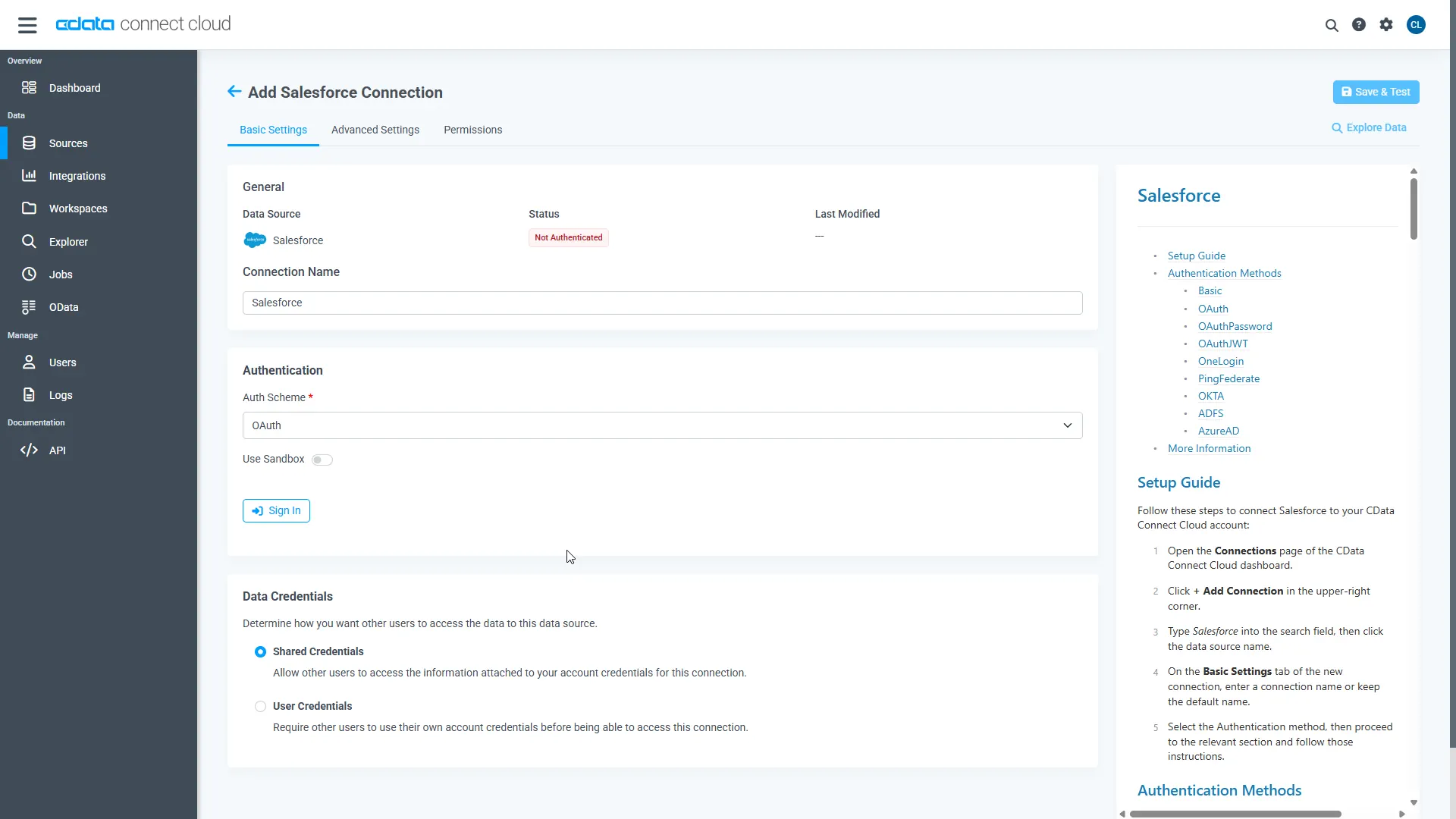
- Click Create & Test
-
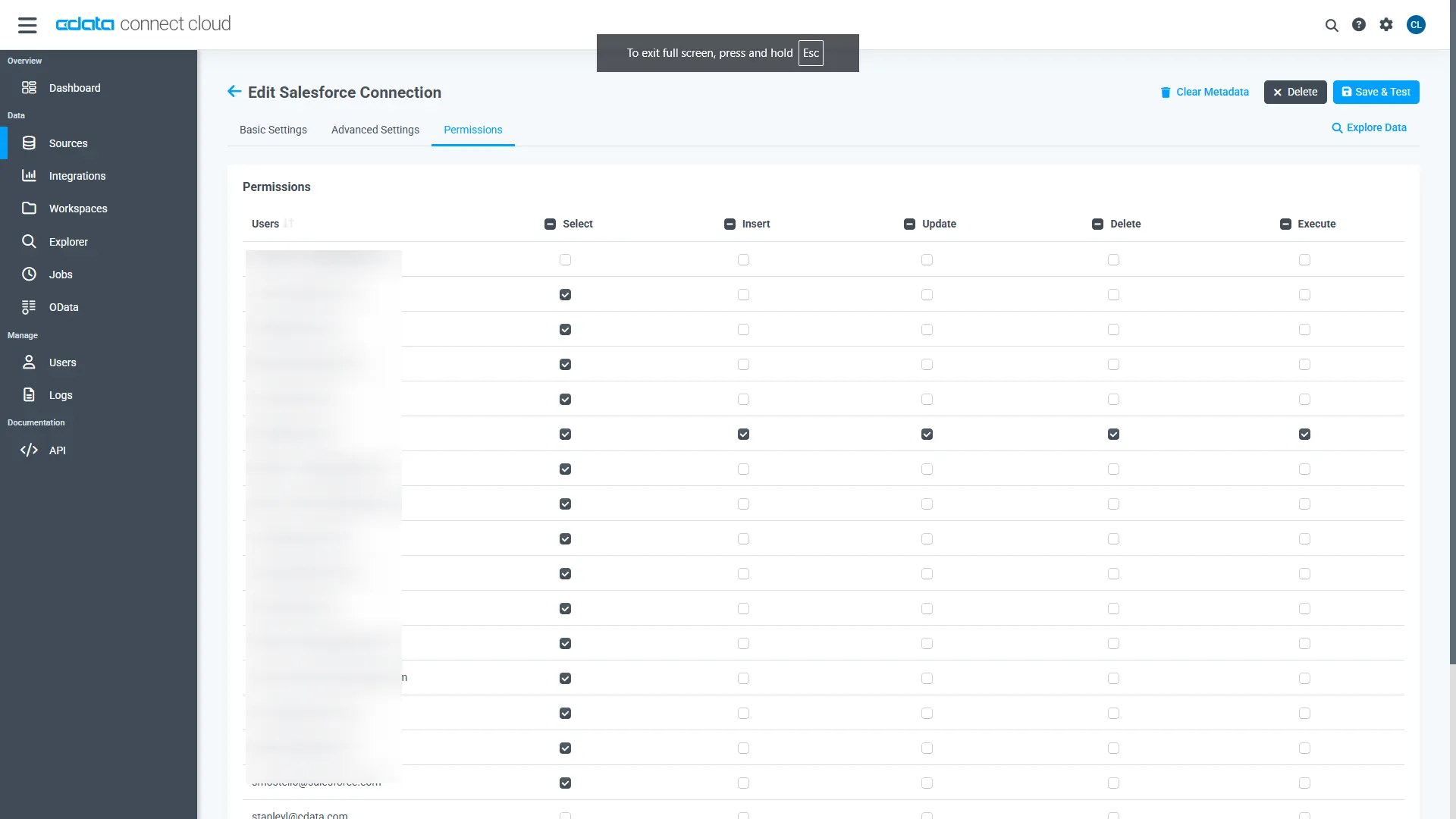
Navigate to the Permissions tab in the Add HCL Domino Connection page and update the User-based permissions.
Add a Personal Access Token
When connecting to Connect Cloud through the REST API, the OData API, or the Virtual SQL Server, a Personal Access Token (PAT) is used to authenticate the connection to Connect Cloud. It is best practice to create a separate PAT for each service to maintain granularity of access.
- Click on the Gear icon () at the top right of the Connect Cloud app to open the settings page.
- On the Settings page, go to the Access Tokens section and click Create PAT.
-
Give the PAT a name and click Create.
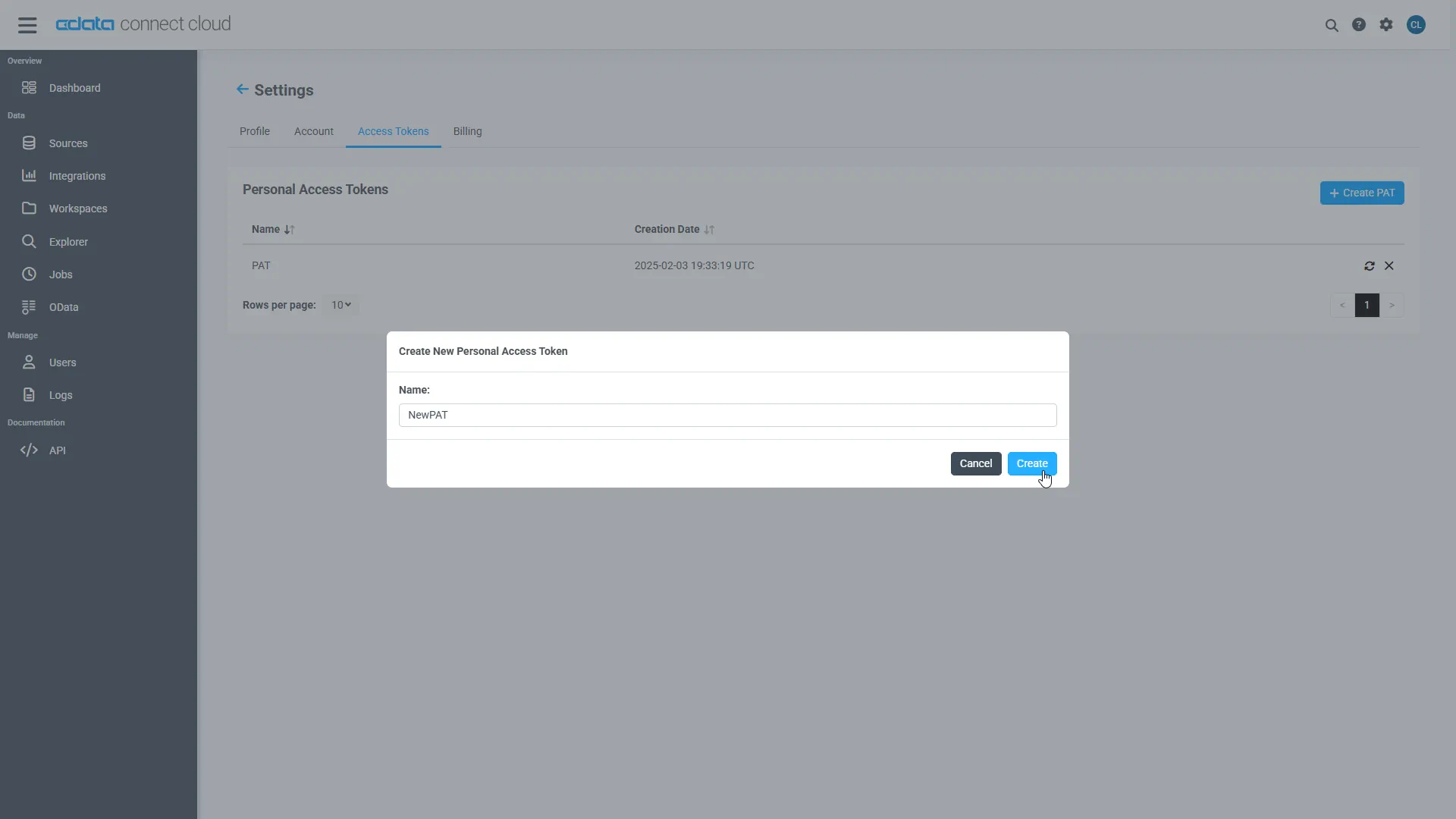
- The personal access token is only visible at creation, so be sure to copy it and store it securely for future use.
With the connection configured and a PAT generated, you are ready to connect to HCL Domino data from Grafana.
Visualize Live HCL Domino Data in Grafana
To establish a connection from Grafana to the CData Connect Cloud Virtual SQL Server API, follow these steps.
- If you have not already done so, download and install Grafana for your operating system from the Grafana Website. Once installed, access Grafana at http://localhost:3000/.
- Log in to Grafana with your username and password for Grafana. If this is your first time logging in, the username is admin and the password is admin.
-
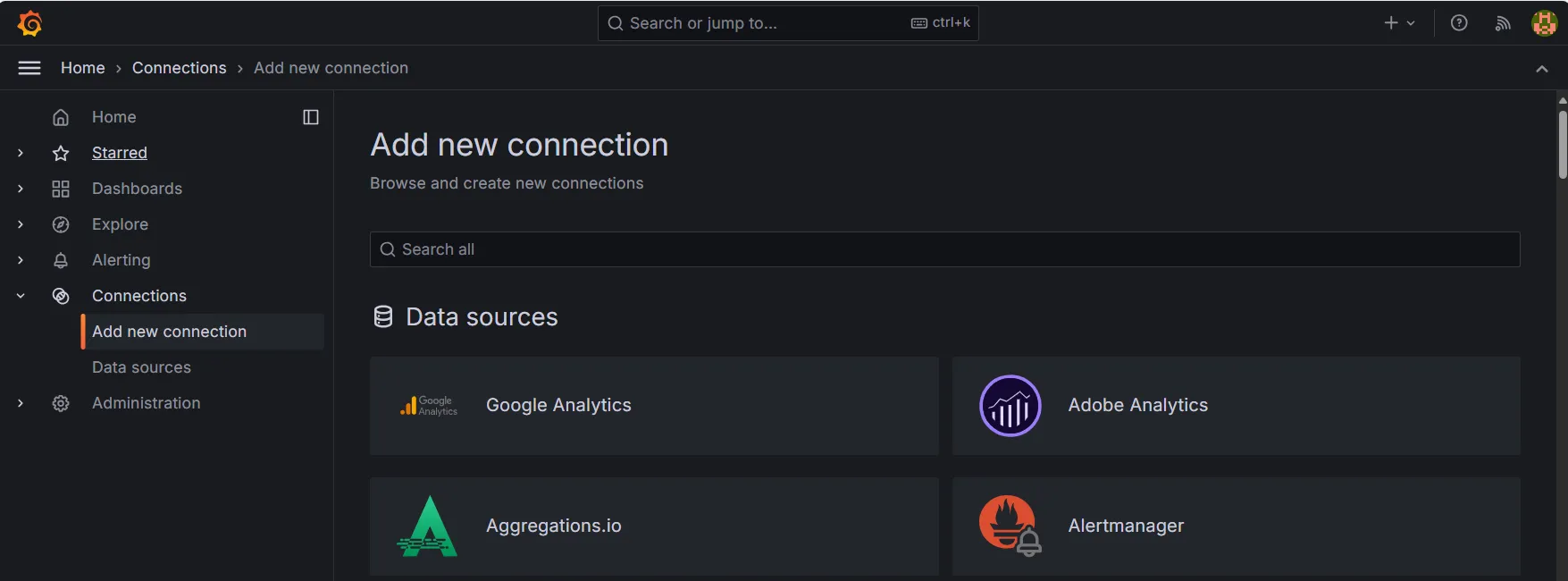
On the navigation menu, click Connections > Add new connection. On this page, you can search for Microsoft SQL Server and select it as your data source.
-
Select Microsoft SQL Server and click Add new data source.

-
Enter a name for the new data source and then enter the following connection settings:
- Host: tds.cdata.com:14333
- Database: enter the Connection Name of the CData Connect Cloud data source you want to connect to (for example, Domino1).
- Username: enter your CData Connect Cloud username. This is displayed in the top-right corner of the CData Connect Cloud interface. For example, [email protected].
- Password: enter the PAT you previously generated.
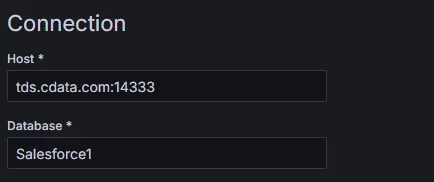
- Click Save & Test. A Database Connect OK message appears when you have a successful connection established.
Create a Dashboard
Once you create the data source for HCL Domino, you can start building dashboards on HCL Domino data. Start in the navigation menu and click Dashboards
- On the Dashboards page, click + Create dashboard, then click + Add visualization.
-
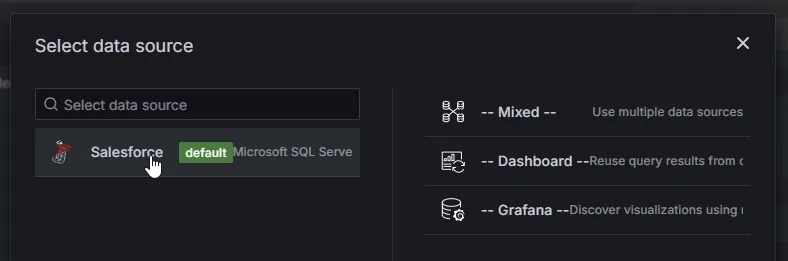
This opens the Select data source window where you can select your created connection.
-
After selecting your connection, you can choose the tables and columns that you want to query for your visualization. Then press Run Query to run the generated query.
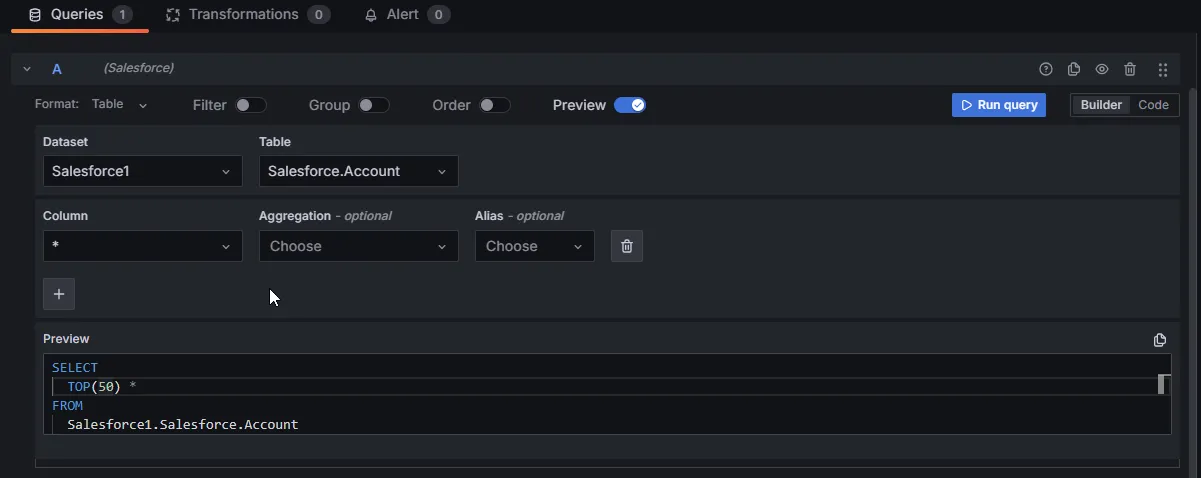
-
After running your query, the resulting data is populated above the query editor. Here you can select the visualization that you want to use to present your data on the dashboard panel.
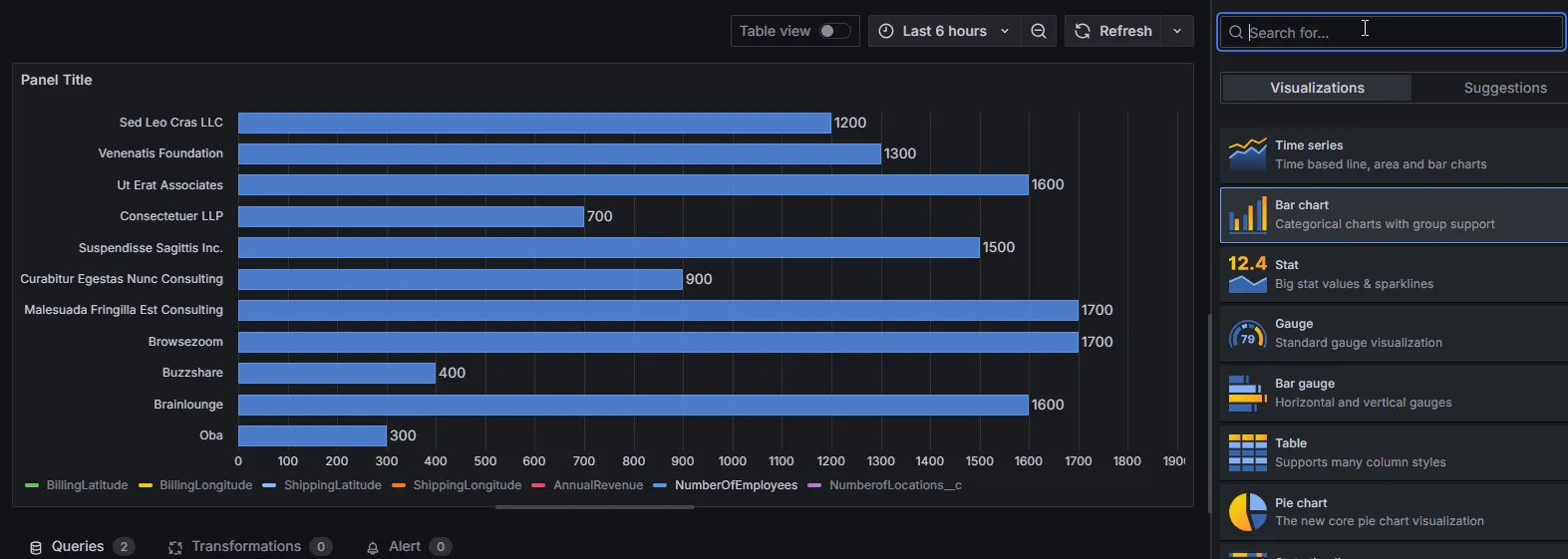
- When you have finished editing your panel, you can click Save dashboard to save the changes made to your Dashboard.
To get live data access to 100+ SaaS, Big Data, and NoSQL sources directly from your cloud applications, try CData Connect Cloud today!
