
Model Context Protocol (MCP) finally gives AI models a way to access the business data needed to make them really useful at work. CData MCP Servers have the depth and performance to make sure AI has access to all of the answers.
Try them now for free →


Connect to Sage Intacct Data in RapidMiner
Integrate Sage Intacct data with standard components and data source configuration wizards in RapidMiner Studio.
This article shows how you can easily integrate the CData JDBC driver for Sage Intacct into your processes in RapidMiner. This article uses the CData JDBC Driver for Sage Intacct to transfer Sage Intacct data to a process in RapidMiner.
About Sage Intacct Data Integration
CData provides the easiest way to access and integrate live data from Sage Intact. Customers use CData connectivity to:
- Access Sage Intacct without worrying about API updates or changes.
- Access custom objects and fields in Sage Intacct with no extra configuration steps involved.
- Write data back to Sage Intacct using embedded Web Services credentials with Basic authentication.
- Use SQL stored procedures to perform functional operations like approving or declining vendors, inserting engagements, and creating or deleting custom objects or fields.
Users frequently integrate Sage Intact with analytics tools such as Tableau, Power BI, and Excel, and leverage our tools to replicate Workday data to databases or data warehouses.
To learn about how other customers are using CData's Sage Intacct solutions, check out our blog: Drivers in Focus: Accounting Connectivity.
Getting Started
Connect to Sage Intacct in RapidMiner as a JDBC Data Source
You can follow the procedure below to establish a JDBC connection to Sage Intacct:
- Add a new database driver for Sage Intacct: Click Connections -> Manage Database Drivers.
- In the resulting wizard, click the Add button and enter a name for the connection.
- Enter the prefix for the JDBC URL:
jdbc:sageintacct:
- Enter the path to the cdata.jdbc.sageintacct.jar file, located in the lib subfolder of the installation directory.
- Enter the driver class:
cdata.jdbc.sageintacct.SageIntacctDriver
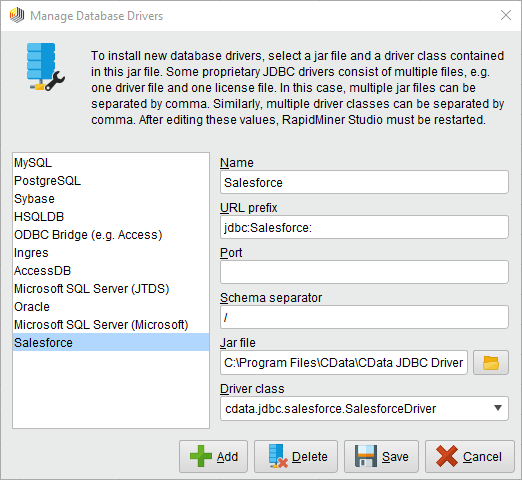
- Create a new Sage Intacct connection: Click Connections -> Manage Database Connections.
- Enter a name for your connection.
- For Database System, select the Sage Intacct driver you configured previously.
- Enter your connection string in the Host box.
To connect using the Login method, the following connection properties are required: User, Password, CompanyId, SenderId and SenderPassword.
User, Password, and CompanyId are the credentials for the account you wish to connect to.
SenderId and SenderPassword are the Web Services credentials assigned to you by Sage Intacct.
Built-in Connection String Designer
For assistance in constructing the JDBC URL, use the connection string designer built into the Sage Intacct JDBC Driver. Either double-click the JAR file or execute the jar file from the command-line.
java -jar cdata.jdbc.sageintacct.jar
Fill in the connection properties and copy the connection string to the clipboard.
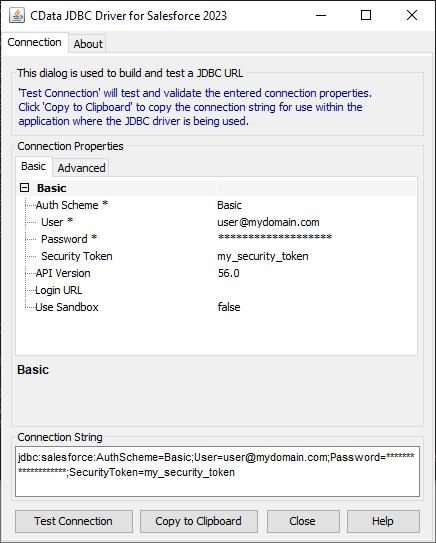
A typical connection string is below:
User=myusername;CompanyId=TestCompany;Password=mypassword;SenderId=Test;SenderPassword=abcde123;
- Enter your username and password if necessary.
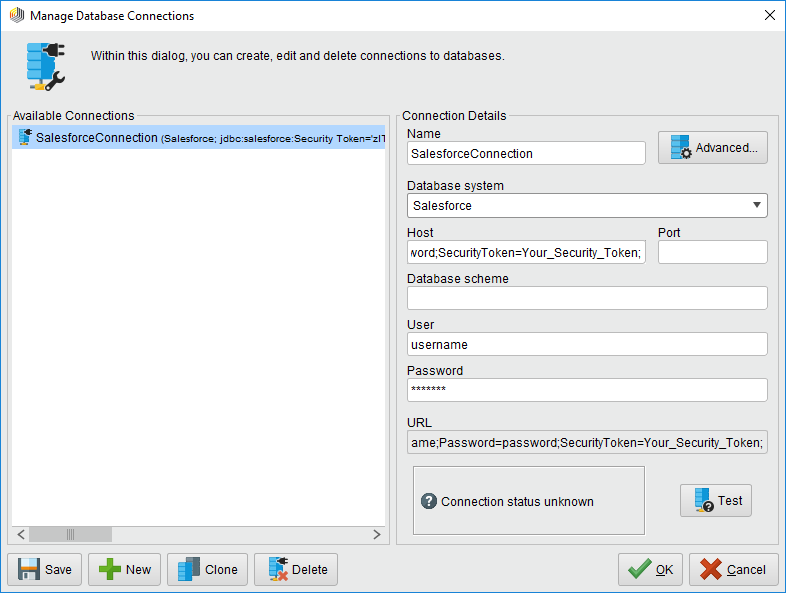
You can now use your Sage Intacct connection with the various RapidMiner operators in your process. To retrieve Sage Intacct data, drag the Retrieve operator from the Operators view.
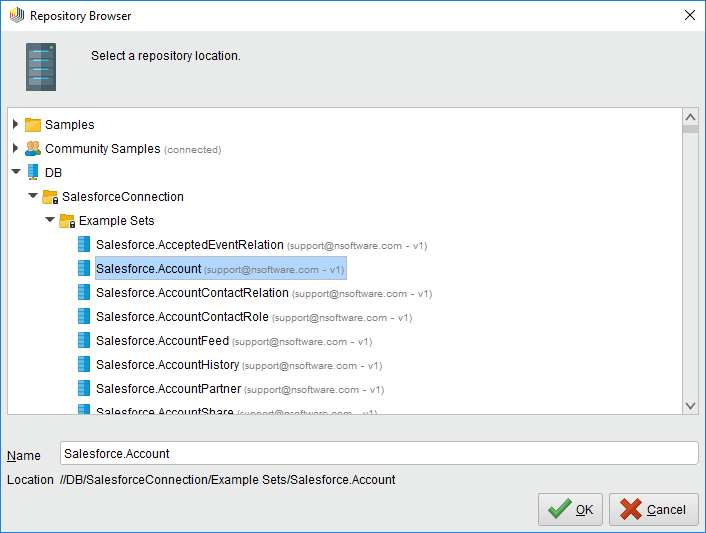 With the Retrieve operator selected, you can then define which table to retrieve in the Parameters view by clicking the folder icon next to the "repository entry." In the resulting Repository Browser, you can expand your connection node to select the desired example set.
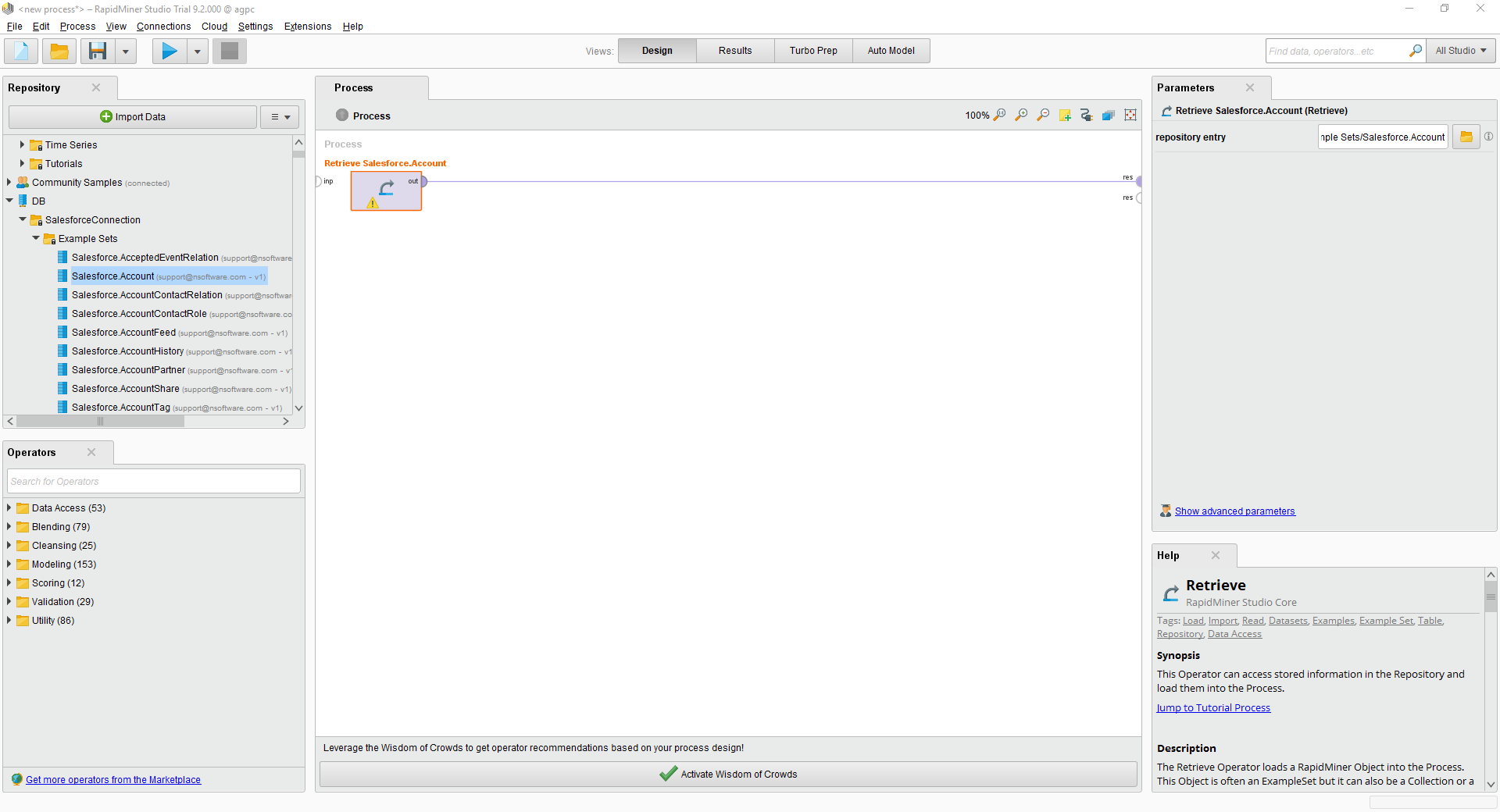
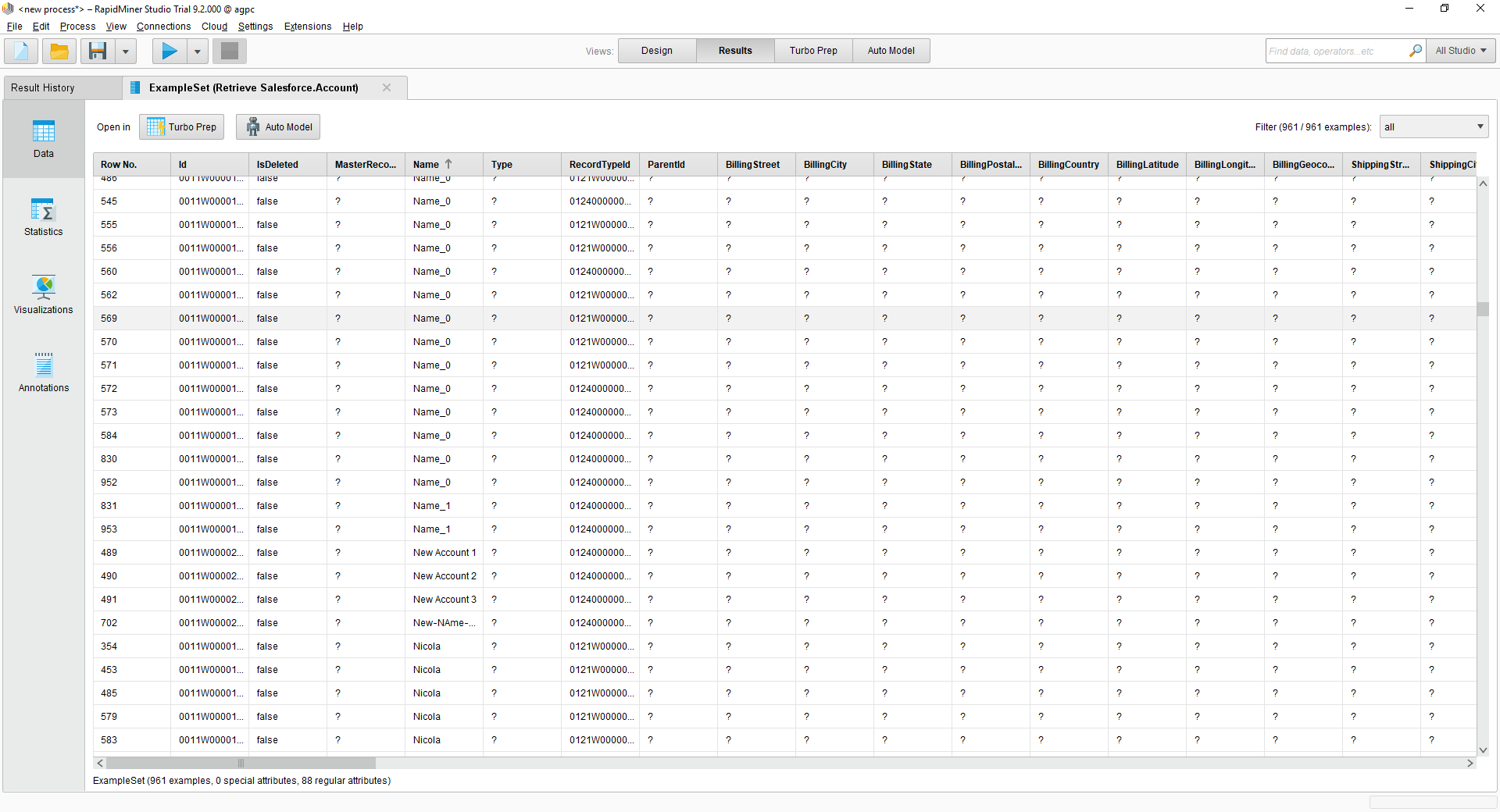
Finally, wire the output to the Retrieve process to a result, and run the process to see the Sage Intacct data.
Ready to get started?
Download a free trial of the Intacct Driver to get started:
Download NowLearn more:
 Intacct JDBC Driver
Complete read-write access to Intacct enables developers to search (Contacts, Invoices, Transactions, Vendors, etc.), update items, edit customers, and more, from any Java/J2EE application.
