
Model Context Protocol (MCP) finally gives AI models a way to access the business data needed to make them really useful at work. CData MCP Servers have the depth and performance to make sure AI has access to all of the answers.
Try them now for free →


Connect to Okta Data Using the Script Function in Claris FileMaker Pro
Use the CData ODBC Driver for Okta and the Script function in FileMaker Pro to connect to Okta and work with Okta data in your FileMaker application.
Claris FileMaker is a low-code database application development tool that enables users to create custom apps for managing and organizing data. It combines a powerful relational database engine with an intuitive interface, allowing both technical and non-technical users to design and deploy applications across desktop, web, and mobile platforms.
In this article, we'll explore how to use the CData ODBC Driver for Okta and FileMaker scripting to connect to Okta data.
Create an ODBC Data Source for Okta
If you have not already, first specify connection properties in an ODBC DSN (data source name). This is the last step of the driver installation. You can use the Microsoft ODBC Data Source Administrator to create and configure ODBC DSNs.
To connect to Okta, set the Domain connection string property to your Okta domain.
You will use OAuth to authenticate with Okta, so you need to create a custom OAuth application.
Creating a Custom OAuth Application
From your Okta account:
- Sign in to your Okta developer edition organization with your administrator account.
- In the Admin Console, go to Applications > Applications.
- Click Create App Integration.
- For the Sign-in method, select OIDC - OpenID Connect.
- For Application type, choose Web Application.
- Enter a name for your custom application.
- Set the Grant Type to Authorization Code. If you want the token to be automatically refreshed, also check Refresh Token.
- Set the callback URL:
- For desktop applications and headless machines, use http://localhost:33333 or another port number of your choice. The URI you set here becomes the CallbackURL property.
- For web applications, set the callback URL to a trusted redirect URL. This URL is the web location the user returns to with the token that verifies that your application has been granted access.
- In the Assignments section, either select Limit access to selected groups and add a group, or skip group assignment for now.
- Save the OAuth application.
- The application's Client Id and Client Secret are displayed on the application's General tab. Record these for future use. You will use the Client Id to set the OAuthClientId and the Client Secret to set the OAuthClientSecret.
- Check the Assignments tab to confirm that all users who must access the application are assigned to the application.
- On the Okta API Scopes tab, select the scopes you wish to grant to the OAuth application. These scopes determine the data that the app has permission to read, so a scope for a particular view must be granted for the driver to have permission to query that view. To confirm the scopes required for each view, see the view-specific pages in Data Model < Views in the Help documentation.
When you configure the DSN, you may also want to set the Max Rows connection property. This will limit the number of rows returned, which is especially helpful for improving performance when designing reports and visualizations.
Connect and Sync Okta data with FileMaker Using Scripts
In this section, we walk through the steps to connect live Okta data to FileMaker using the CData ODBC Driver for Okta and the Script function. During the initial import, FileMaker brings in all data from the external data source. From the second import onward, it updates only the data that has changed in the external source (a differential update). You can also replace the data in the current record order and schedule these differential updates for automated syncing.
You can download and install the latest version of FileMaker Pro for your Mac/Windows/Linux systems from this link.
Connect and sync Okta data with FileMaker using scripts
Scripting in FileMaker automates complex tasks and workflows by running a sequence of actions with a single command. By using scripting to integrate with Okta, you can automatically connect to, import, update, and replace Okta data within your FileMaker applications, streamlining data management and improving efficiency.
First-time importing and adding Okta data using script
In this section, we'll use scripts to import Okta data into FileMaker by following these steps:
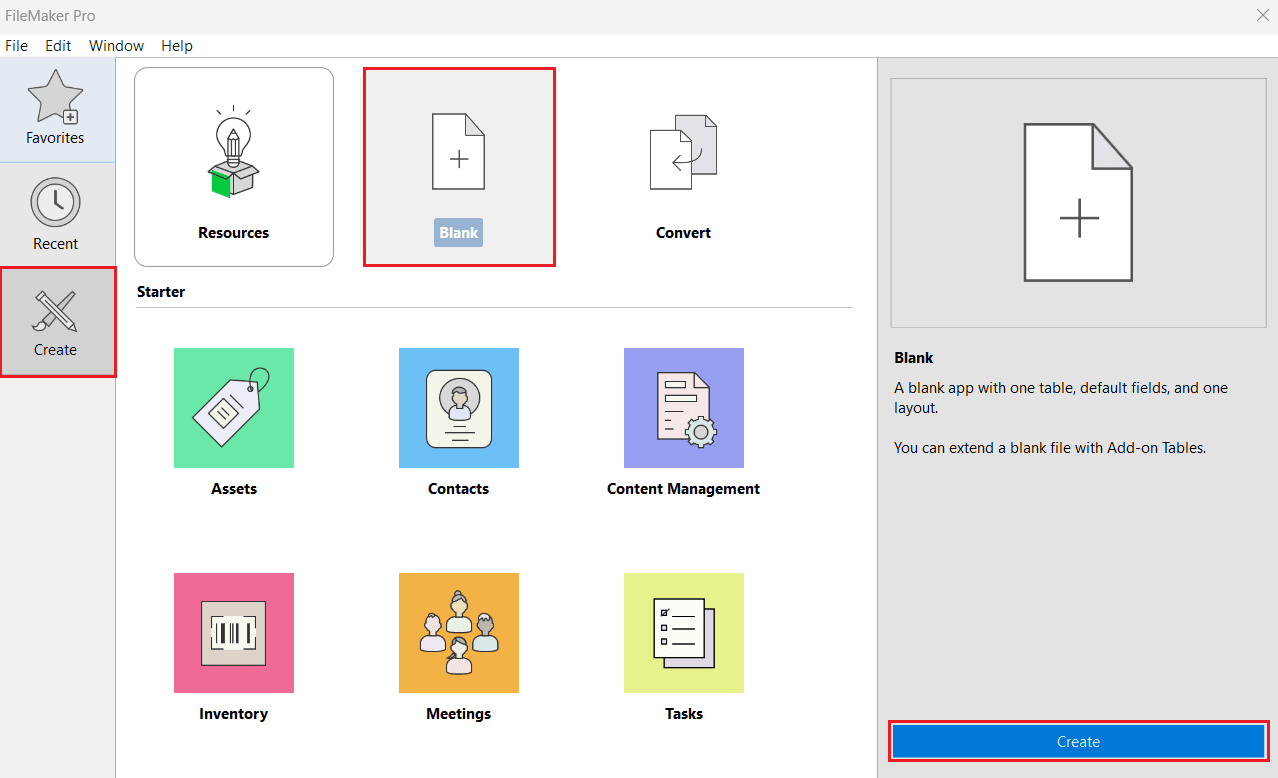
- Open FileMaker Pro. Navigate to Create from the left panel and select Blank > Create.
- Enter a filename of your choice and click Save.
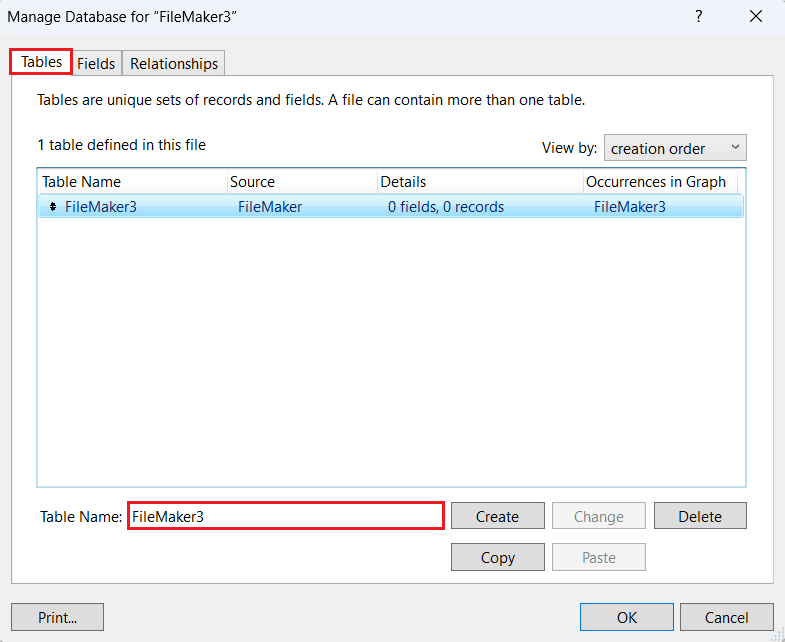
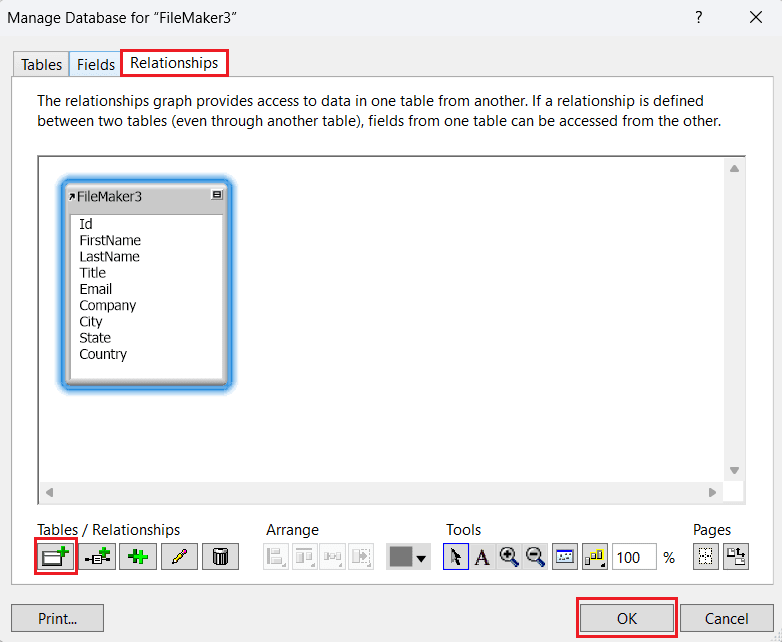
- In the Manage Database window, go to the Tables tab and create or rename the table where you want to display the Okta data.
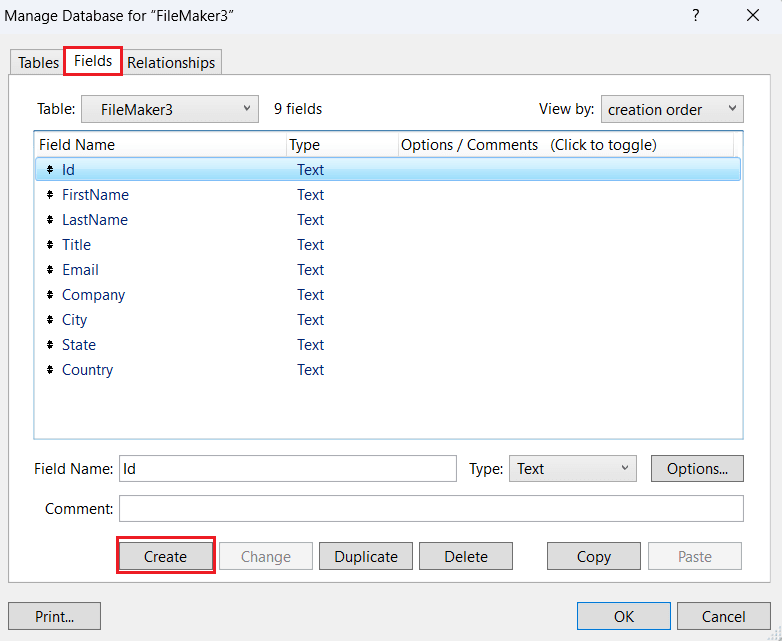
- In the Fields tab, create and add the fields you want to use in the table.
- In the Relationships tab, add table relationships if there are multiple tables, then click OK.
- To reopen and modify the table structure, go to File > Manage > Database.
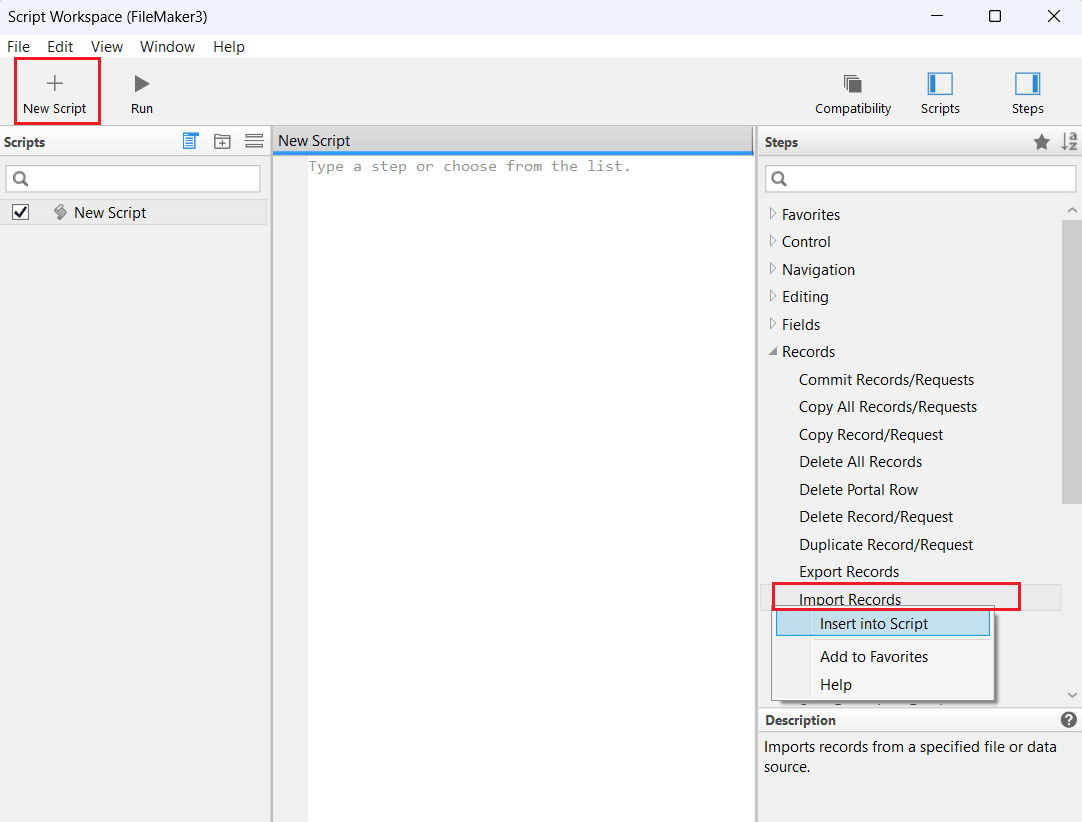
- Navigate to Scripts > Script Workspace.
- Select New Script to open a new script workspace.
- From the Steps panel on the right, select Records > Import Records > Insert into Script.
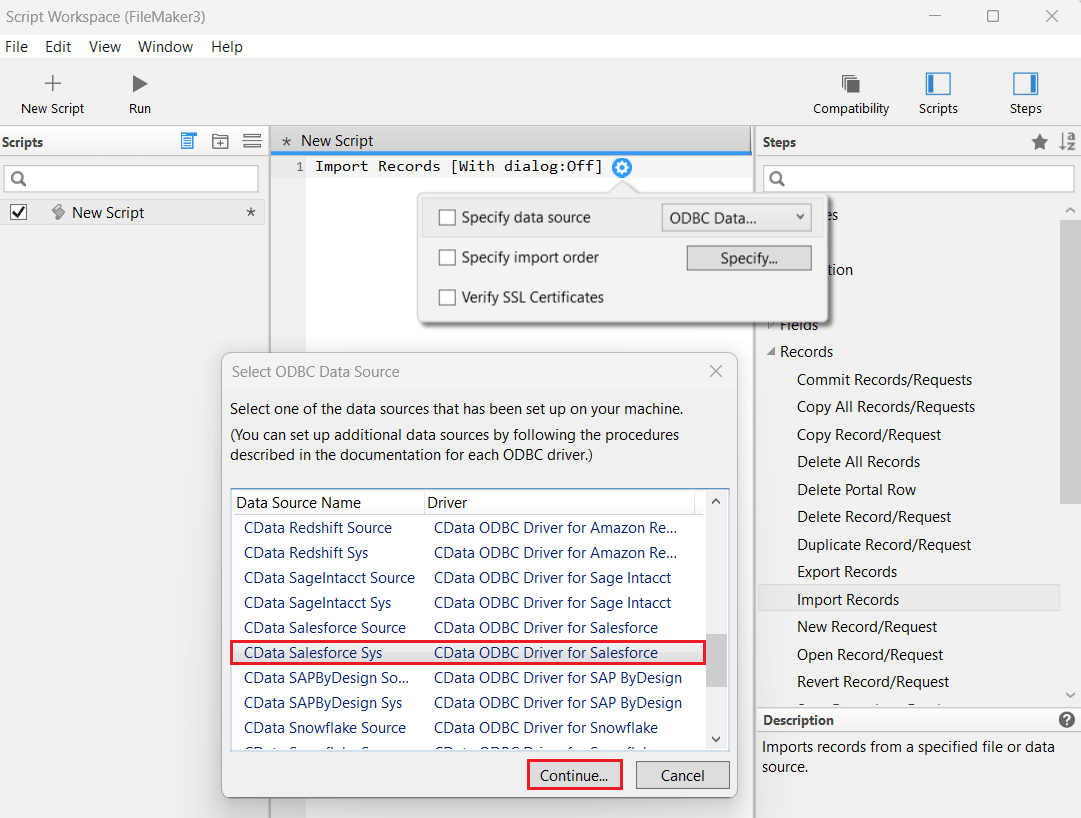
- In the Specify Data Source dropdown, choose ODBC Data.
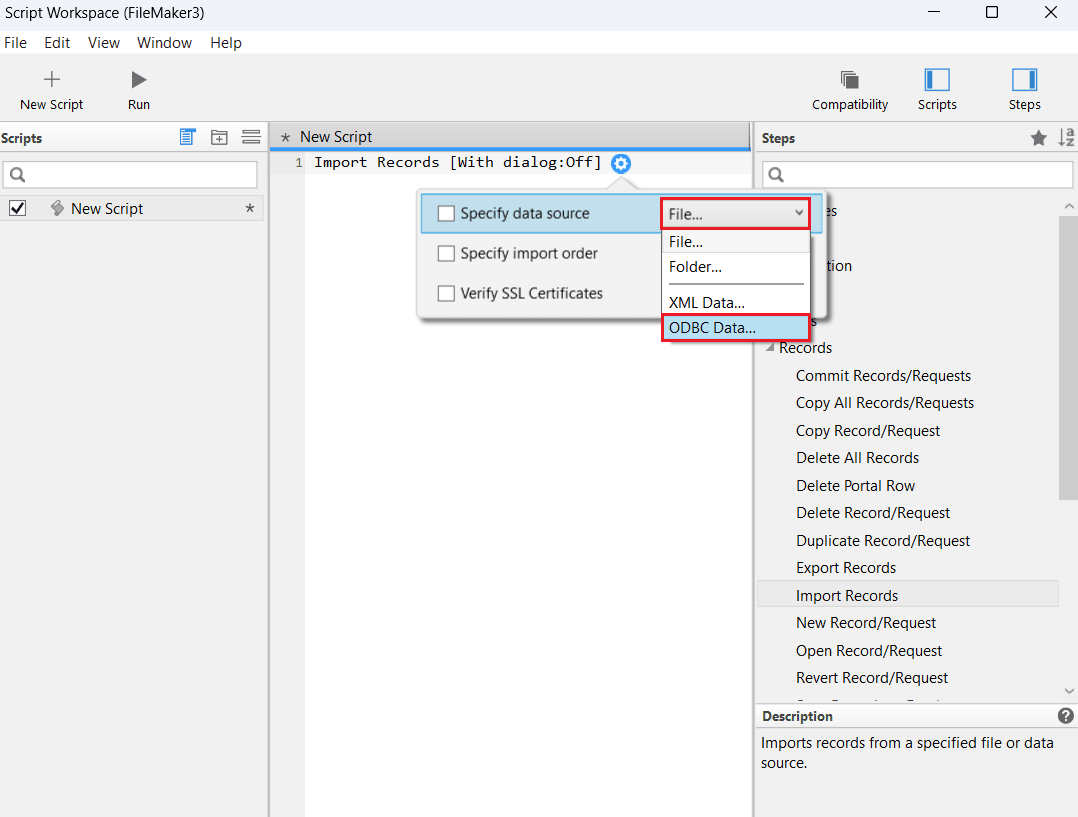
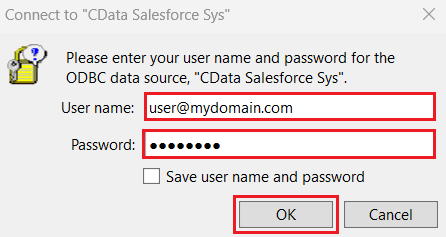
- Select CData Okta Sys from the Select ODBC Data Source window, and click Continue. Enter your Okta credentials and click OK.
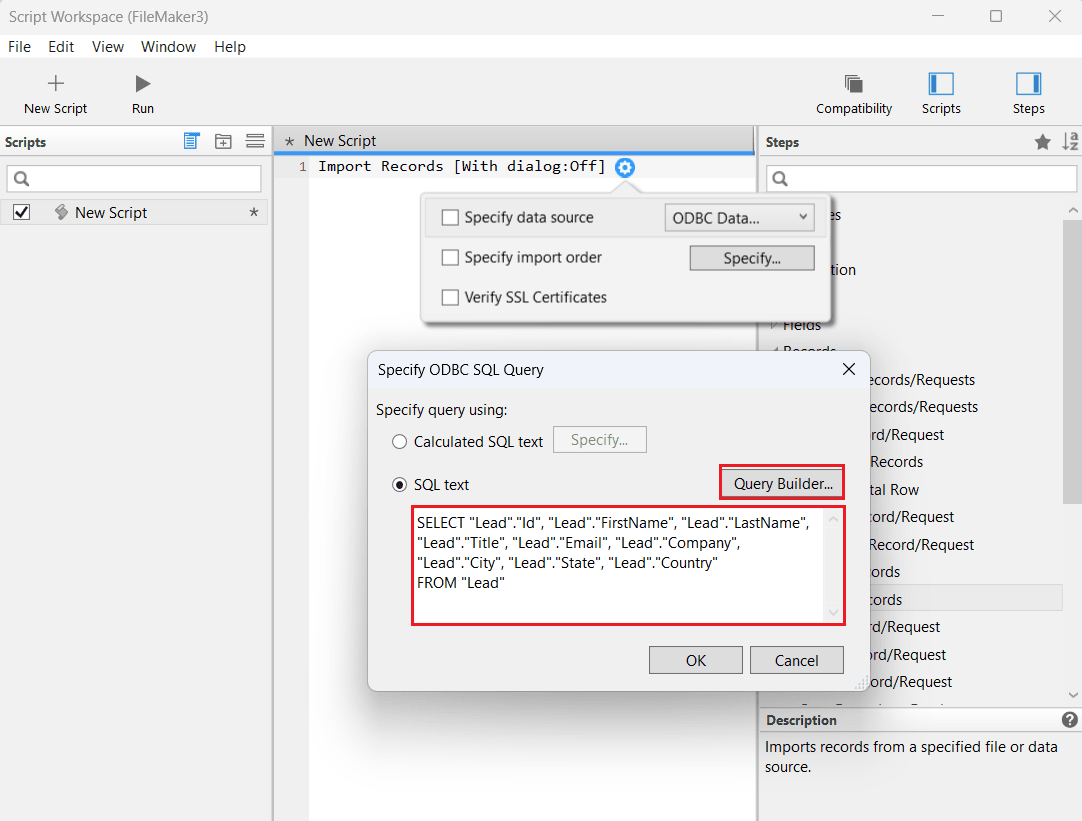
- In the Specify ODBC SQL Query dialog, enter the SQL query in the SQL text editor to import the desired Okta data.
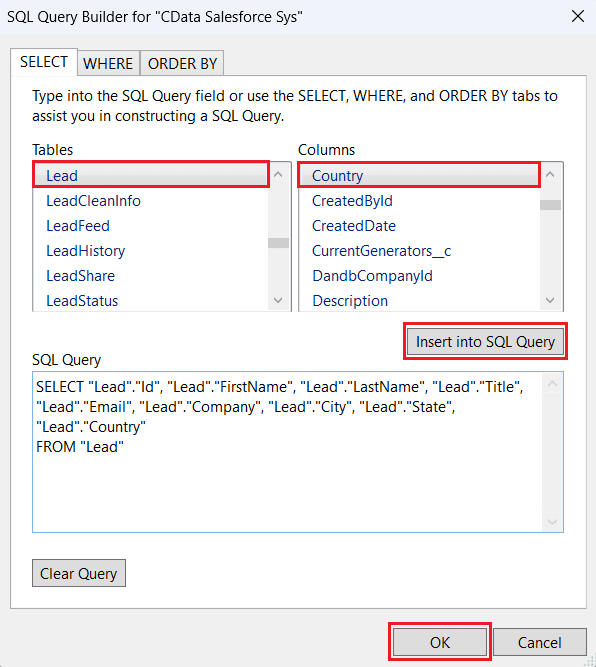
- Alternatively, select Query Builder to open the SQL Query Builder window. Choose the target table from the Tables section and relevant columns from the Columns section. Click Insert into SQL Query after each selection to auto-generate the query. You can also manually edit the query using WHERE and ORDER BY clauses or the designated tabs. Click OK to finalize the query.
- Click OK.
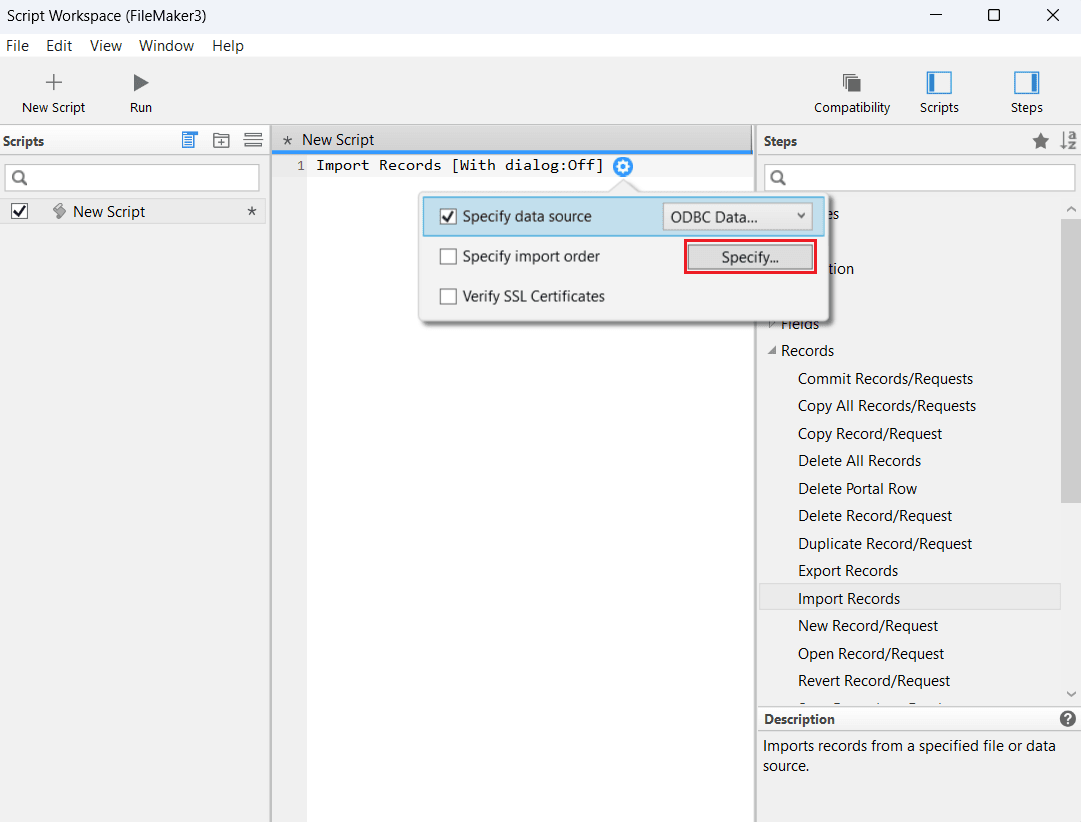
- In the Specify import order option, click Specify and enter the Okta credentials.
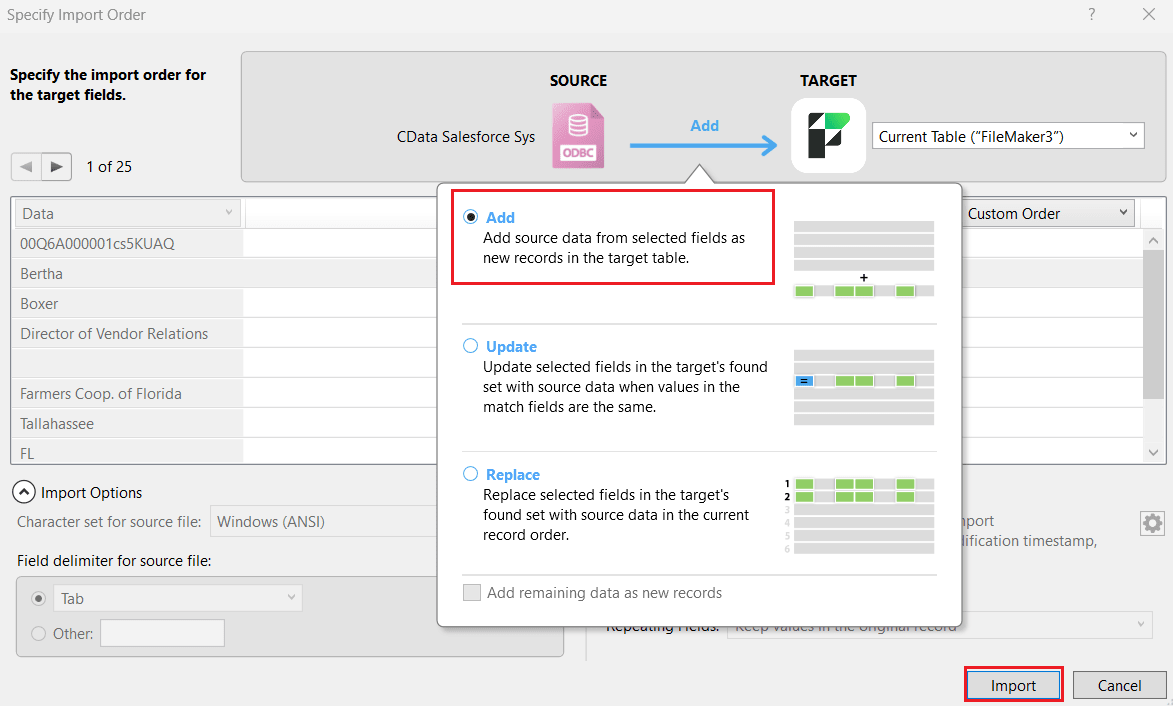
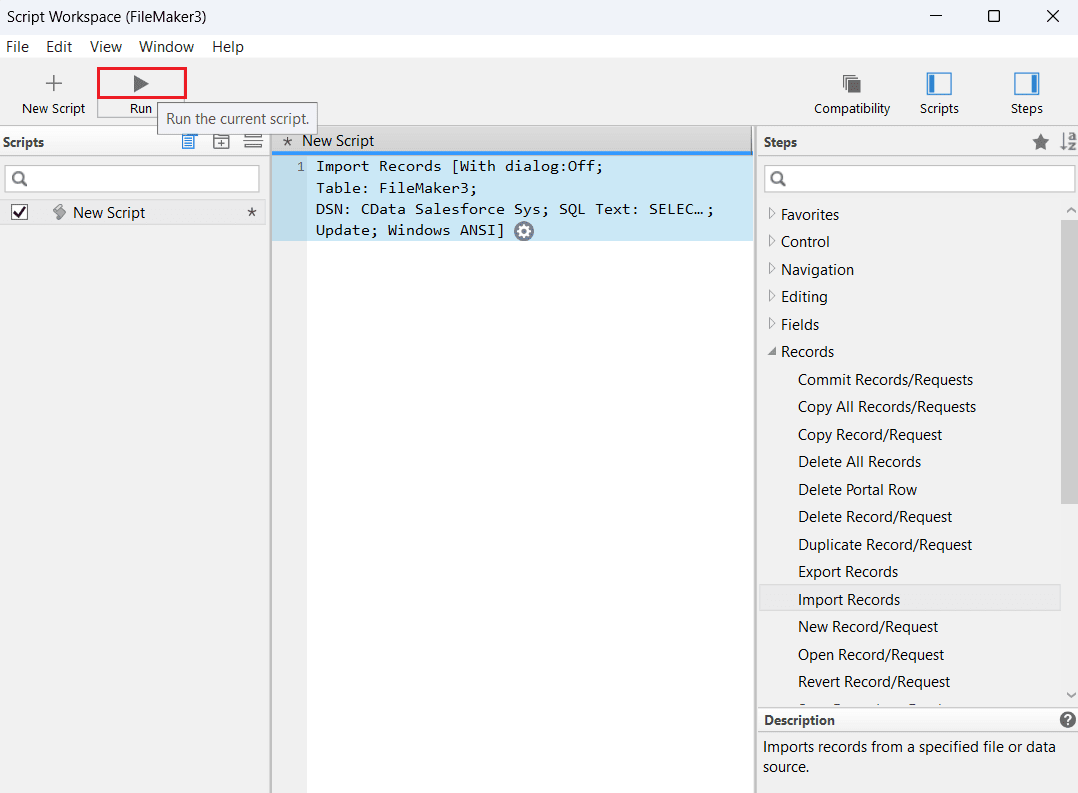
- In the Specify Import Order window, define the import order for the target fields you added earlier. Select Add between the source and target fields to insert the Okta data as new records in the table. Click Import.
- The script now appears in the workspace. Click Run to execute the script and process the import.
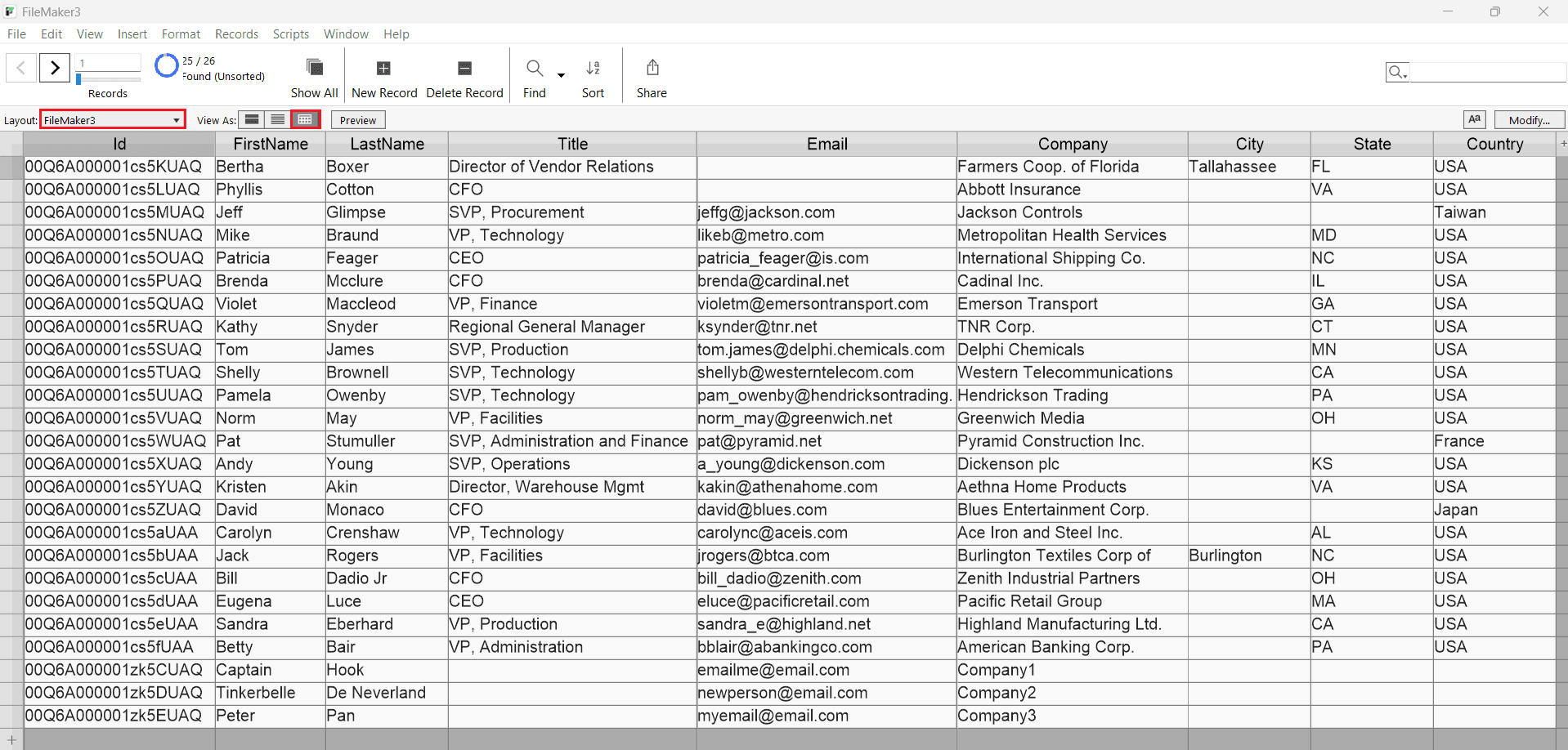
- FileMaker imports the Okta data as a table.

Update or Replace Imported Okta data Using a Script
After importing the Okta data into FileMaker, use scripts to update or replace any changes made in Okta by following this process:
- Go back to the Script Workspace by following the steps mentioned in the earlier section.
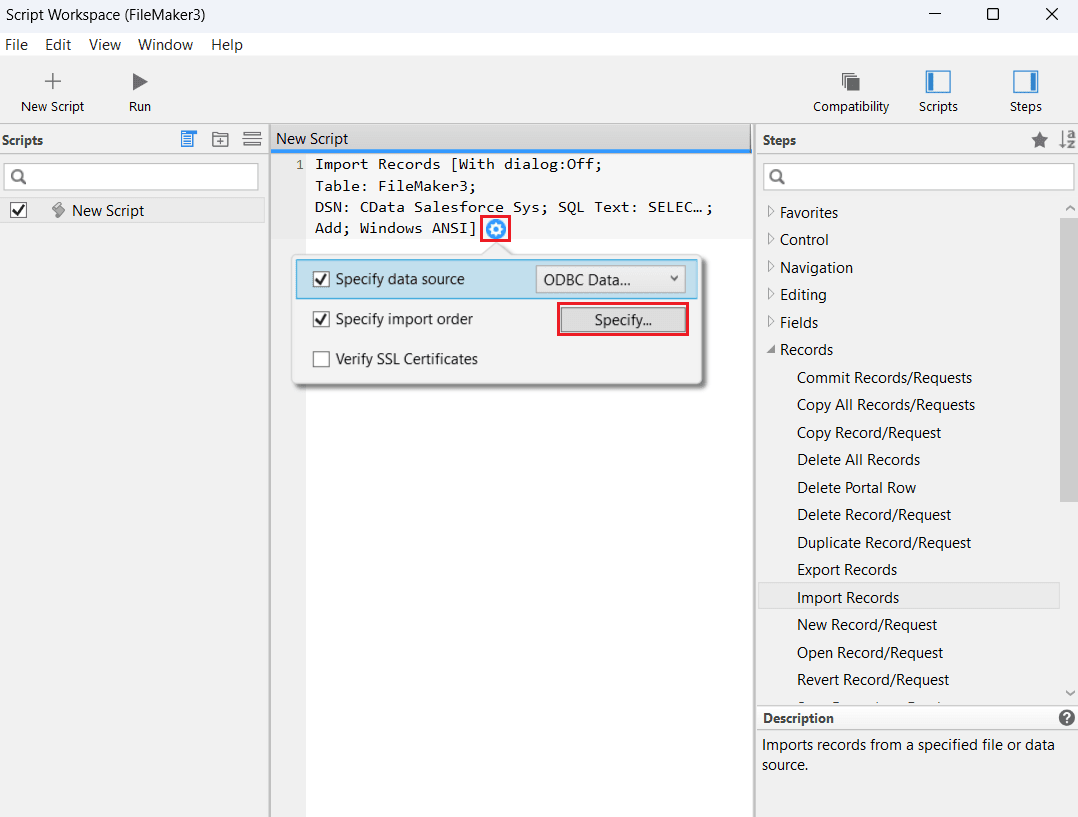
- Select the existing script, click the settings button, choose Specify under Specify Import Order, and re-enter the Okta credentials to authenticate.
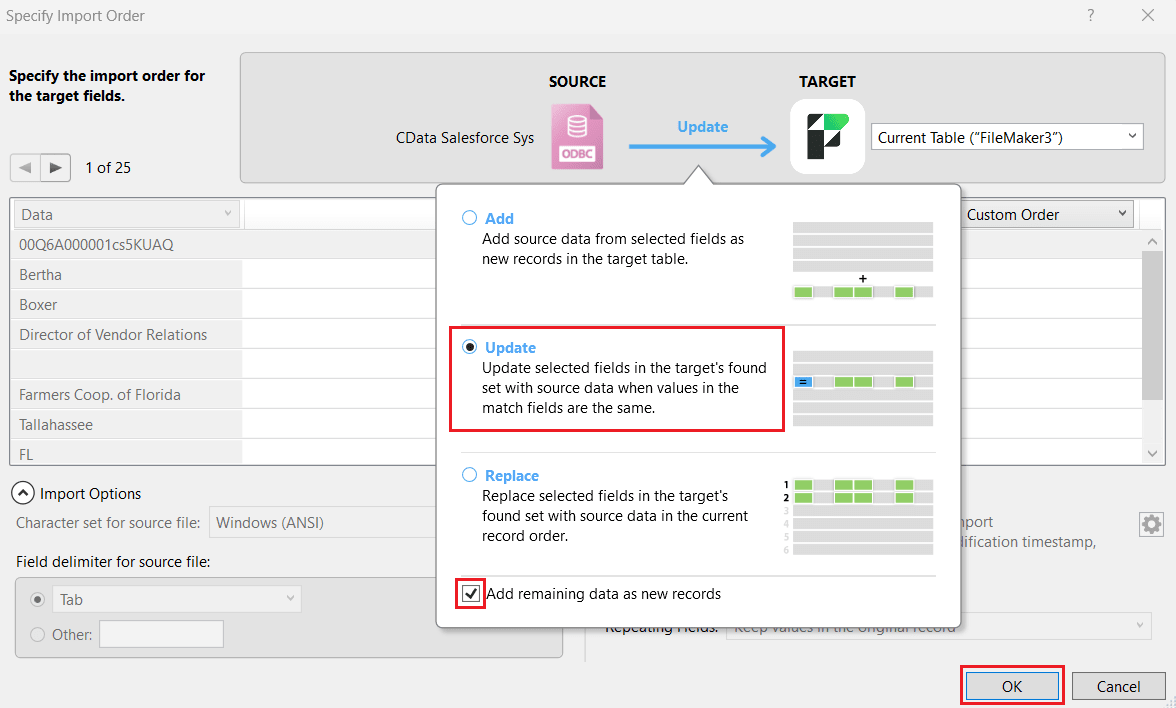
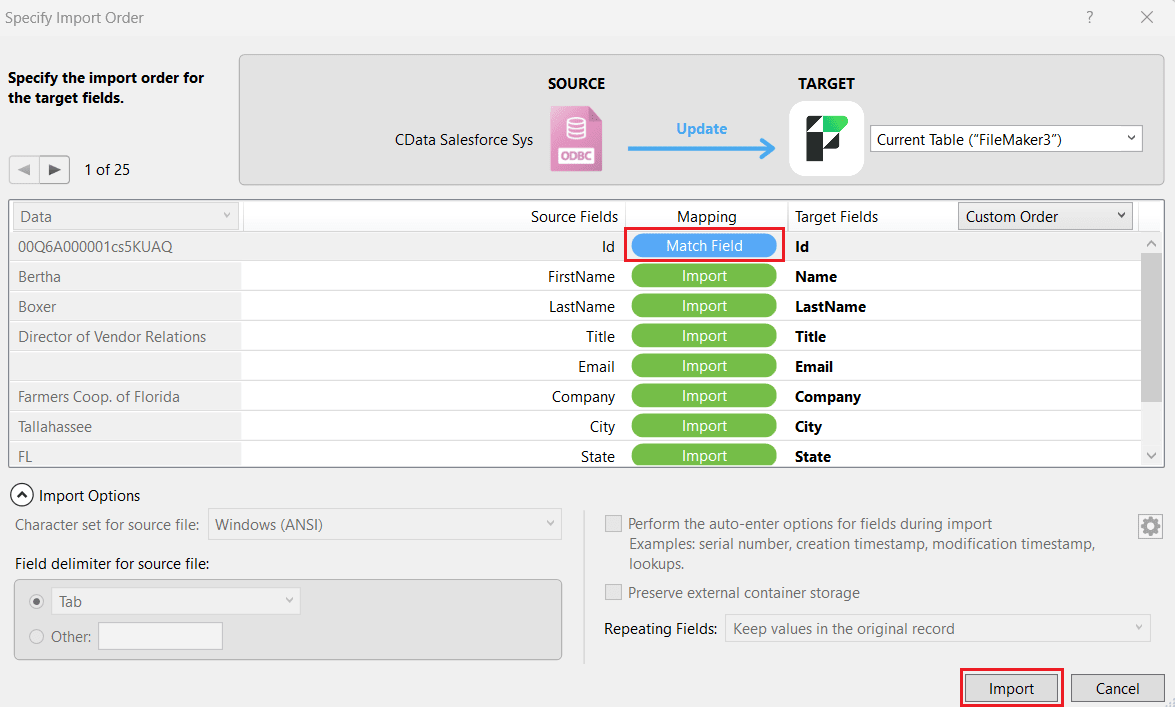
- In the Specify Import Order window, choose Update between source and target to update the imported Okta data. This updates the target's found set with Okta data values from selected fields when the match fields have the same values. You must define at least one match field in the mapping and select the checkbox Add remaining data as new records. Click Import.
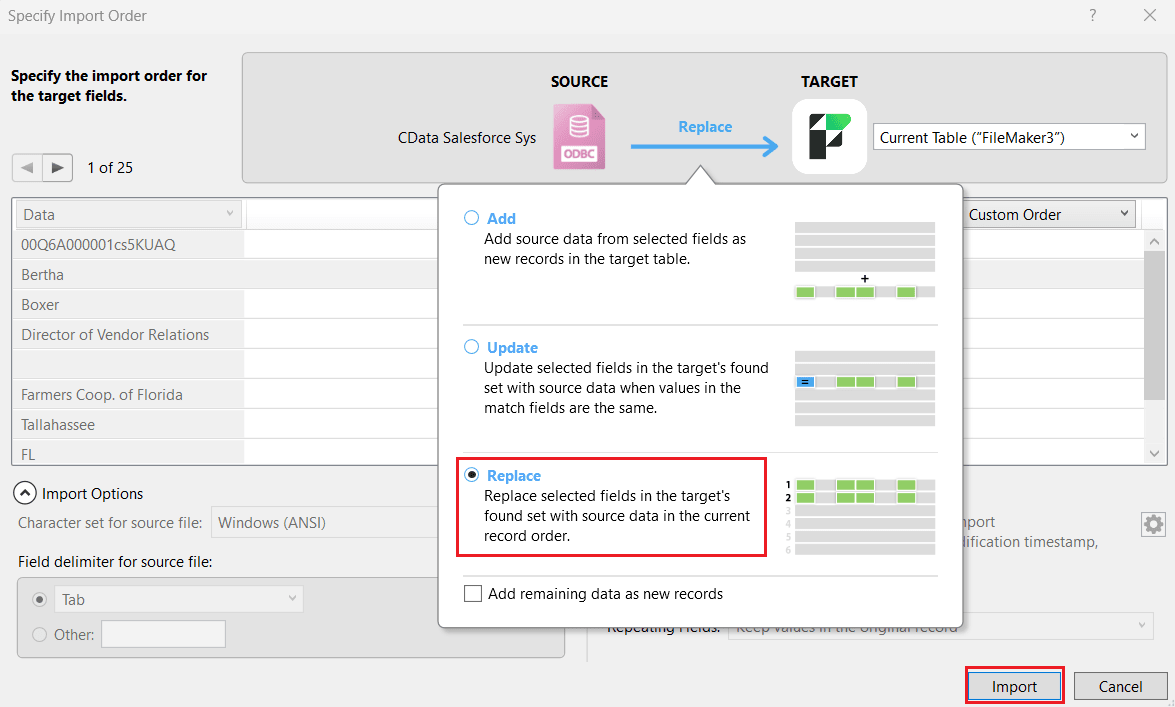
- Alternatively, choose the Replace option instead of Update, based on your use case. This replaces the selected fields in the target's found set with Okta data in the current record order. Click Import.
- FileMaker adds the script to the workspace. Click Run to execute the script and process the import query.
- FileMaker imports the updated or replaced Okta data as a table.
Get Started Today
Download a free 30-day trial of CData ODBC Driver for Okta to integrate Okta data into Claris FileMaker and work with Okta data in your FileMaker applications.
Reach out to our Support Team if you have any questions.
Ready to get started?
Download a free trial of the Okta ODBC Driver to get started:
Download NowLearn more:
 Okta ODBC Driver
The Okta ODBC Driver is a powerful tool that allows you to connect with live data from Okta, directly from any applications that support ODBC connectivity.
Access Okta data like you would a database - read, write, and update Okta 0, etc. through a standard ODBC Driver interface.
