
Model Context Protocol (MCP) finally gives AI models a way to access the business data needed to make them really useful at work. CData MCP Servers have the depth and performance to make sure AI has access to all of the answers.
Try them now for free →


Integrate SQL Analysis Services Data in Pentaho Data Integration
Build ETL pipelines based on SQL Analysis Services data in the Pentaho Data Integration tool.
The CData JDBC Driver for SQL Analysis Services enables access to live data from data pipelines. Pentaho Data Integration is an Extraction, Transformation, and Loading (ETL) engine that data, cleanses the data, and stores data using a uniform format that is accessible.This article shows how to connect to SQL Analysis Services data as a JDBC data source and build jobs and transformations based on SQL Analysis Services data in Pentaho Data Integration.
Configure to SQL Analysis Services Connectivity
To connect, provide authentication and set the Url property to a valid SQL Server Analysis Services endpoint. You can connect to SQL Server Analysis Services instances hosted over HTTP with XMLA access. See the Microsoft documentation to configure HTTP access to SQL Server Analysis Services.
To secure connections and authenticate, set the corresponding connection properties, below. The data provider supports the major authentication schemes, including HTTP and Windows, as well as SSL/TLS.
-
HTTP Authentication
Set AuthScheme to "Basic" or "Digest" and set User and Password. Specify other authentication values in CustomHeaders.
-
Windows (NTLM)
Set the Windows User and Password and set AuthScheme to "NTLM".
-
Kerberos and Kerberos Delegation
To authenticate with Kerberos, set AuthScheme to NEGOTIATE. To use Kerberos delegation, set AuthScheme to KERBEROSDELEGATION. If needed, provide the User, Password, and KerberosSPN. By default, the data provider attempts to communicate with the SPN at the specified Url.
-
SSL/TLS:
By default, the data provider attempts to negotiate SSL/TLS by checking the server's certificate against the system's trusted certificate store. To specify another certificate, see the SSLServerCert property for the available formats.
You can then access any cube as a relational table: When you connect the data provider retrieves SSAS metadata and dynamically updates the table schemas. Instead of retrieving metadata every connection, you can set the CacheLocation property to automatically cache to a simple file-based store.
See the Getting Started section of the CData documentation, under Retrieving Analysis Services Data, to execute SQL-92 queries to the cubes.
Built-in Connection String Designer
For assistance in constructing the JDBC URL, use the connection string designer built into the SQL Analysis Services JDBC Driver. Either double-click the JAR file or execute the jar file from the command-line.
java -jar cdata.jdbc.ssas.jar
Fill in the connection properties and copy the connection string to the clipboard.
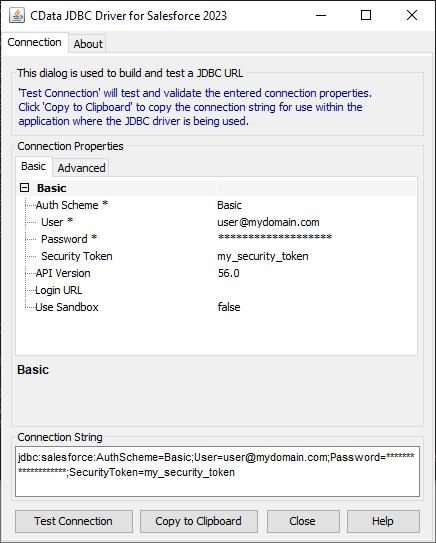
When you configure the JDBC URL, you may also want to set the Max Rows connection property. This will limit the number of rows returned, which is especially helpful for improving performance when designing reports and visualizations.
Below is a typical JDBC URL:
jdbc:ssas:User=myuseraccount;Password=mypassword;URL=http://localhost/OLAP/msmdpump.dll;
Save your connection string for use in Pentaho Data Integration.
Connect to SQL Analysis Services from Pentaho DI
Open Pentaho Data Integration and select "Database Connection" to configure a connection to the CData JDBC Driver for SQL Analysis Services
- Click "General"
- Set Connection name (e.g. SQL Analysis Services Connection)
- Set Connection type to "Generic database"
- Set Access to "Native (JDBC)"
- Set Custom connection URL to your SQL Analysis Services connection string (e.g.
jdbc:ssas:User=myuseraccount;Password=mypassword;URL=http://localhost/OLAP/msmdpump.dll;
- Set Custom driver class name to "cdata.jdbc.ssas.SSASDriver"
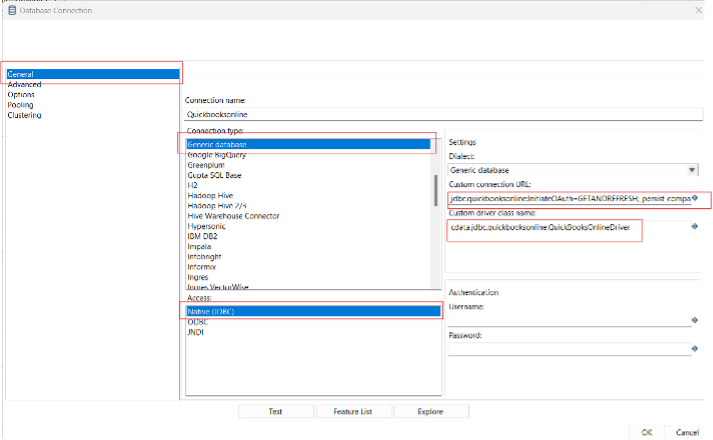
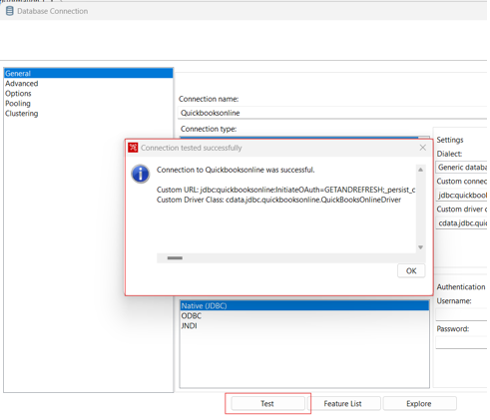
- Test the connection and click "OK" to save.
Create a Data Pipeline for SQL Analysis Services
Once the connection to SQL Analysis Services is configured using the CData JDBC Driver, you are ready to create a new transformation or job.
- Click "File" >> "New" >> "Transformation/job"
- Drag a "Table input" object into the workflow panel and select your SQL Analysis Services connection.
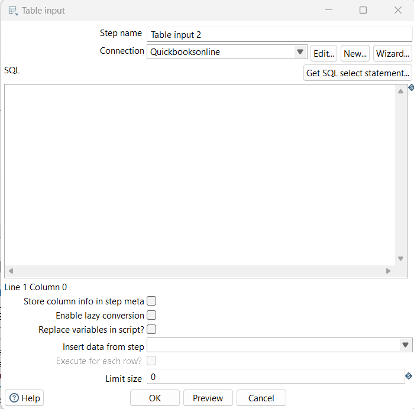
- Click "Get SQL select statement" and use the Database Explorer to view the available tables and views.
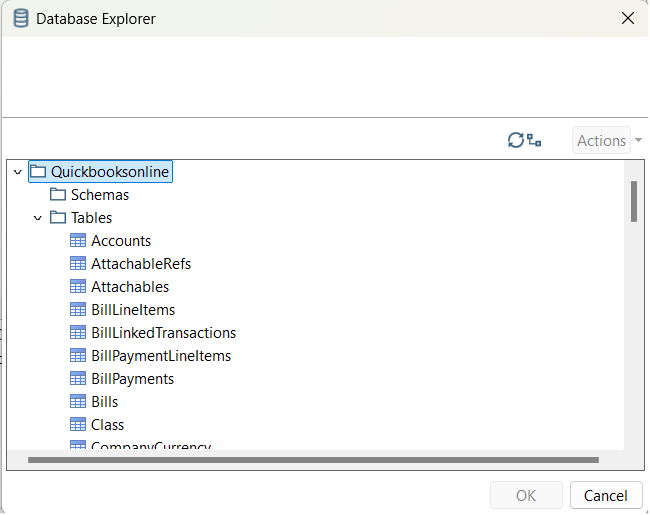
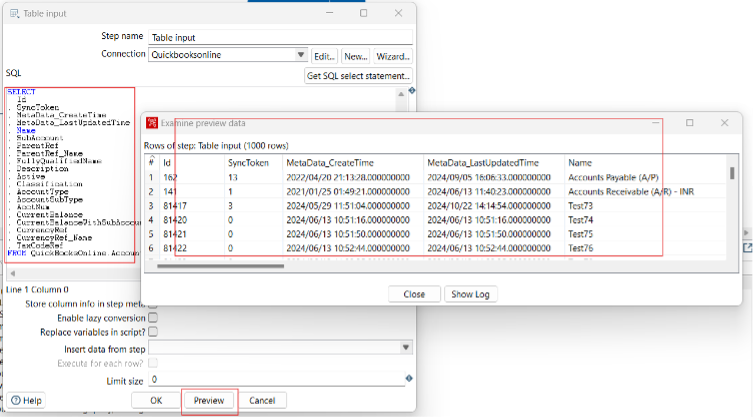
- Select a table and optionally preview the data for verification.
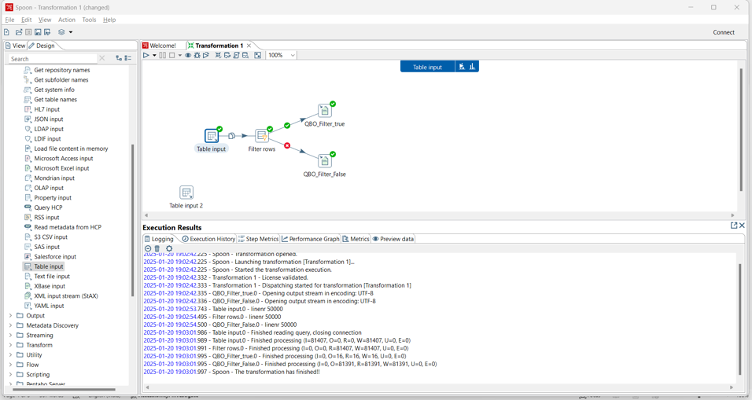
At this point, you can continue your transformation or jb by selecting a suitable destination and adding any transformations to modify, filter, or otherwise alter the data during replication.
Free Trial & More Information
Download a free, 30-day trial of the CData JDBC Driver for SQL Analysis Services and start working with your live SQL Analysis Services data in Pentaho Data Integration today.
Ready to get started?
Download a free trial of the SQL Analysis Services Driver to get started:
Download NowLearn more:
 SQL Analysis Services JDBC Driver
Rapidly create and deploy powerful Java applications that integrate with SQL Analysis Services.
