
Model Context Protocol (MCP) finally gives AI models a way to access the business data needed to make them really useful at work. CData MCP Servers have the depth and performance to make sure AI has access to all of the answers.
Try them now for free →


Automated Continuous NetSuite SuiteAnalytics Replication to Google Cloud SQL
Use CData Sync for automated, continuous, customizable NetSuite SuiteAnalytics replication to Google Cloud SQL.
Always-on applications rely on automatic failover capabilities and real-time data access. CData Sync integrates live NetSuite SuiteAnalytics data into your Google Cloud SQL instance, allowing you to consolidate all of your data into a single location for archiving, reporting, analytics, machine learning, artificial intelligence and more.
Configure Google Cloud SQL as a Replication Destination
Using CData Sync, you can replicate NetSuite SuiteAnalytics data to Google Cloud SQL. To add a replication destination, navigate to the Connections tab. Then select the appropriate destination based on your Google Cloud SQL service (MySQL, PostgreSQL, or SQL Server).
MySQL
- Click Add Connection.
- Select MySQL as a destination.

- Enter the necessary connection properties. To connect to MySQL, set the following:
- Server: The IP address or domain name of the server you want to connect to.
- Port: The port where the server is running.
- User: The username of a user with read/write access to the database.
- Password: The password of a user with read/write access to the database.
- Database: The name of the database.
- Click Test Connection to ensure that the connection is configured properly.

- Click Save Changes.
Jump to configuring the NetSuite SuiteAnalytics connection.
PostgreSQL
- Click Add Connection.
- Select PostgreSQL as a destination.

- Enter the necessary connection properties. To connect to PostgreSQL, set the following connection properties (CData Sync ships with the Npgsql ADO.NET Provider for PostgreSQL):
- Server: The address of the server hosting the PostgreSQL database.
- Port: The port used to connect to the server hosting the PostgreSQL database.
- User: The user ID provided for authentication with the PostgreSQL database.
- Password: The password provided for authentication with the PostgreSQL database.
- Database: The name of the database.
- Click Test Connection to ensure that the connection is configured properly.

- Click Save Changes.
Jump to configuring the NetSuite SuiteAnalytics connection.
SQL Server
- Click Add Connection.
- Select SQL Server as a destination.

- Enter the necessary connection properties. To connect to SQL Server, set the following:
- Server: The name or network address of the computer running SQL Server.
- User: The username provided for authentication with SQL Server, if using forms authentication.
- Password: The password provided for authentication with SQL Server, if using forms authentication.
- Database: The name of the SQL Server database.
Java Edition
The Java version requires the Microsoft SQL Server JDBC driver, which can be downloaded from the Microsoft Download Center. Copy the JDBC driver to the lib folder of your Java Web server to make a connection.
- Click Test Connection to ensure that the connection is configured properly.

- Click Save Changes.
Jump to configuring the NetSuite SuiteAnalytics connection.
Configure the NetSuite SuiteAnalytics Connection
You can configure a connection to NetSuite SuiteAnalytics from the Connections tab. To add a connection to your NetSuite SuiteAnalytics account, navigate to the Connections tab.
- Click Add Connection.
- Select a source (NetSuite SuiteAnalytics).
- Configure the connection properties.
Prerequisites
Before you can connect to NetSuite SuiteAnalytics, you must set up SuiteAnalytics Connect in your NetSuite account:
-
Enable the Connect Service feature.
-
Ensure that your Account Administrator has enabled your Account and Role with the Connect Service feature.
-
Navigate to Setup > Company > Enable Features.
-
Click the Analytics tab and check the SuiteAnalytics Connect box.
-
-
Add the SuiteAnalytics Connect permission to an existing Role.
-
Navigate to Setup > Users/Roles > User Management > Manage Roles.
-
Click Customize next to the name of the role for which you would like to add the SuiteAnalytics Connect permission.
-
Click the Setup tab under the Permissions tab.
-
Add the SuiteAnalytics Connect permission.
-
Click Add and Save.
-
-
Verify the Suite Analytics Connect permissions.
-
Find the Settings portlet on your home page and click Set Up SuiteAnalytics Connect.
-
Click Your Configuration to view your service host and account ID information. These settings map directly to Server and Account ID connection properties.
-
Add the NetSuite SuiteAnalytics Connector
To enable Sync to use data from NetSuite SuiteAnalytics, you first must add the connector, as follows:
-
Open the Connections page of the Sync dashboard.
-
Click Add Connection to open the Select Connectors page.
-
Click the Sources tab and locate the NetSuite SuiteAnalytics row.
-
Click the Configure Connection icon at the end of that row to open the New Connection page. If the Configure Connection icon is not available, click the Download Connector icon to install the NetSuite SuiteAnalytics connector. For more information about installing new connectors, see the Connections section in the Help documentation.
Authenticate to NetSuite SuiteAnalytics
After you add the connector, you need to set the required properties.
-
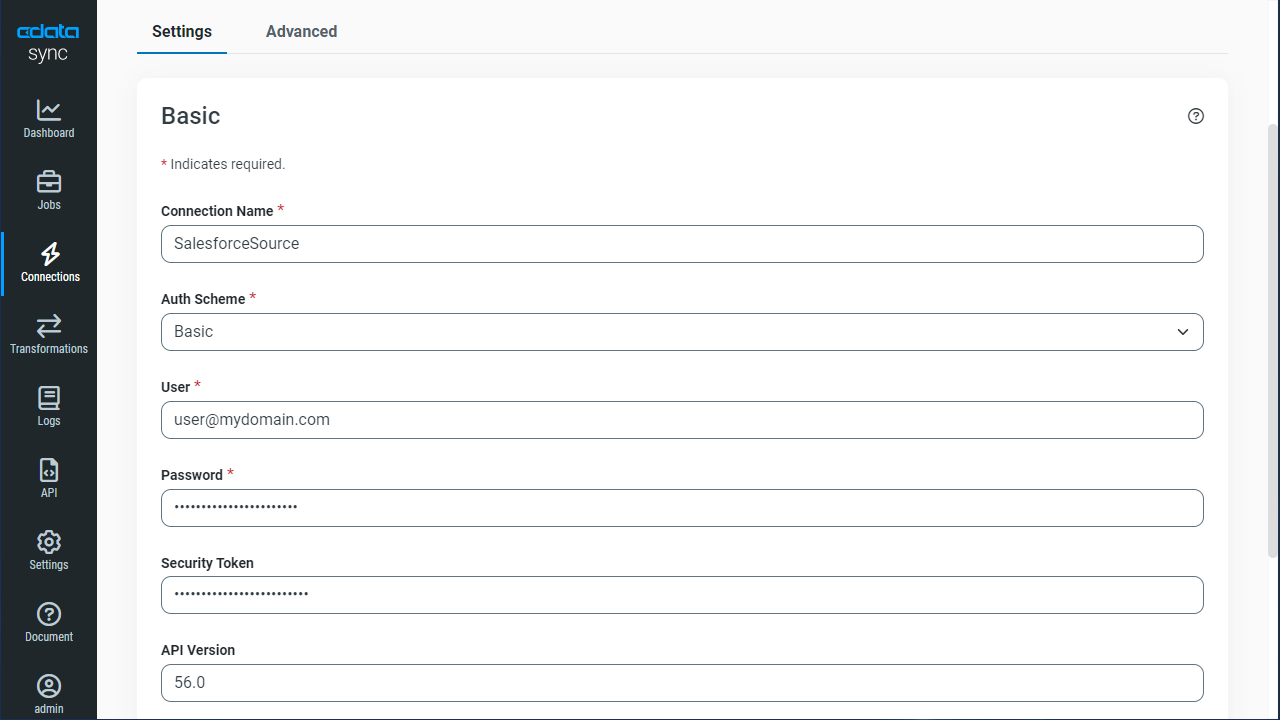
Connection Name - Enter a connection name of your choice.
-
Server - Enter the value of Service Host you previously found.
-
Account Id - Enter the value of Account Id you previously found.
-
Role Id - Enter the Role ID you previously updated.
-
User - Enter the username that you use to authenticate to your NetSuite account.
-
Password - Enter the password associated with that account.
-
- Click Connect to ensure that the connection is configured properly.
- Click Save Changes.
Configure Replication Queries
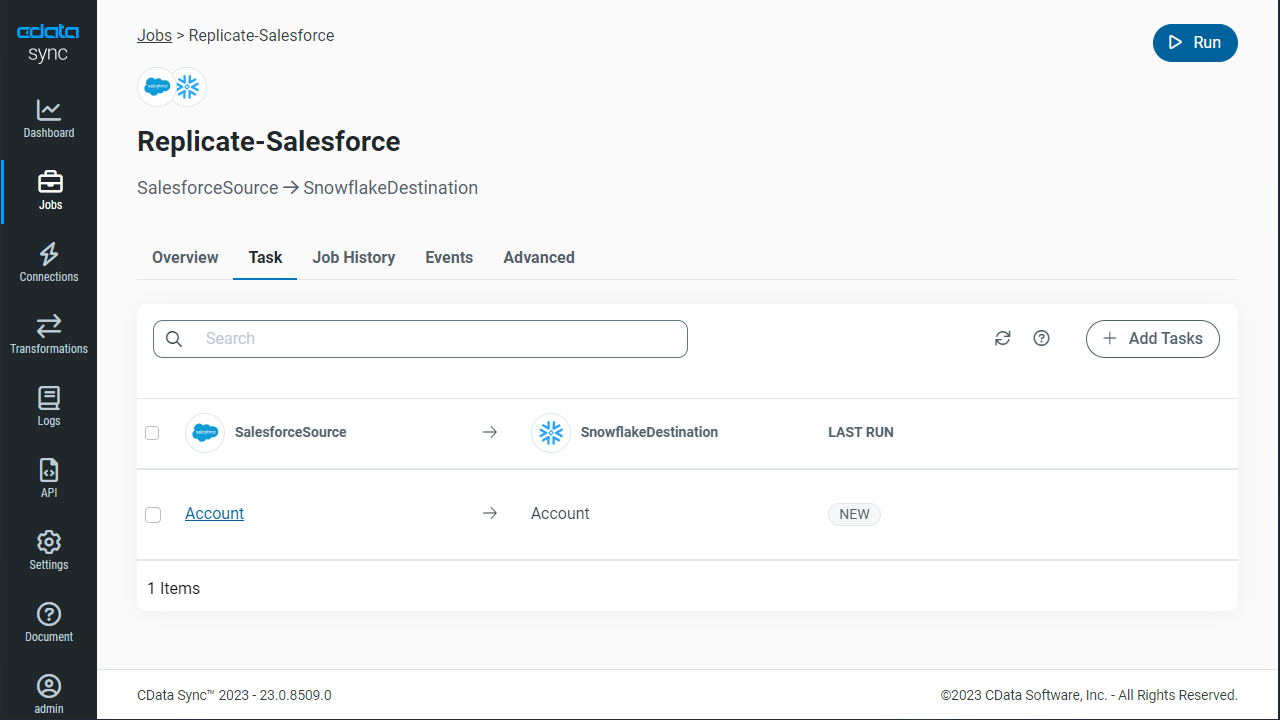
CData Sync enables you to control replication with a point-and-click interface and with SQL queries. For each replication you wish to configure, navigate to the Jobs tab and click Add Job. Select the Source and Destination for your replication.
Replicate Entire Tables
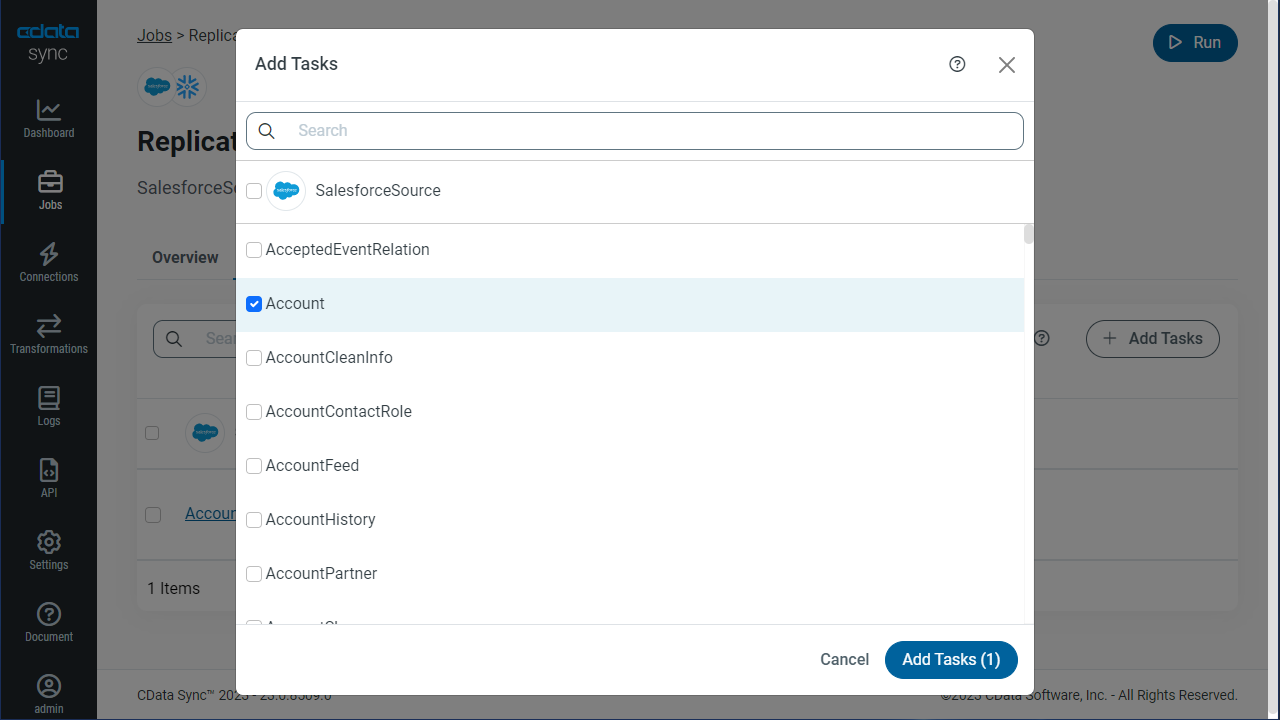
To replicate an entire table, click Add Tables in the Tables section, choose the table(s) you wish to replicate, and click Add Selected Tables.
Customize Your Replication
You can use the Columns and Query tabs of a task to customize your replication. The Columns tab allows you to specify which columns to replicate, rename the columns at the destination, and even perform operations on the source data before replicating. The Query tab allows you to add filters, grouping, and sorting to the replication.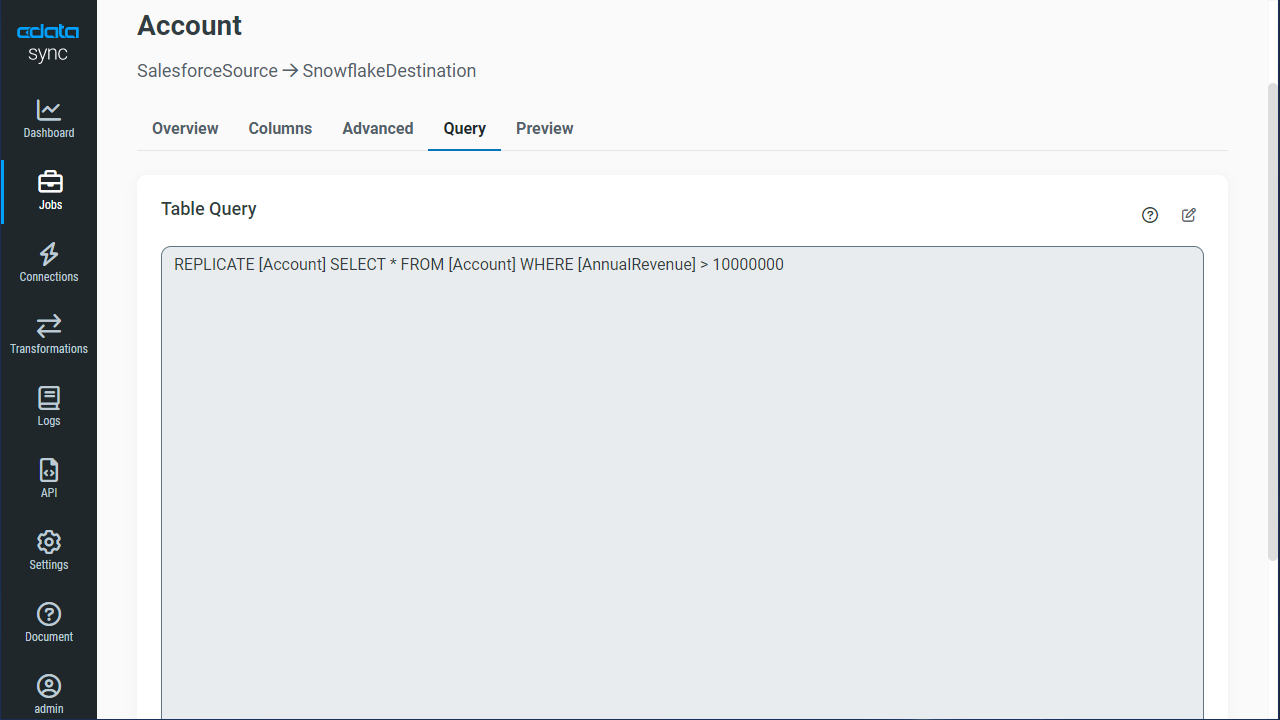
Schedule Your Replication
In the Schedule section, you can schedule a job to run automatically, configuring the job to run after specified intervals ranging from once every 10 minutes to once every month.
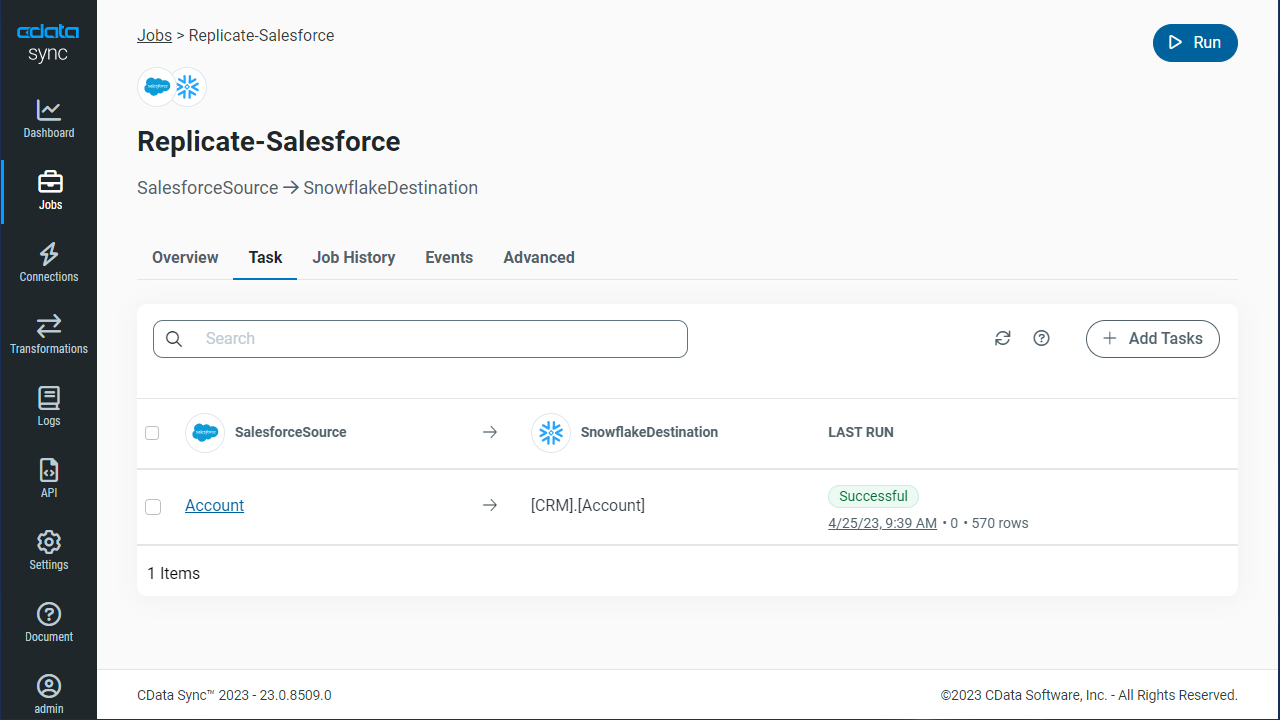
Once you have configured the replication job, click Save Changes. You can configure any number of jobs to manage the replication of your NetSuite SuiteAnalytics data to Google Cloud SQL.
