
Model Context Protocol (MCP) finally gives AI models a way to access the business data needed to make them really useful at work. CData MCP Servers have the depth and performance to make sure AI has access to all of the answers.
Try them now for free →


Connect to XML Data in Claris FileMaker Pro
Use the CData ODBC Driver for XML in FileMaker Pro to connect to XML and work with XML data in your FileMaker applications.
Claris FileMaker is a low-code database application development tool that allows users to create custom apps for managing and organizing data. It combines a powerful relational database engine with an intuitive interface, enabling both technical and non-technical users to design and deploy applications across desktop, web, and mobile platforms.
In this article, we'll explore how to use the CData ODBC Driver for XML in FileMaker to connect to XML data.
Create an ODBC Data Source for XML
If you have not already, first specify connection properties in an ODBC DSN (data source name). This is the last step of the driver installation. You can use the Microsoft ODBC Data Source Administrator to create and configure ODBC DSNs.
See the Getting Started chapter in the data provider documentation to authenticate to your data source: The data provider models XML APIs as bidirectional database tables and XML files as read-only views (local files, files stored on popular cloud services, and FTP servers). The major authentication schemes are supported, including HTTP Basic, Digest, NTLM, OAuth, and FTP. See the Getting Started chapter in the data provider documentation for authentication guides.
After setting the URI and providing any authentication values, set DataModel to more closely match the data representation to the structure of your data.
The DataModel property is the controlling property over how your data is represented into tables and toggles the following basic configurations.
- Document (default): Model a top-level, document view of your XML data. The data provider returns nested elements as aggregates of data.
- FlattenedDocuments: Implicitly join nested documents and their parents into a single table.
- Relational: Return individual, related tables from hierarchical data. The tables contain a primary key and a foreign key that links to the parent document.
See the Modeling XML Data chapter for more information on configuring the relational representation. You will also find the sample data used in the following examples. The data includes entries for people, the cars they own, and various maintenance services performed on those cars.
When you configure the DSN, you may also want to set the Max Rows connection property. This will limit the number of rows returned, which is especially helpful for improving performance when designing reports and visualizations.
Connect and sync XML data with FileMaker using the CData ODBC Driver for XML
Once you configure the CData ODBC Driver for XML, you can connect to live XML data in FileMaker and use it in your applications. In this section, we'll walk through the steps to connect live XML data to FileMaker.
You can download and install the latest version of FileMaker Pro for your Mac/Windows/Linux systems here: https://www.claris.com/resources/downloads/.
Importing XML data using FileMaker's ODBC Import Function
Follow the steps below to easily import XML data using the ODBC import feature:
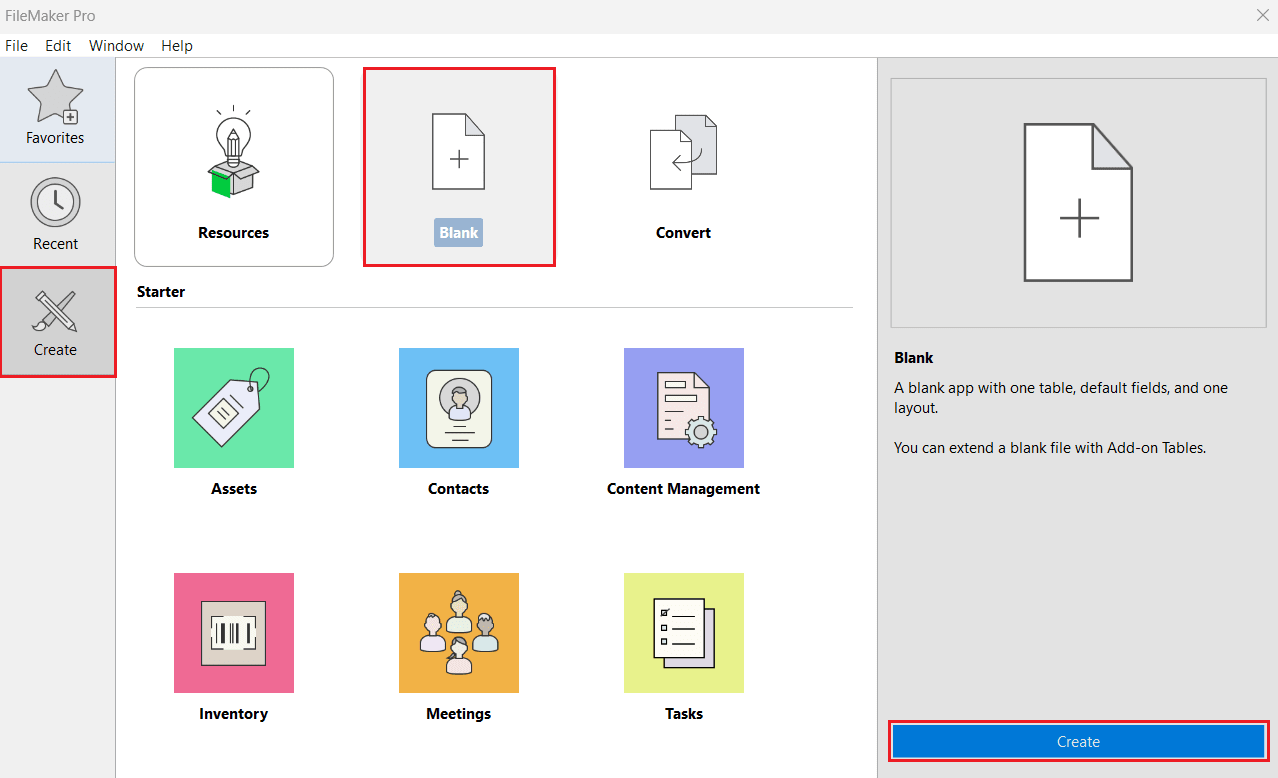
- Open FileMaker Pro. Navigate to Create from the left panel and select Blank > Create.
- Enter a desired filename and click Save.
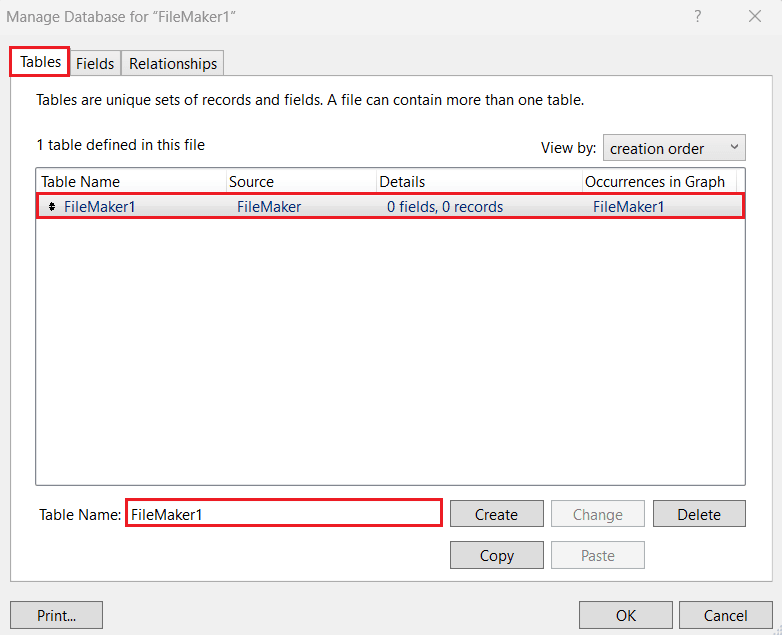
- In the Manage Database window, go to the Tables tab and create or rename the table where you want to display XML data.
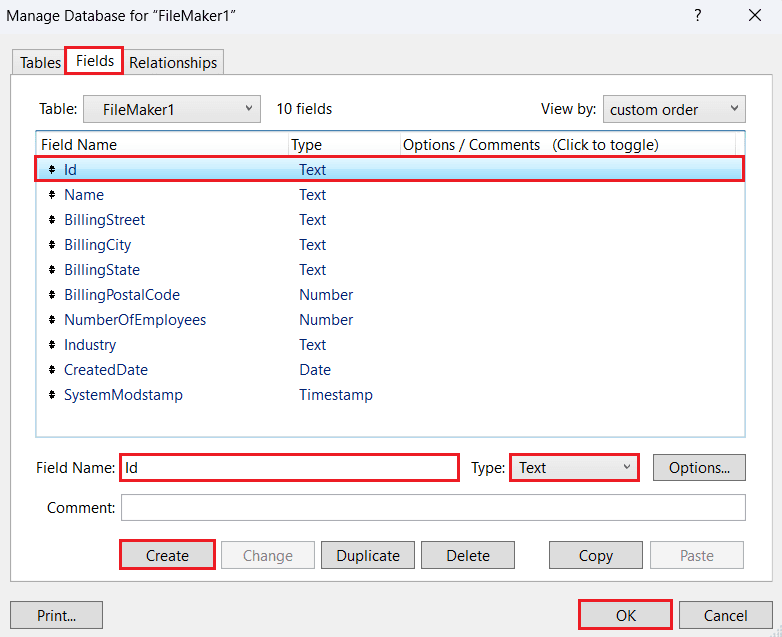
- In the Fields tab, add the required fields to the table.
- In the Relationships tab, define table relationships if your database has multiple tables, then click OK.
- To reopen and modify the table structure later, go to File > Manage > Database.
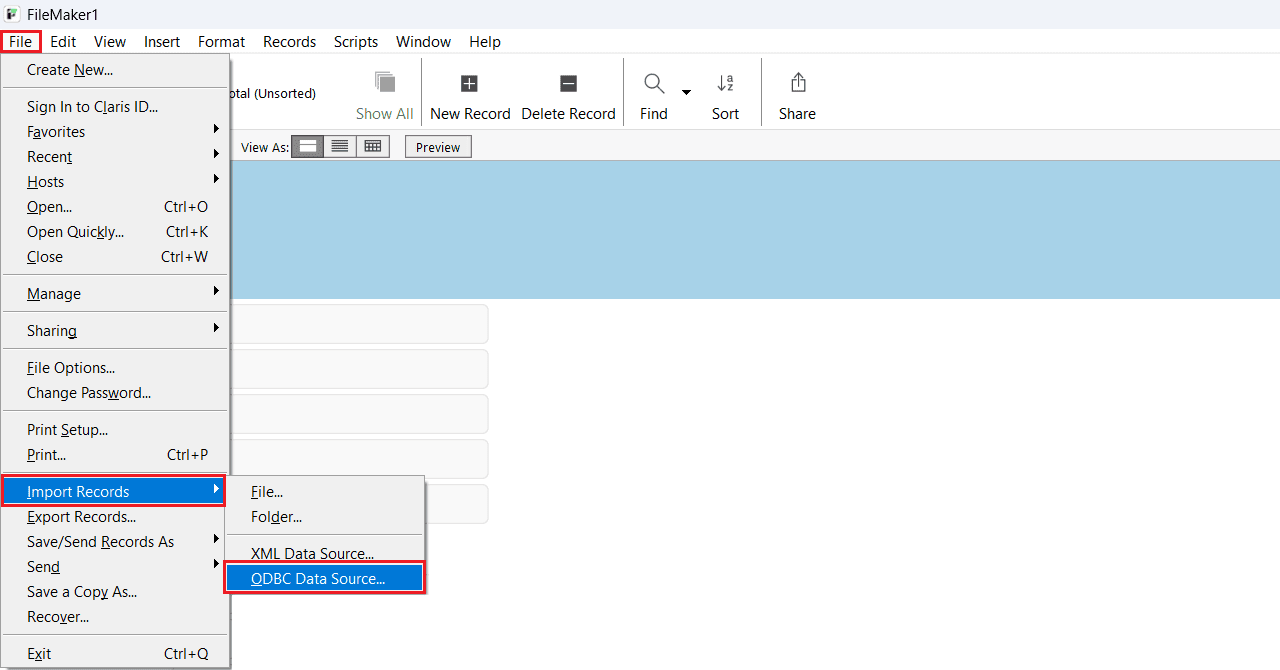
- To import XML data via the CData ODBC Driver for XML, navigate to File > Import Records > ODBC Data Source.
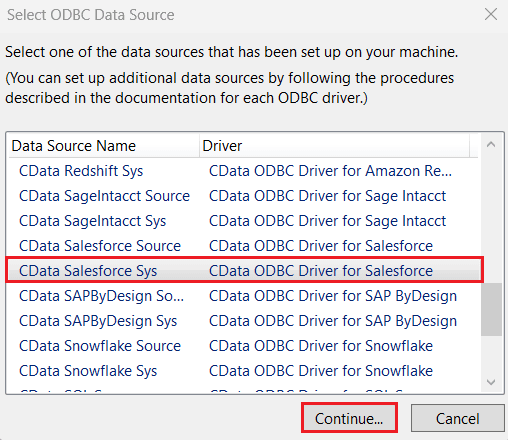
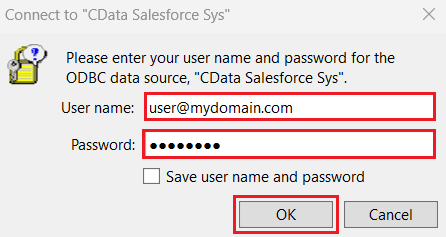
- In the Select ODBC Data Source window, choose CData ODBC Driver for XML and click Create. Enter your XML username and password, then click OK.
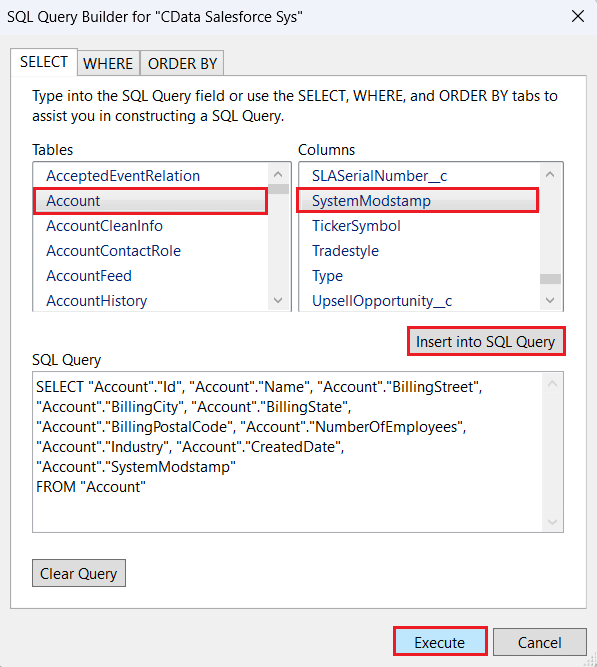
- In the SQL Query Builder window, select the desired table from the Tables section and choose the relevant columns from the Columns section. Click Insert into SQL Query after each selection to automatically generate a query that retrieves data from XML. You can also manually edit the query using WHERE and ORDER BY clauses or use the tabs provided in the SQL Query Builder. Click Execute to run the query.
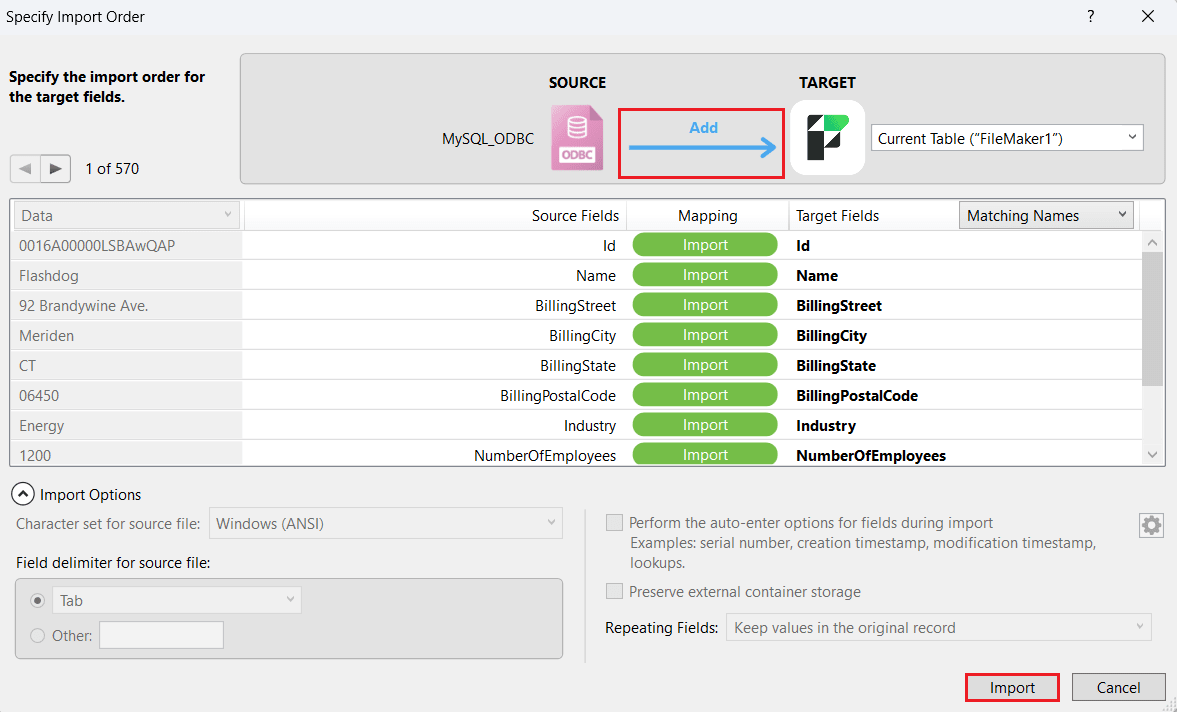
- In the Specify Import Order window, define the import order for the target fields. Select Add between source and target to add new records to the target table from the selected fields. Click Import.
You have now successfully imported XML data into FileMaker Pro using the CData ODBC Driver for XML. To perform incremental updates, change the import order to "Update" or use "Replace" based on your use case.
Process XML data at design time
You can sort and aggregate data, as well as calculate summary functions while browsing tables. To manipulate the view of data at design time, complete the following steps:
- Switch to Preview Mode: Click the Preview at the top to check how the XML data with look before you print it.
- Switch to Table View: Click the table icon in the View As menu in the main toolbar of the application.
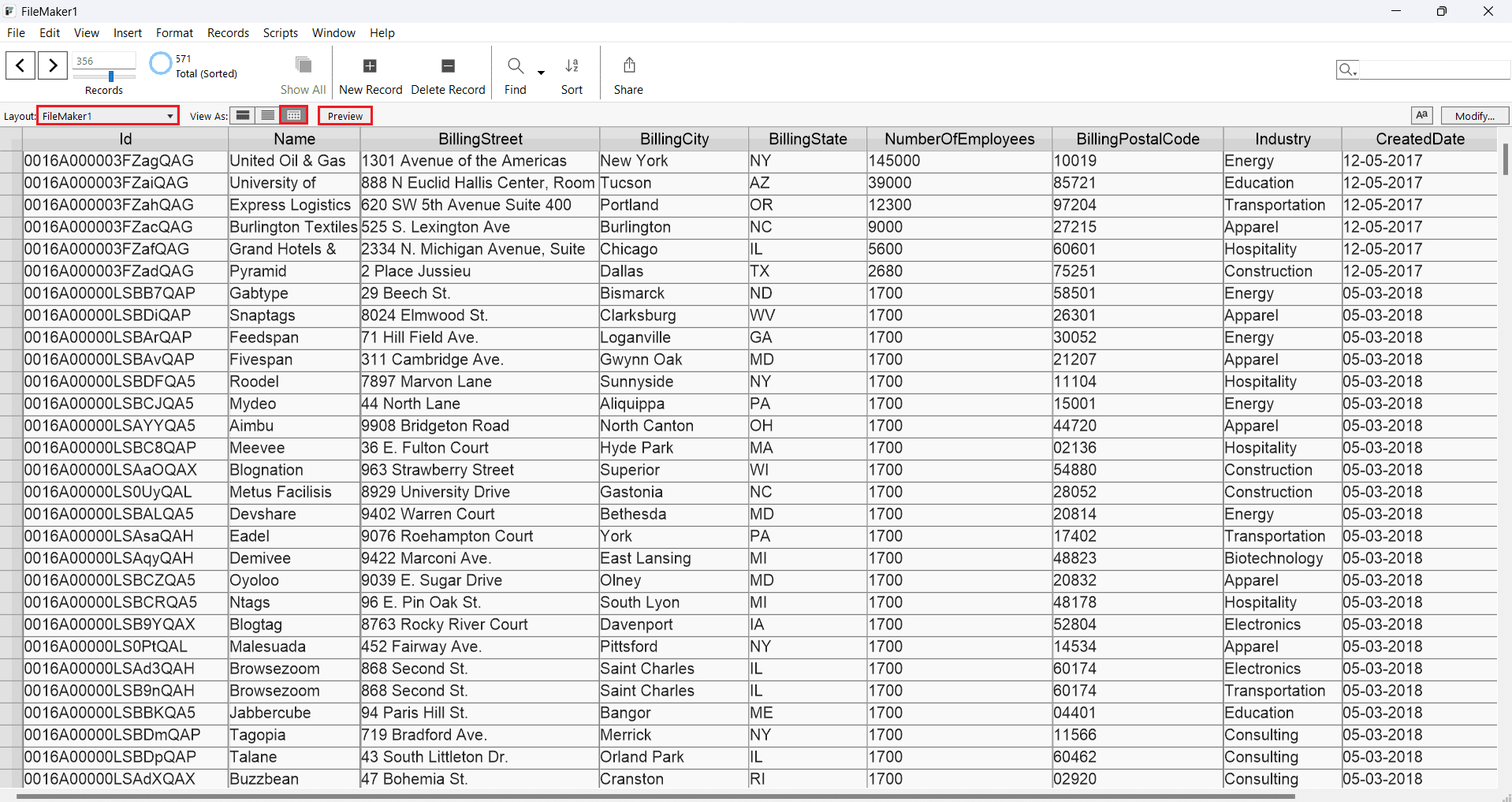
Aggregate and summarize
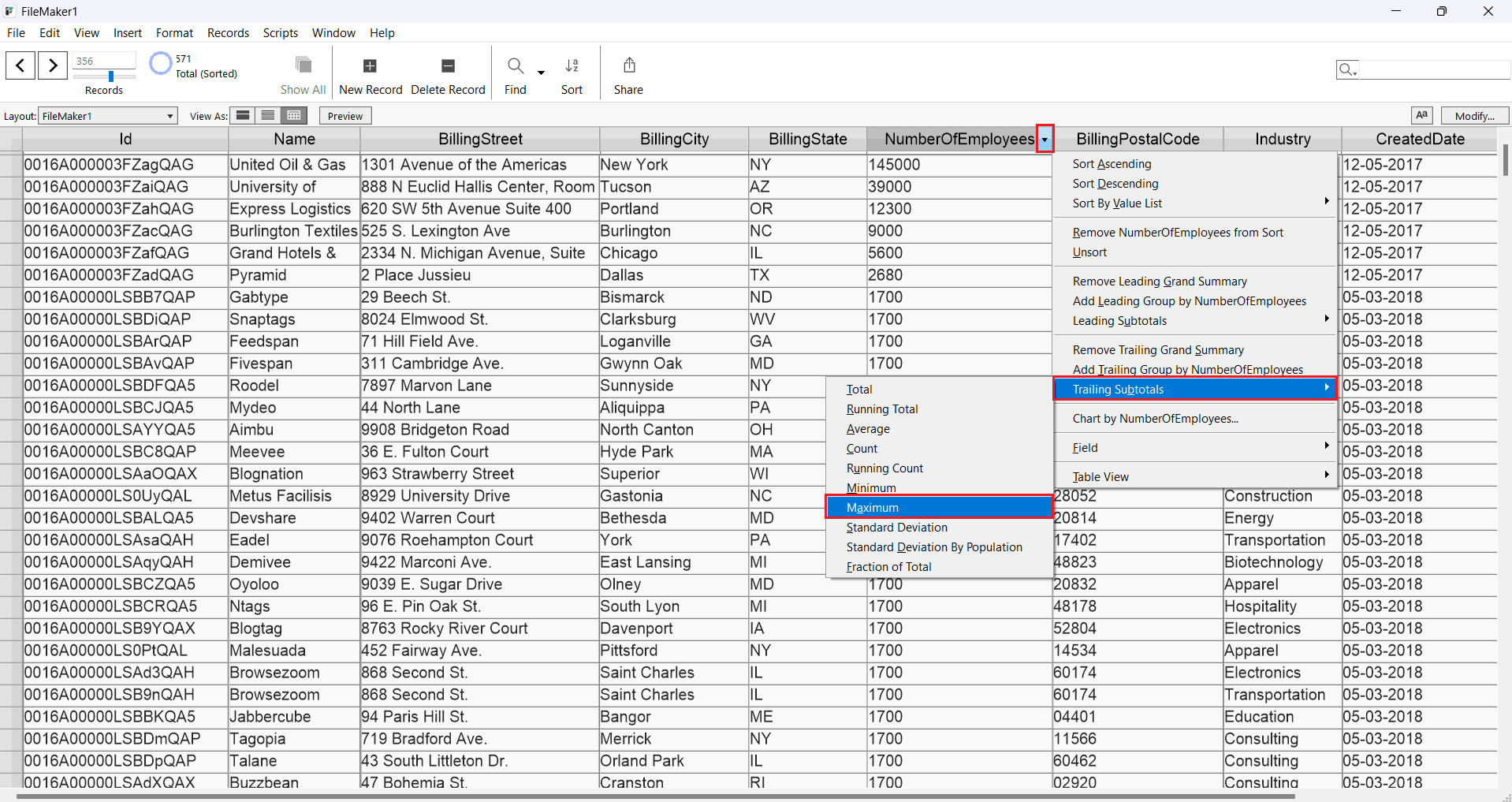
Follow the steps below to group column values and display summaries, as shown in the screenshot:
- Sort: Click the arrow in the NumberOfEmployees column header and choose Sort Ascending from the menu.
- Group: In the same menu, click Add Trailing Group by Industry to group the values and insert a summary row. Alternatively, click Add Leading Group to add a summary row at the beginning.
- Summarize: Select a summary option from the Trailing Subtotals menu for a grouped column.
Create a bar chart
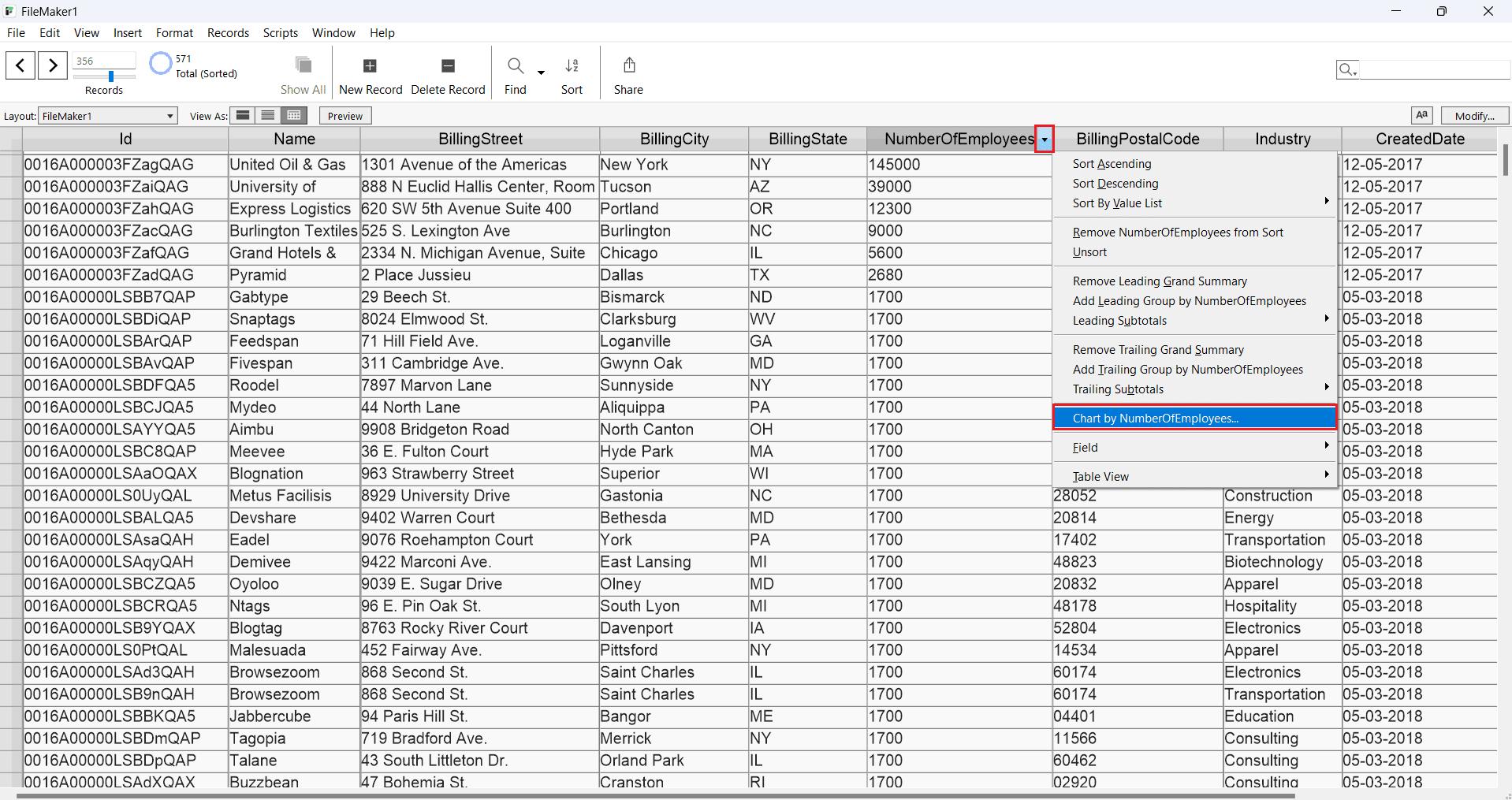
Use the following steps to create a simple bar chart showing the total NumberOfEmployees for each Industry:
- Click the arrow in the NumberOfEmployees column header and select Chart by NumberOfEmployees.
- If you've already grouped the table by a column (e.g., Industry), you can chart NumberOfEmployees by that column.
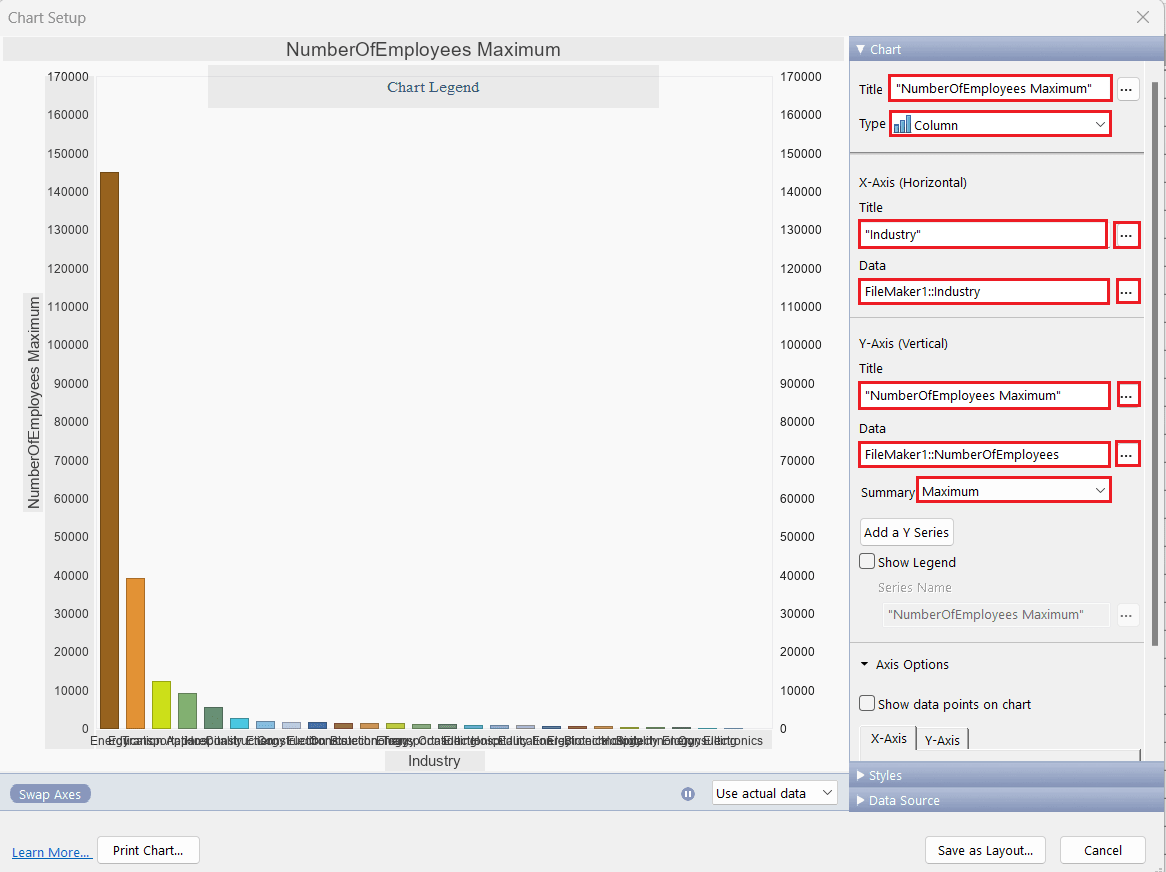
- In the Chart Setup window:
- Click the button next to the Data box to add the x-axis column.
- Choose the appropriate column in the dialog that appears.
- For the y-axis, select a summary option from the Summary menu.
Get Started Today
Download a free 30-day trial of the CData ODBC Driver for XML to integrate XML data into Claris FileMaker and work with XML data in your FileMaker applications.
Reach out to our Support Team if you have any questions.
Ready to get started?
Download a free trial of the XML ODBC Driver to get started:
Download NowLearn more:
 XML ODBC Driver
The XML ODBC Driver is a powerful tool that allows you to connect with live XML data stores, directly from any applications that support ODBC connectivity.
Access XML data like you would any standard database - read, write, and update etc. through a standard ODBC Driver interface.
