
Model Context Protocol (MCP) finally gives AI models a way to access the business data needed to make them really useful at work. CData MCP Servers have the depth and performance to make sure AI has access to all of the answers.
Try them now for free →


Replicate Zuora Data to Multiple Databases
Replicate Zuora data to disparate databases with a point-and-click configuration.
Always-on applications rely on automatic failover capabilities and real-time access to data. CData Sync integrates live Zuora data into your mirrored databases, always-on cloud databases, and other databases such as your reporting server: Automatically synchronize with remote Zuora data from Windows.
Configure Replication Destinations
Using CData Sync, you can replicate data from Zuora to any number of databases, both cloud-based and on-premises. In this example, we use SQLite as the replication destination to demonstrate the process. To add it as a destination, navigate to the Connections tab.
For each destination database:
- Click Add Connection.
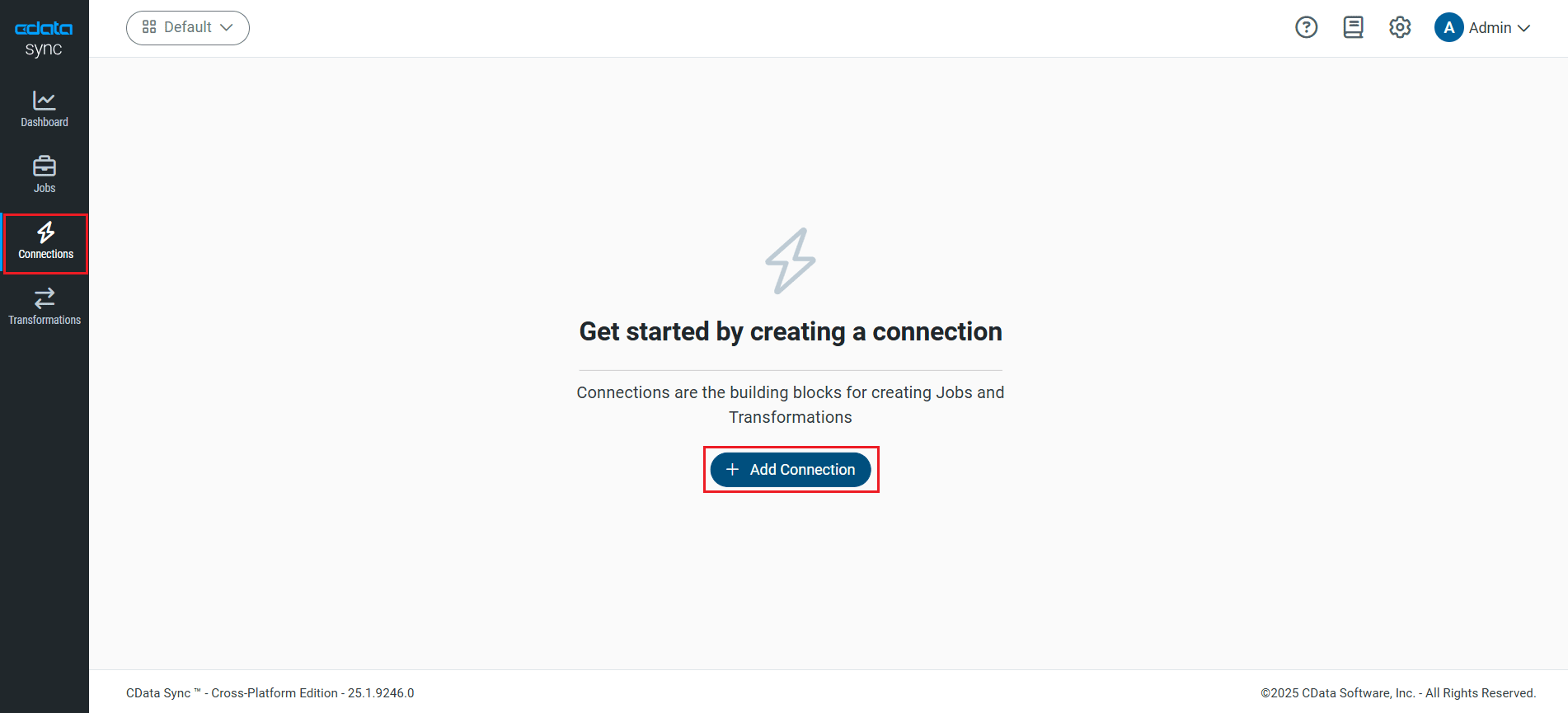
- Select the Destinations tab and locate the SQLite connector.
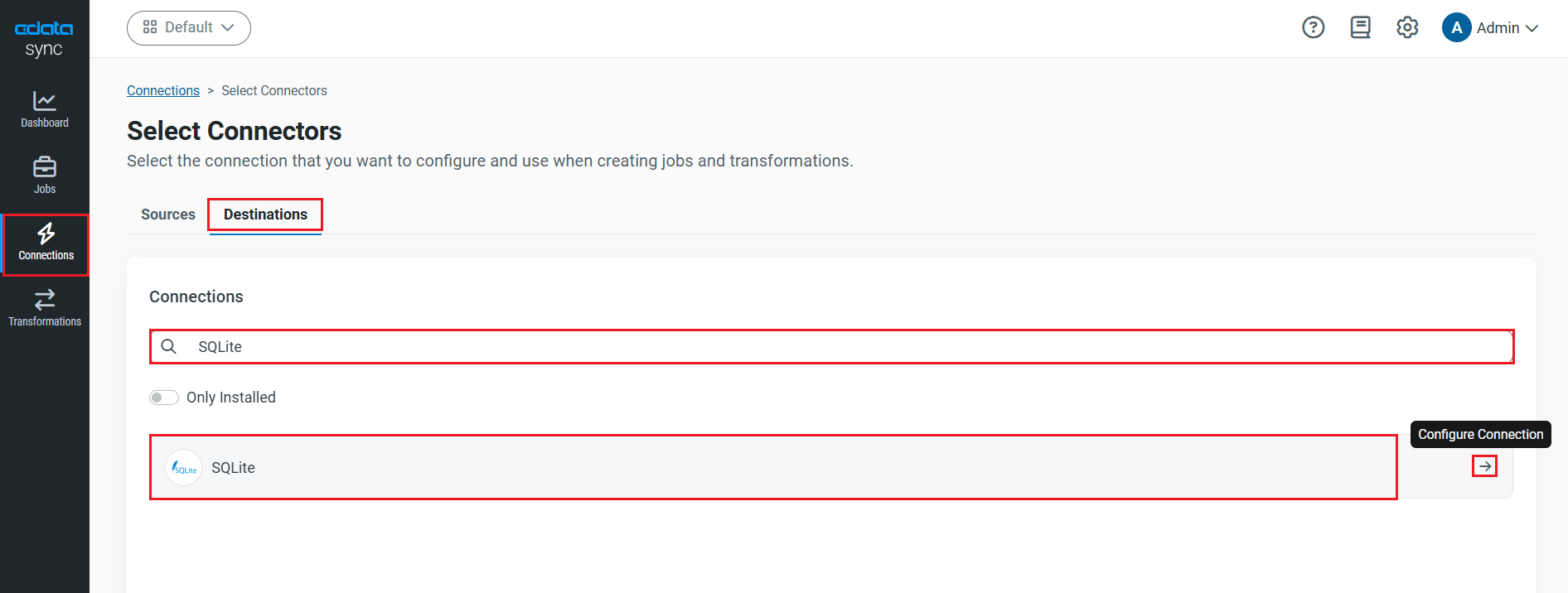
- Click the Configure Connection icon at the end of that row to open the New Connection page. If the Configure Connection icon is not available, click the Download Connector icon to install the SQLite connector. For more information about installing new connectors, see Connections in the Help documentation.
- To connect to SQLite, set the following connection properties:
- Connection Name: Enter a connection name of your choice.
- Data Source: Enter the path to the database. You can replicate to an existing database or to a new one. The application must have permission to access the database.
- Once connected, click Create & Test to create, test and save the connection.
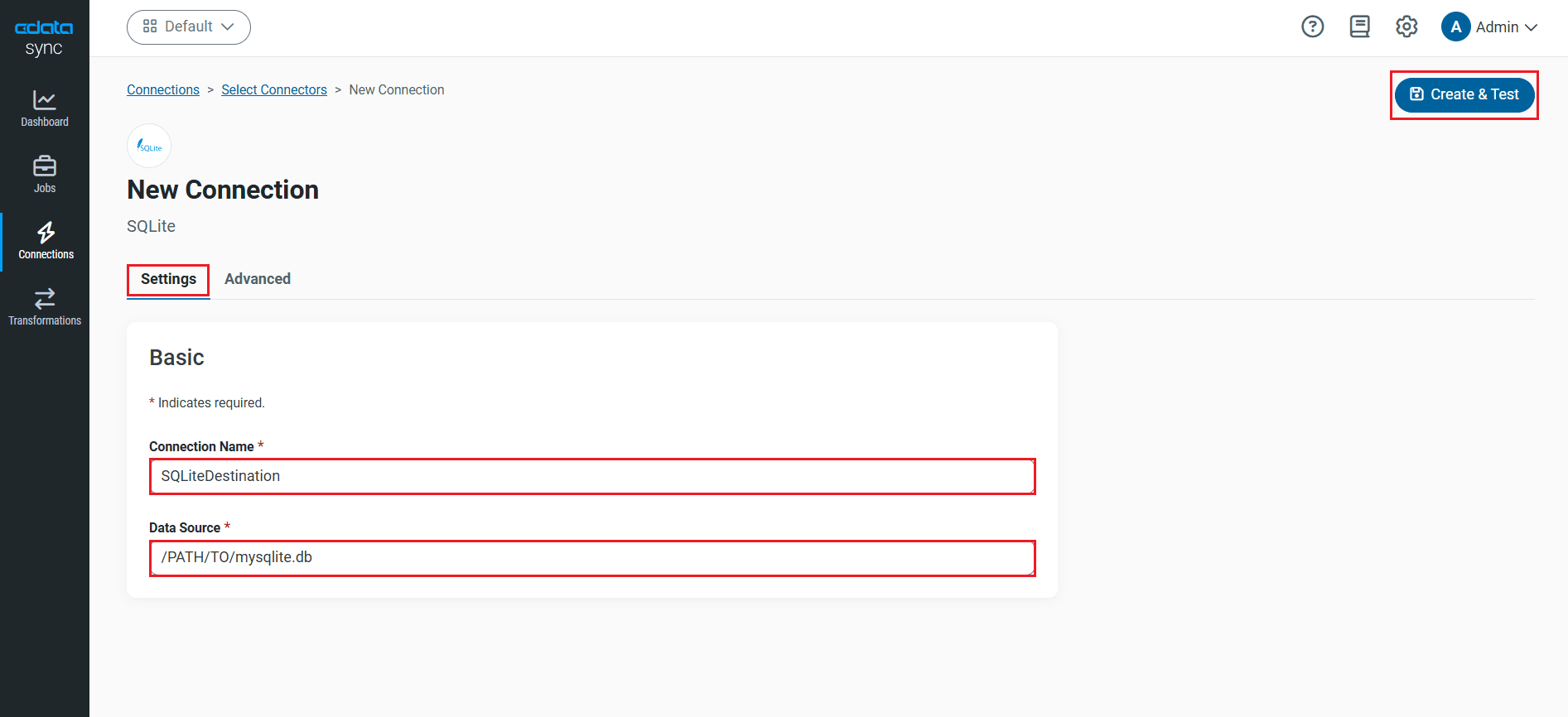
You are now connected to SQLite and can use it as both a source and a destination.
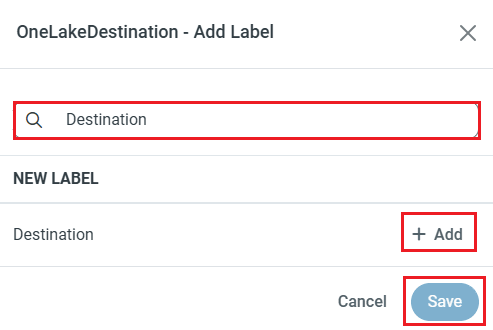
NOTE: You can use the Label feature to add a label for a source or a destination.
Configure the Zuora Connection
You can configure a connection to Zuora from the Connections tab. To add a connection to your Zuora account, navigate to the Connections tab.
- Click Add Connection.
- Select a source (Zuora).
- Configure the connection properties.
Zuora uses the OAuth standard to authenticate users. See the online Help documentation for a full OAuth authentication guide.
Configuring Tenant property
In order to create a valid connection with the provider you need to choose one of the Tenant values (USProduction by default) which matches your account configuration. The following is a list with the available options:
- USProduction: Requests sent to https://rest.zuora.com.
- USAPISandbox: Requests sent to https://rest.apisandbox.zuora.com"
- USPerformanceTest: Requests sent to https://rest.pt1.zuora.com"
- EUProduction: Requests sent to https://rest.eu.zuora.com"
- EUSandbox: Requests sent to https://rest.sandbox.eu.zuora.com"
Selecting a Zuora Service
Two Zuora services are available: Data Query and AQuA API. By default ZuoraService is set to AQuADataExport.
DataQuery
The Data Query feature enables you to export data from your Zuora tenant by performing asynchronous, read-only SQL queries. We recommend to use this service for quick lightweight SQL queries.
Limitations- The maximum number of input records per table after filters have been applied: 1,000,000
- The maximum number of output records: 100,000
- The maximum number of simultaneous queries submitted for execution per tenant: 5
- The maximum number of queued queries submitted for execution after reaching the limitation of simultaneous queries per tenant: 10
- The maximum processing time for each query in hours: 1
- The maximum size of memory allocated to each query in GB: 2
- The maximum number of indices when using Index Join, in other words, the maximum number of records being returned by the left table based on the unique value used in the WHERE clause when using Index Join: 20,000
AQuADataExport
AQuA API export is designed to export all the records for all the objects ( tables ). AQuA query jobs have the following limitations:
Limitations- If a query in an AQuA job is executed longer than 8 hours, this job will be killed automatically.
- The killed AQuA job can be retried three times before returned as failed.
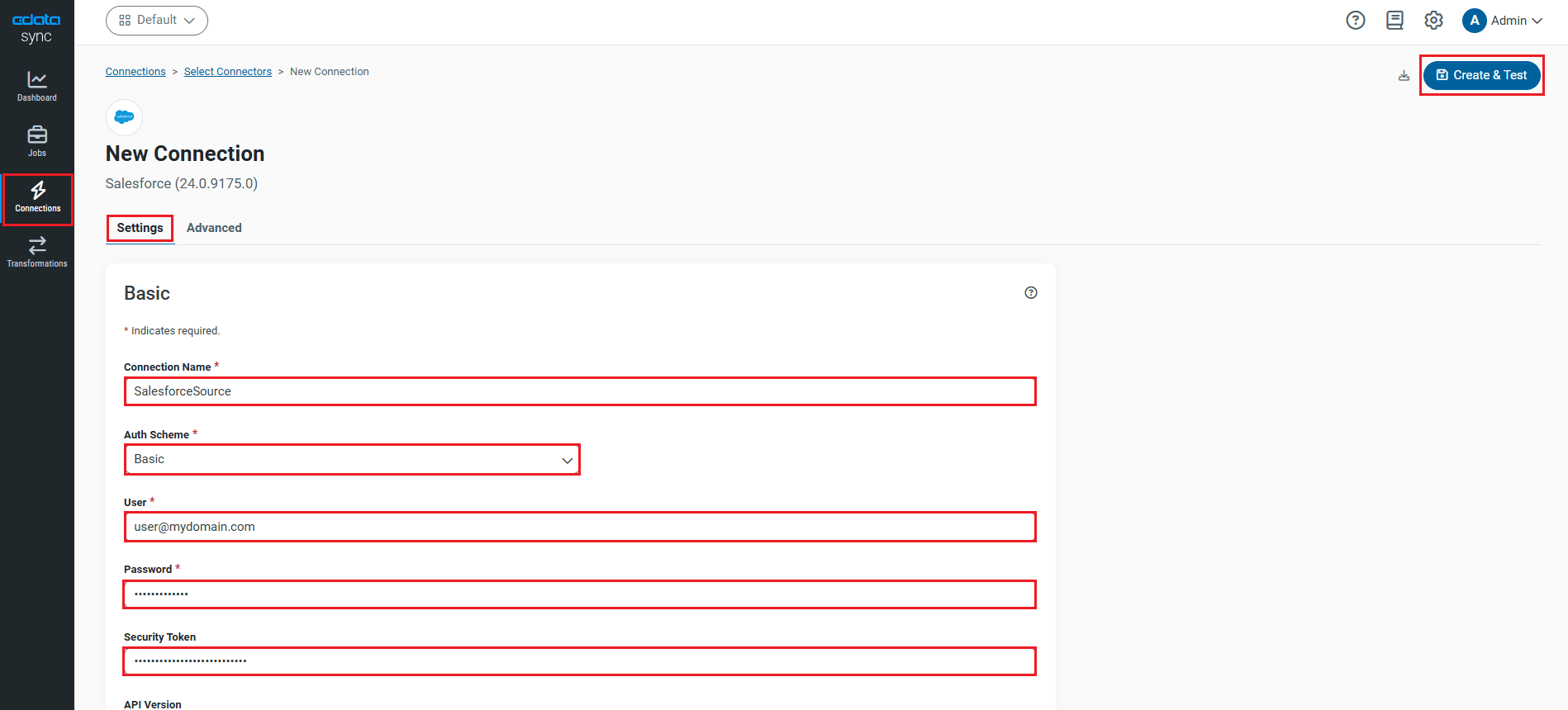
- Click Connect to Zuora to ensure that the connection is configured properly.
- Click Save & Test to save the changes.
Configure Replication Queries
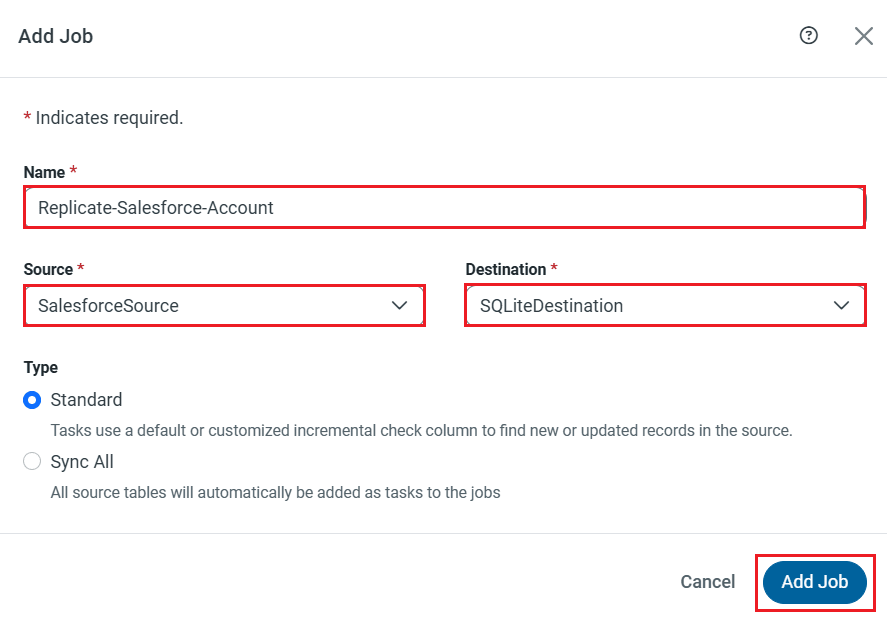
CData Sync enables you to control replication with a point-and-click interface and with SQL queries. For each replication you wish to configure, navigate to the Jobs tab and click Add Job. Select the Source and Destination for your replication.
Replicate Entire Tables
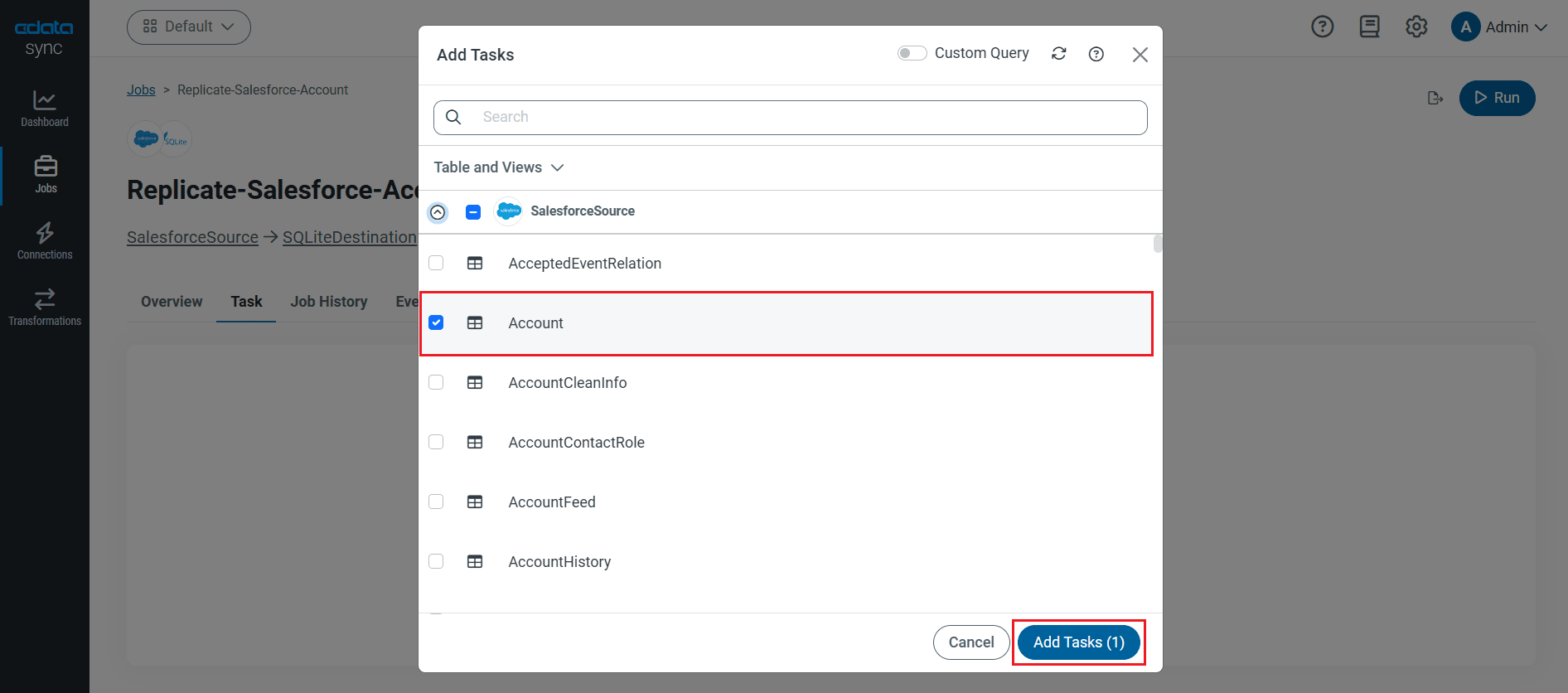
To replicate an entire table, navigate to the Task tab in the Job, click Add Tasks, choose the table(s) from the list of Zuora tables you wish to replicate into SQLite, and click Add Tasks again.
Customize Your Replication
You can use the Columns and Query tabs of a task to customize your replication. The Columns tab allows you to specify which columns to replicate, rename the columns at the destination, and even perform operations on the source data before replicating. The Query tab allows you to add filters, grouping, and sorting to the replication with the help of SQL queries.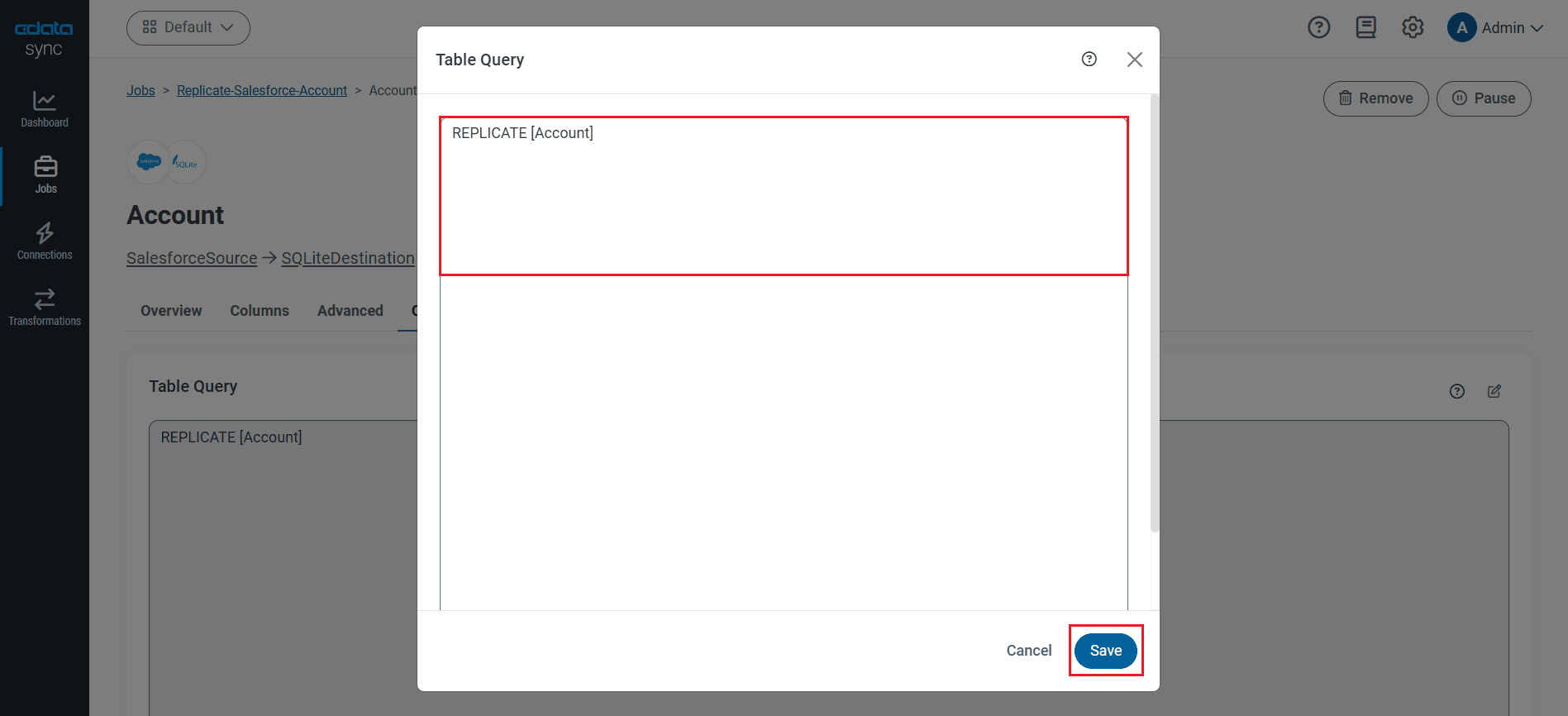
The statement below caches and incrementally updates a table of Zuora data:
REPLICATE Invoices;
You can specify a file containing the replication queries you want to use to update a particular database. Separate the replication statements with semicolons. The following options are useful when replicating multiple Zuora accounts into the same database:
-
Use a different table prefix in the REPLICATE SELECT statement:
REPLICATE PROD_Invoices SELECT * FROM Invoices;
-
Alternatively, use a different schema:
REPLICATE PROD.Invoices SELECT * FROM Invoices;
Schedule Your Replication
Select the Overview tab in the Job, and click Configure under Schedule. You can schedule a job to run automatically by configuring it to run at specified intervals, ranging from once every 10 minutes to once every month.
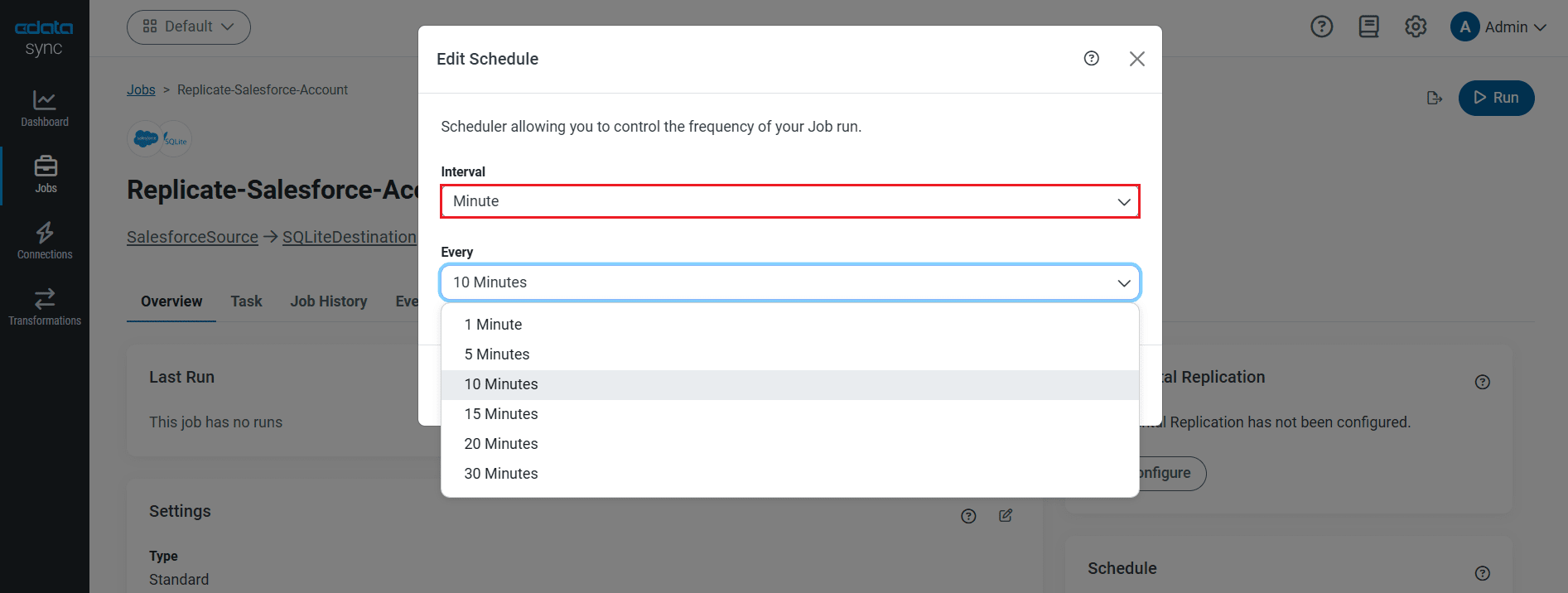
Once you have configured the replication job, click Save Changes. You can configure any number of jobs to manage the replication of your Zuora data to disparate on-premises, cloud-based, and other databases.
Run the Replication Job
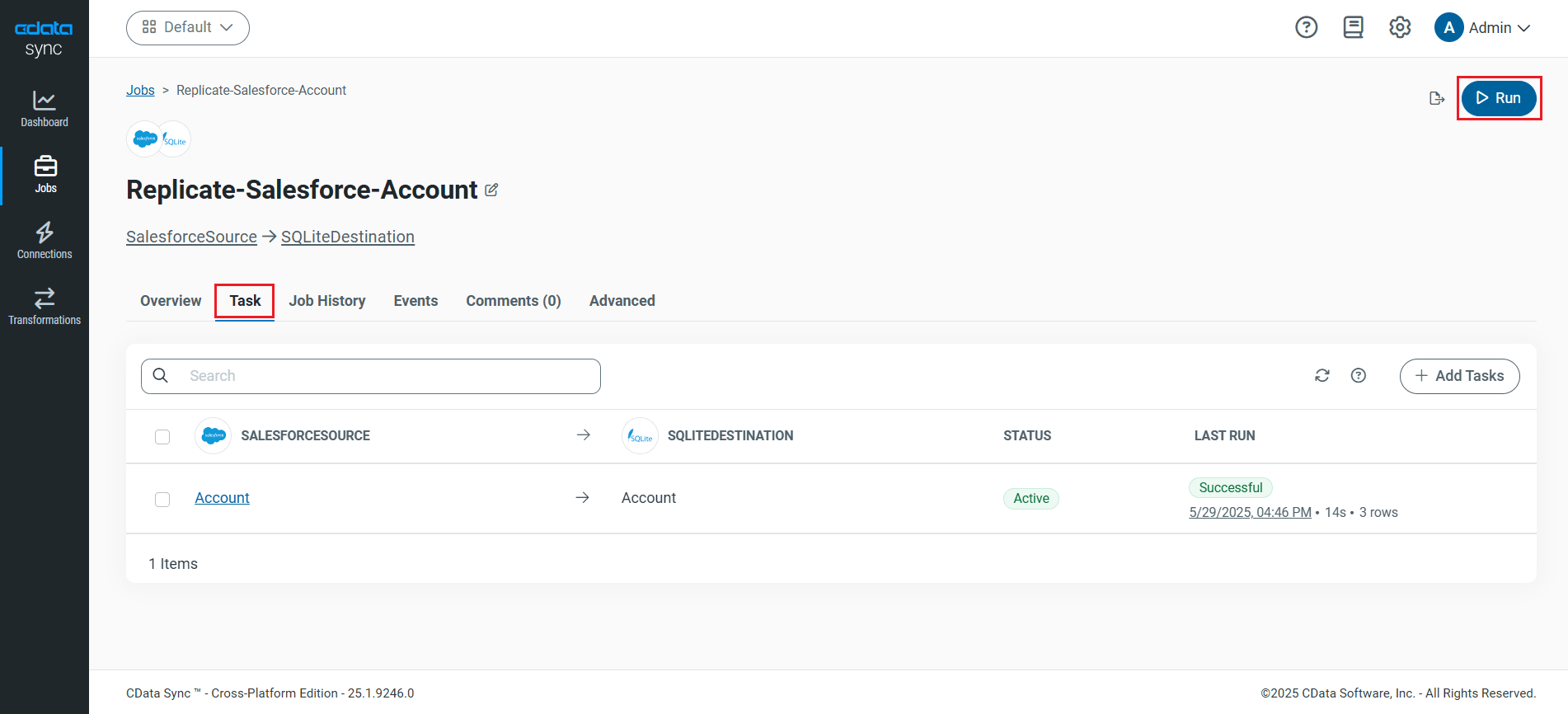
Once all the required configurations are made for the job, select the Zuora table you wish to replicate and click Run. After the replication completes successfully, a notification appears, showing the time taken to run the job and the number of rows replicated.
Free Trial & More Information
Now that you've seen how to replicate and configure multiple jobs to manage the replication of your Zuora data to various on-premises, cloud-based, and other databases, visit our CData Sync page to learn more and download a free 30-day trial. Start consolidating your enterprise data today!
As always, our world-class Support Team is ready to answer any questions you may have.
