
Model Context Protocol (MCP) finally gives AI models a way to access the business data needed to make them really useful at work. CData MCP Servers have the depth and performance to make sure AI has access to all of the answers.
Try them now for free →


Seamlessly Bring HCL Domino Data into Retool Using CData Connect Cloud
Integrate HCL Domino data into Retool with CData Connect Cloud to build smarter apps and streamline workflows with real-time data access.
Retool enables the rapid creation of custom internal tools using a low-code or no-code approach. By integrating HCL Domino into Retool with CData Connect Cloud, you can access live data from HCL Domino in real time, enabling you to build more efficient apps and streamline workflows.
This guide walks you through the simple steps to connect HCL Domino to Retool via CData Connect Cloud using OpenAPI or the Virtual SQL Server API. You can securely connect to your HCL Domino data, ensuring seamless integration and real-time updates, empowering you to create smarter apps and enhance operational efficiency. Let's get started!
Configure the HCL Domino Connectivity for Retool (in CData Connect Cloud)
Overview
Here is an overview of the steps:
- Configure: (Optional) Set up your HCL Domino data source in CData Connect Cloud, add a Workspace, add assets to your Workspace, and generate a Personal Access Token (PAT).
- Connect: Link Retool to CData Connect Cloud using OpenAPI or the Virtual SQL Server API.
- Explore: Use your connected data to build smarter apps and explore advanced integrations.
Prerequisites
Ensure you have the following before starting:
- An active HCL Domino account and credentials.
- A CData Connect Cloud account. Log in or sign up for a free trial here.
- A Retool account. Sign up here.
Connect to HCL Domino from Connect Cloud
CData Connect Cloud uses a straightforward, point-and-click interface to connect to data sources.
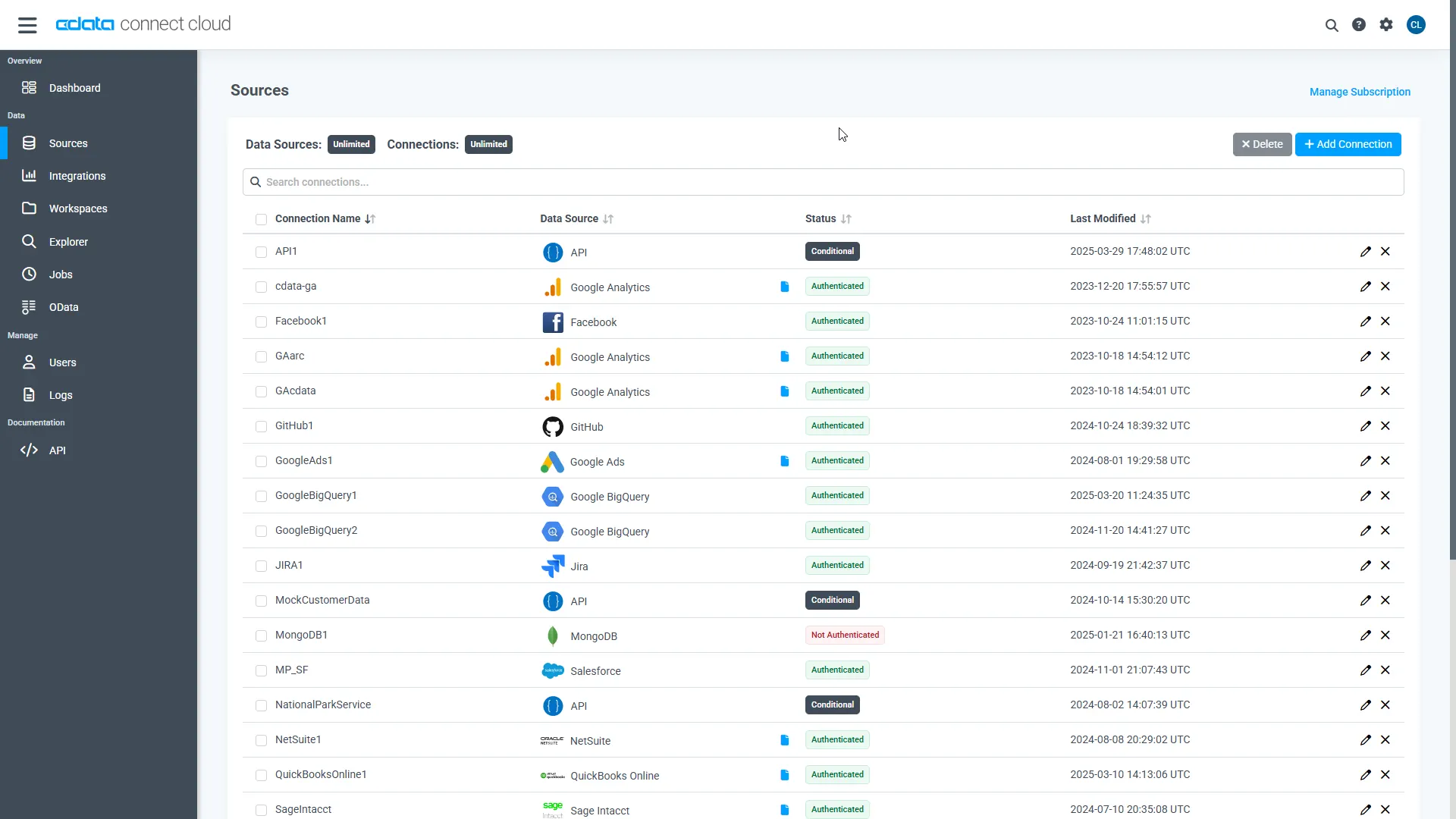
- Log into Connect Cloud, click Sources, and then click Add Connection
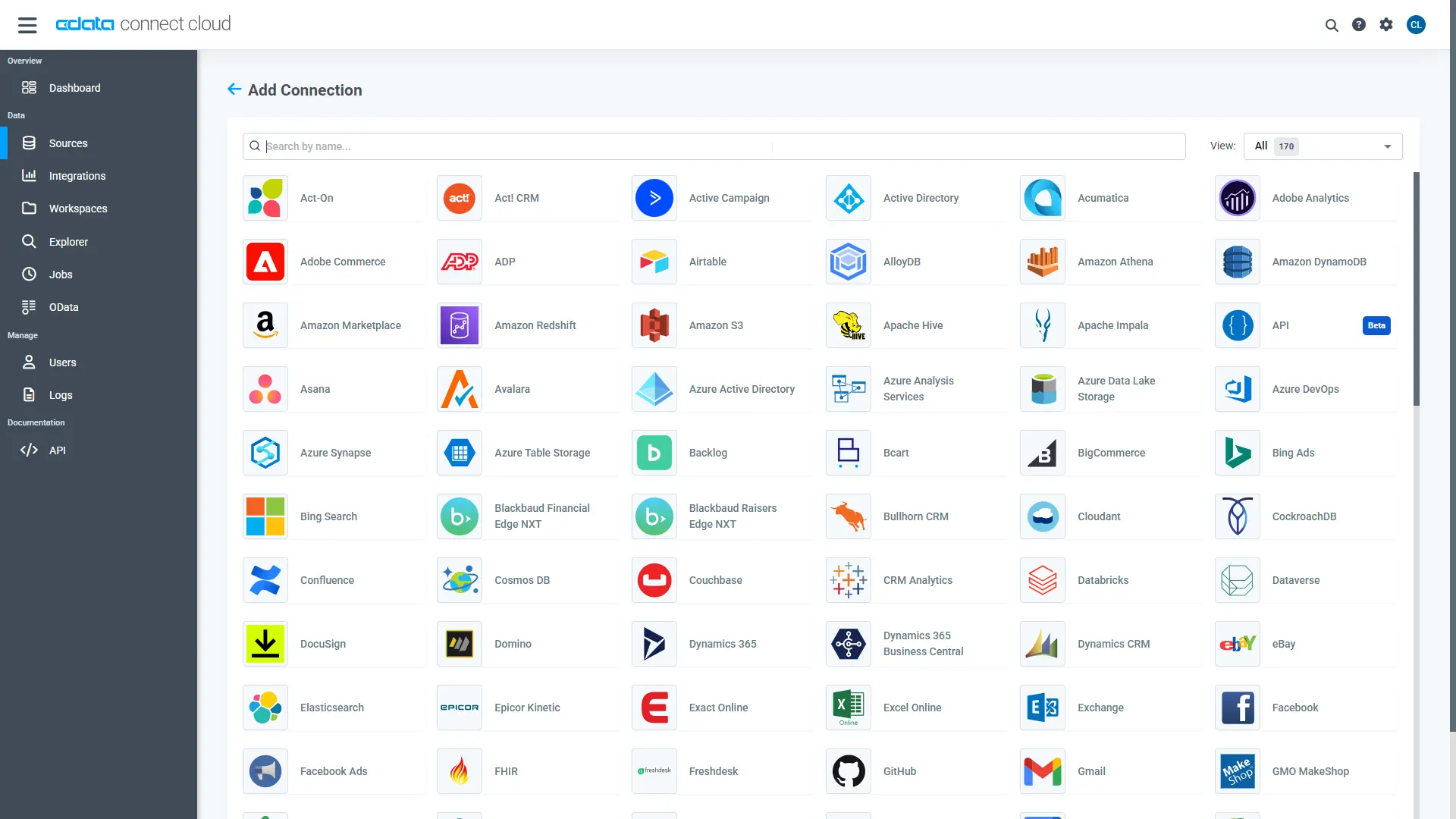
- Select "HCL Domino" from the Add Connection panel
-
Enter the necessary authentication properties to connect to HCL Domino.
Connecting to Domino
To connect to Domino data, set the following properties:
- URL: The host name or IP of the server hosting the Domino database. Include the port of the server hosting the Domino database. For example: http://sampleserver:1234/
- DatabaseScope: The name of a scope in the Domino Web UI. The driver exposes forms and views for the schema governed by the specified scope. In the Domino Admin UI, select the Scopes menu in the sidebar. Set this property to the name of an existing scope.
Authenticating with Domino
Domino supports authenticating via login credentials or an Entra ID (formerly Azure AD) OAuth application:
Login Credentials
To authenticate with login credentials, set the following properties:
- AuthScheme: Set this to "OAuthPassword"
- User: The username of the authenticating Domino user
- Password: The password associated with the authenticating Domino user
The driver uses the login credentials to automatically perform an OAuth token exchange.
EntraID (formerly AzureAD)
This authentication method uses Entra ID (formerly Azure AD) as an IdP to obtain a JWT token. You need to create a custom OAuth application in Entra ID (formerly Azure AD) and configure it as an IdP. To do so, follow the instructions in the Help documentation. Then set the following properties:
- AuthScheme: Set this to "EntraID (formerly AzureAD)"
- InitiateOAuth: Set this to GETANDREFRESH. You can use InitiateOAuth to avoid repeating the OAuth exchange and manually setting the OAuthAccessToken.
- OAuthClientId: The Client ID obtained when setting up the custom OAuth application.
- OAuthClientSecret: The Client secret obtained when setting up the custom OAuth application.
- CallbackURL: The redirect URI defined when you registered your app. For example: https://localhost:33333
- AzureTenant: The Microsoft Online tenant being used to access data. Supply either a value in the form companyname.microsoft.com or the tenant ID.
The tenant ID is the same as the directory ID shown in the Azure Portal's Entra ID (formerly Azure AD) > Properties page.
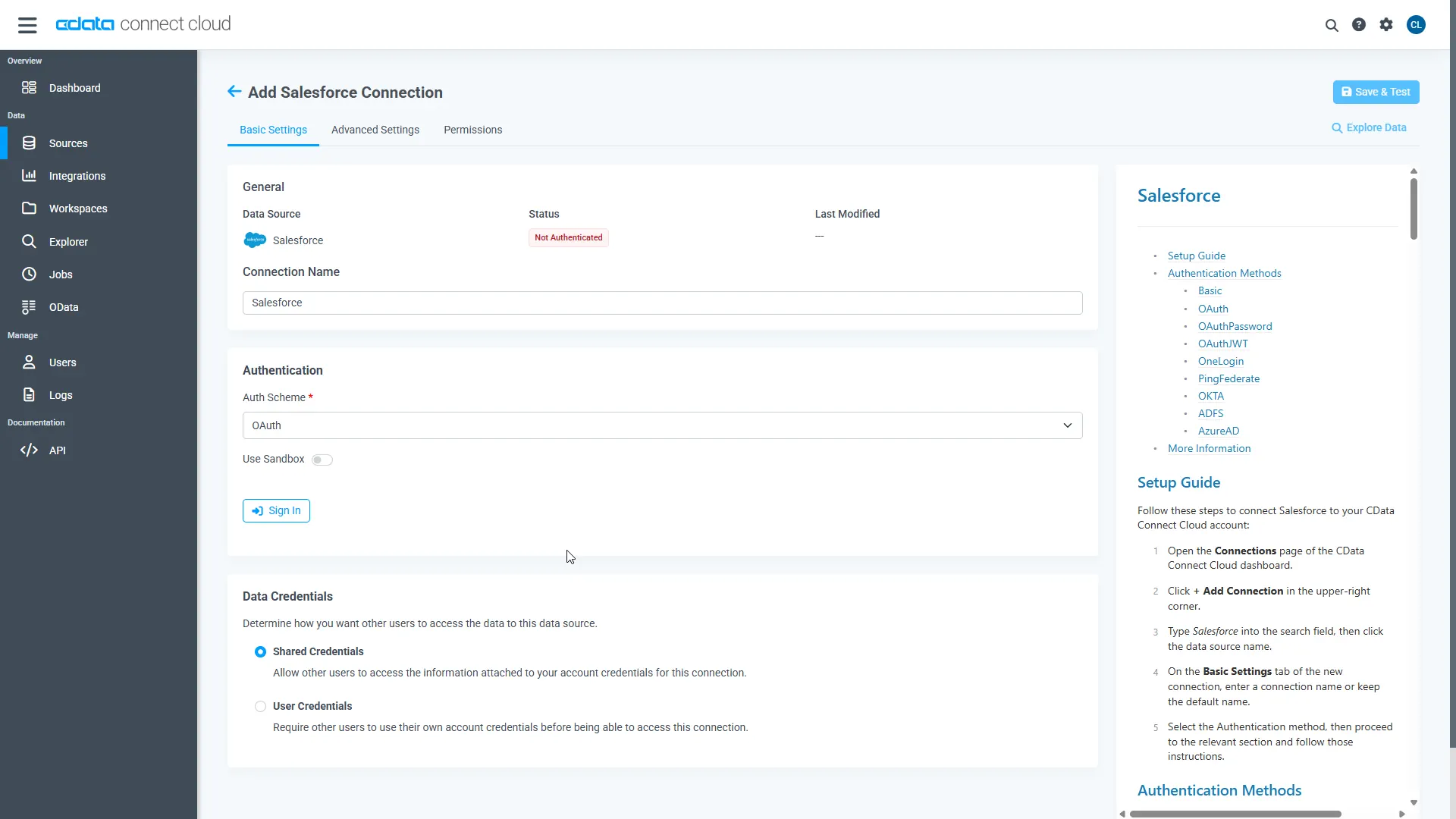
- Click Create & Test
-
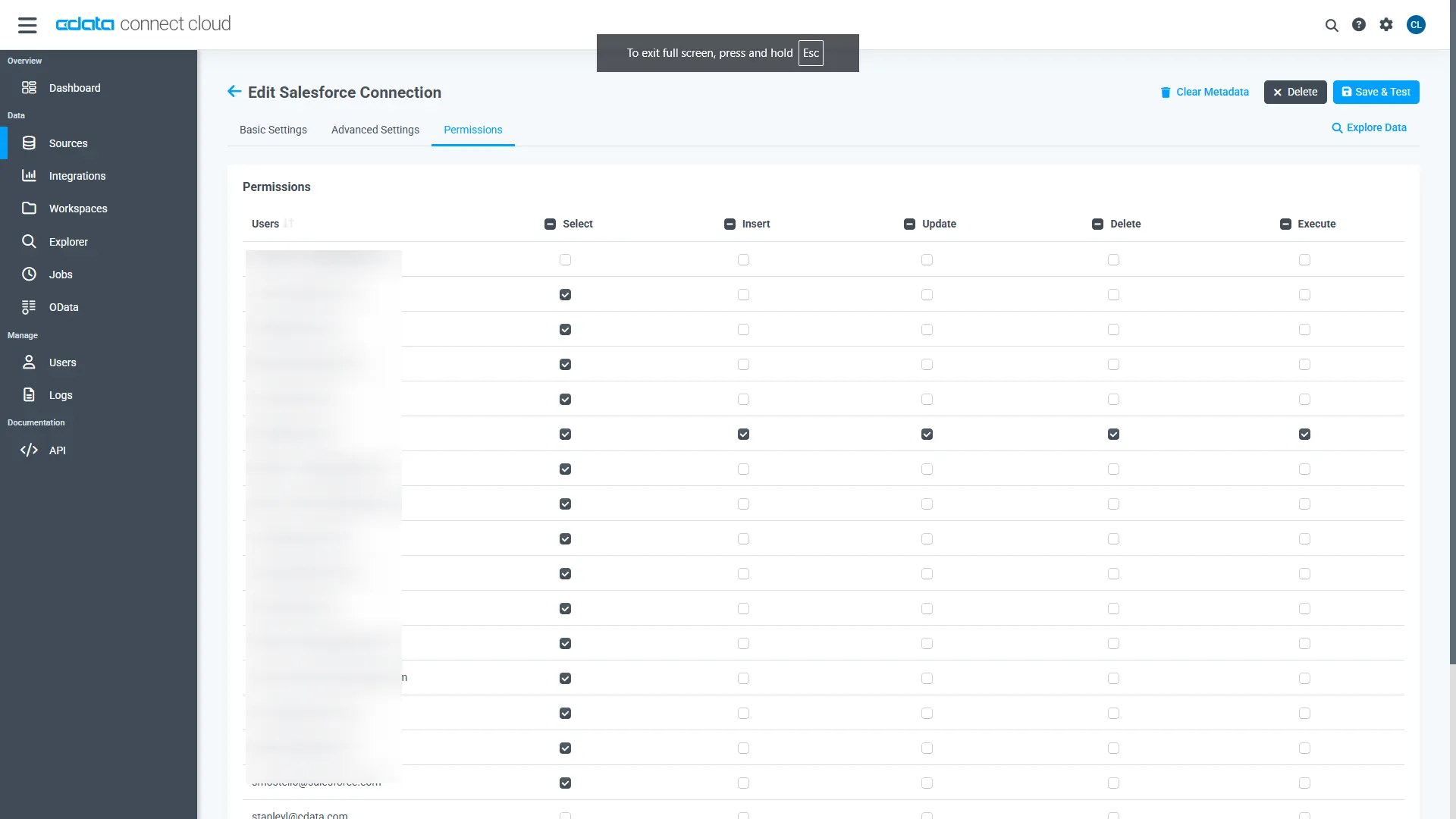
Navigate to the Permissions tab in the Add HCL Domino Connection page and update the User-based permissions.
Add a Personal Access Token
When connecting to Connect Cloud through the REST API, the OData API, or the Virtual SQL Server, a Personal Access Token (PAT) is used to authenticate the connection to Connect Cloud. It is best practice to create a separate PAT for each service to maintain granularity of access.
- Click on the Gear icon () at the top right of the Connect Cloud app to open the settings page.
- On the Settings page, go to the Access Tokens section and click Create PAT.
-
Give the PAT a name and click Create.
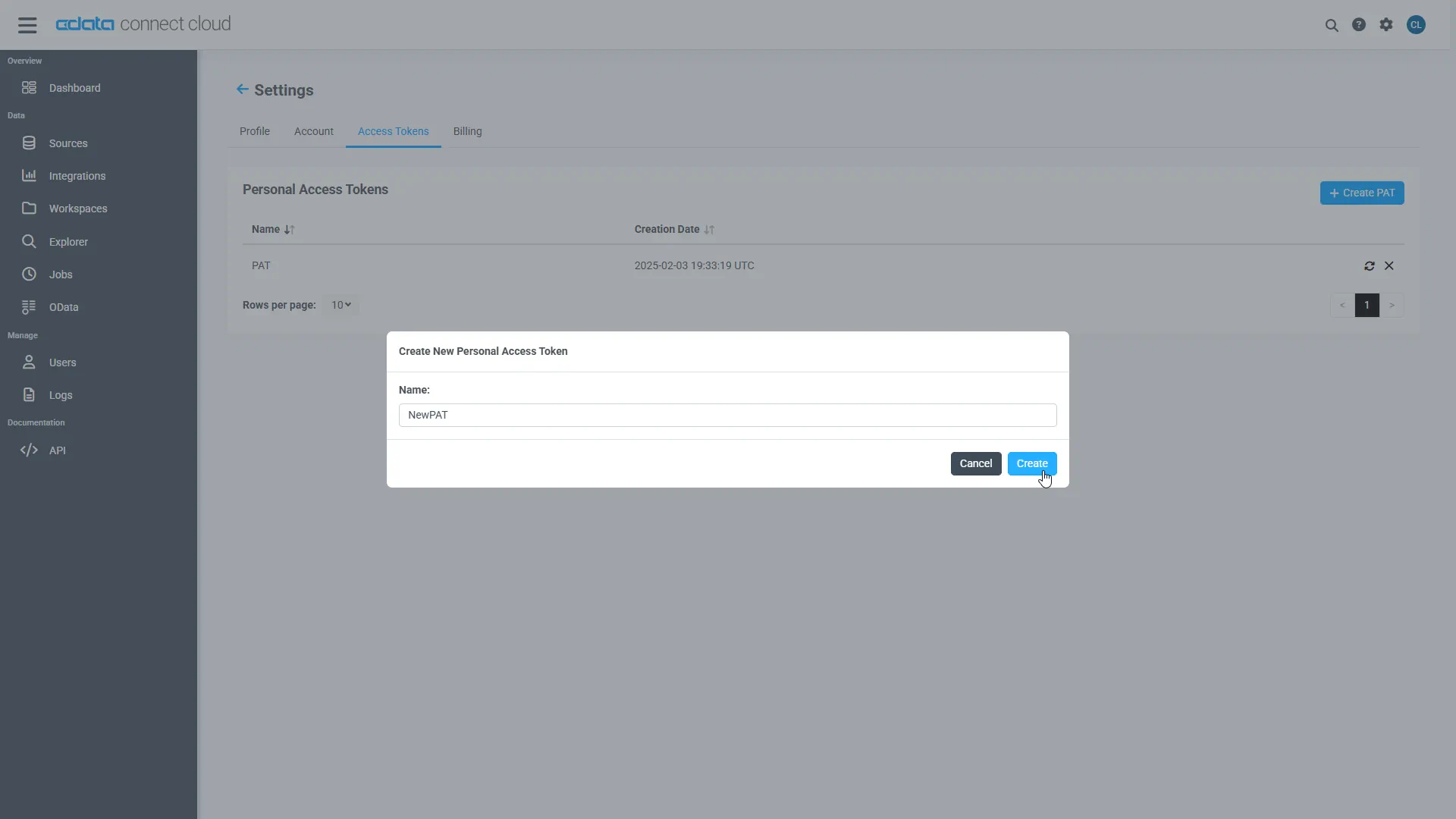
- The personal access token is only visible at creation, so be sure to copy it and store it securely for future use.
Configure HCL Domino Endpoints for Retool
After connecting to HCL Domino, create a workspace for your desired table(s).
-
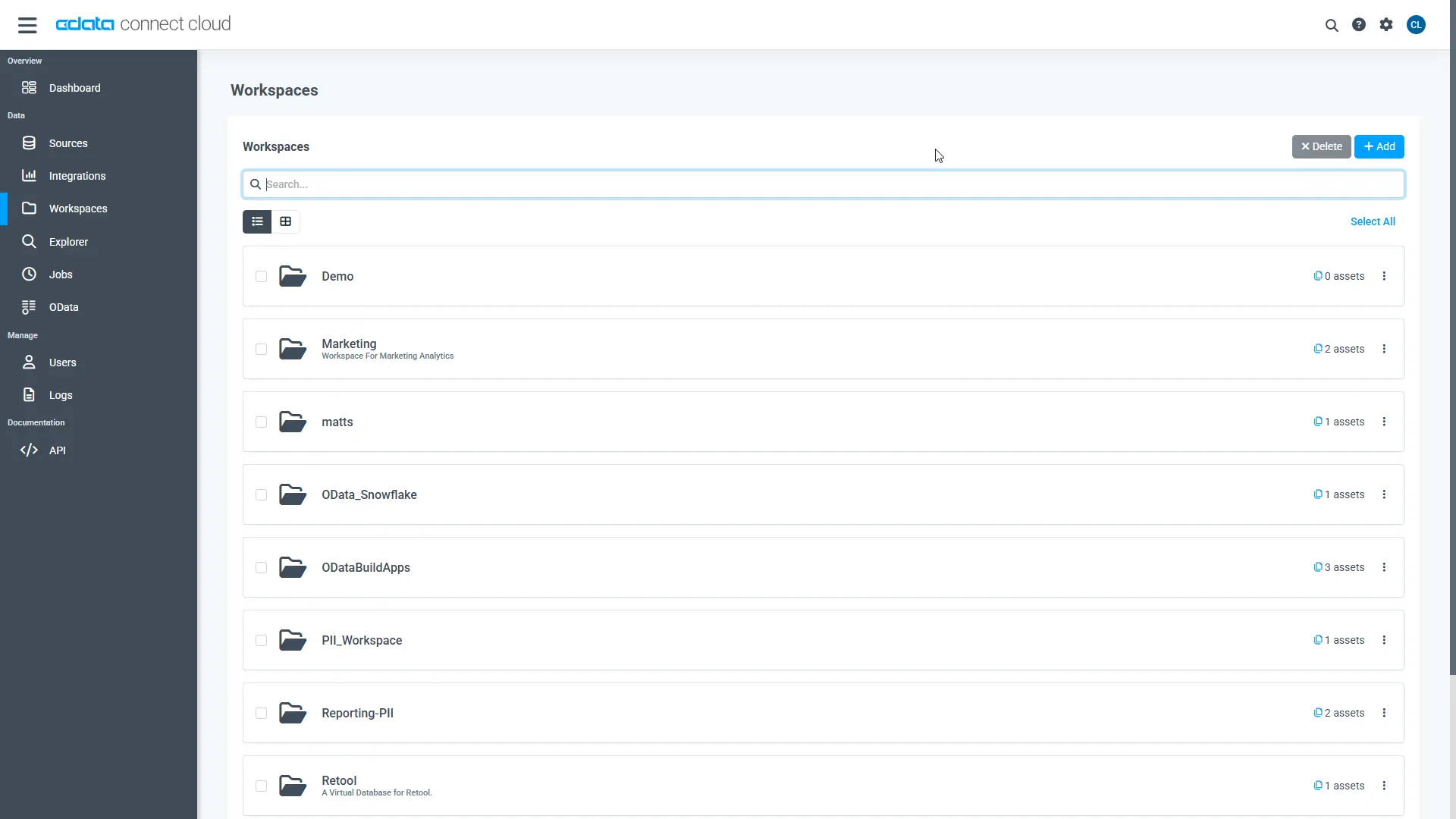
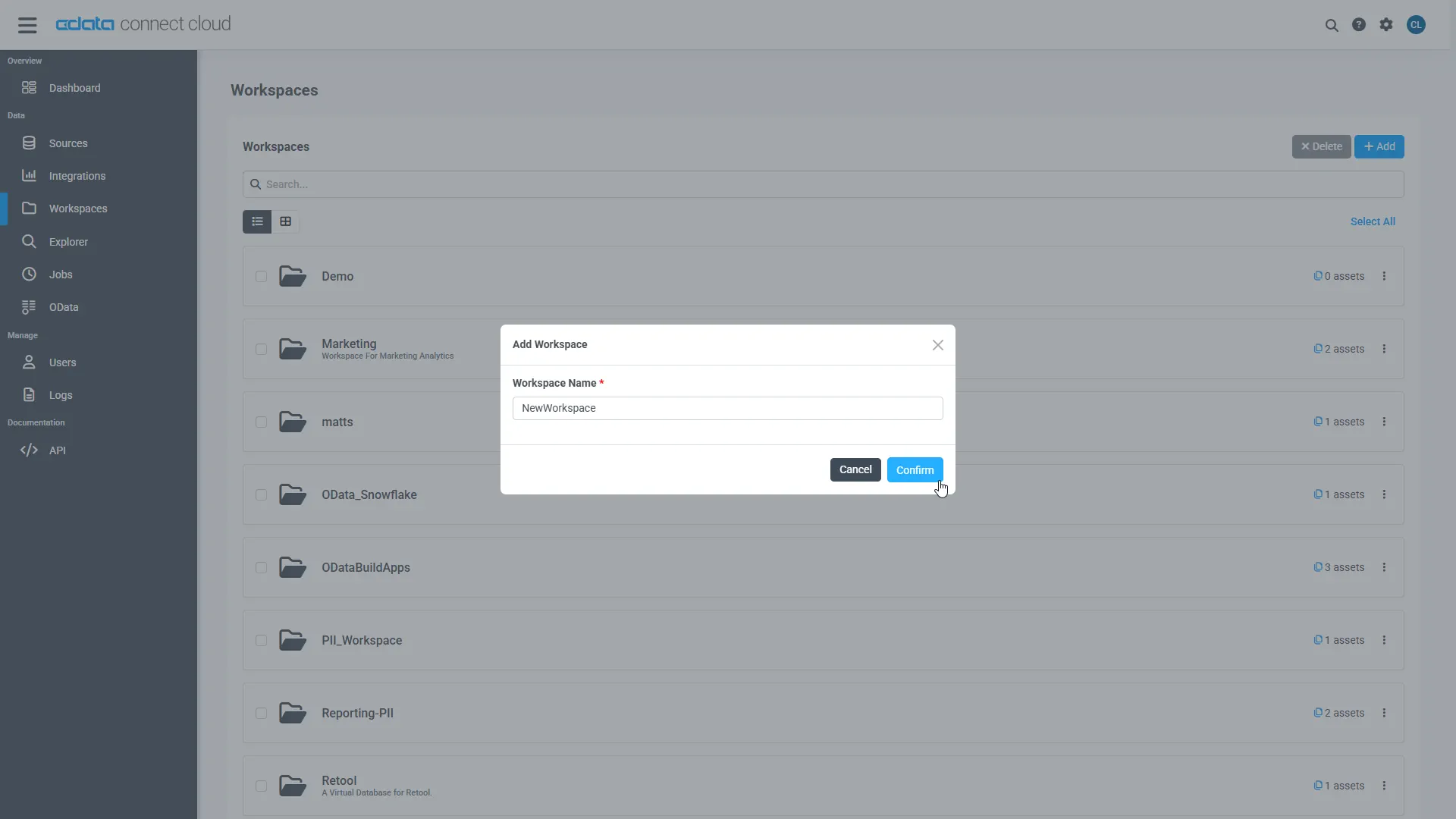
Navigate to the Workspaces page and click Add to create a new Workspace (or select an existing workspace).
- Click Add to add new assets to the Workspace.
-
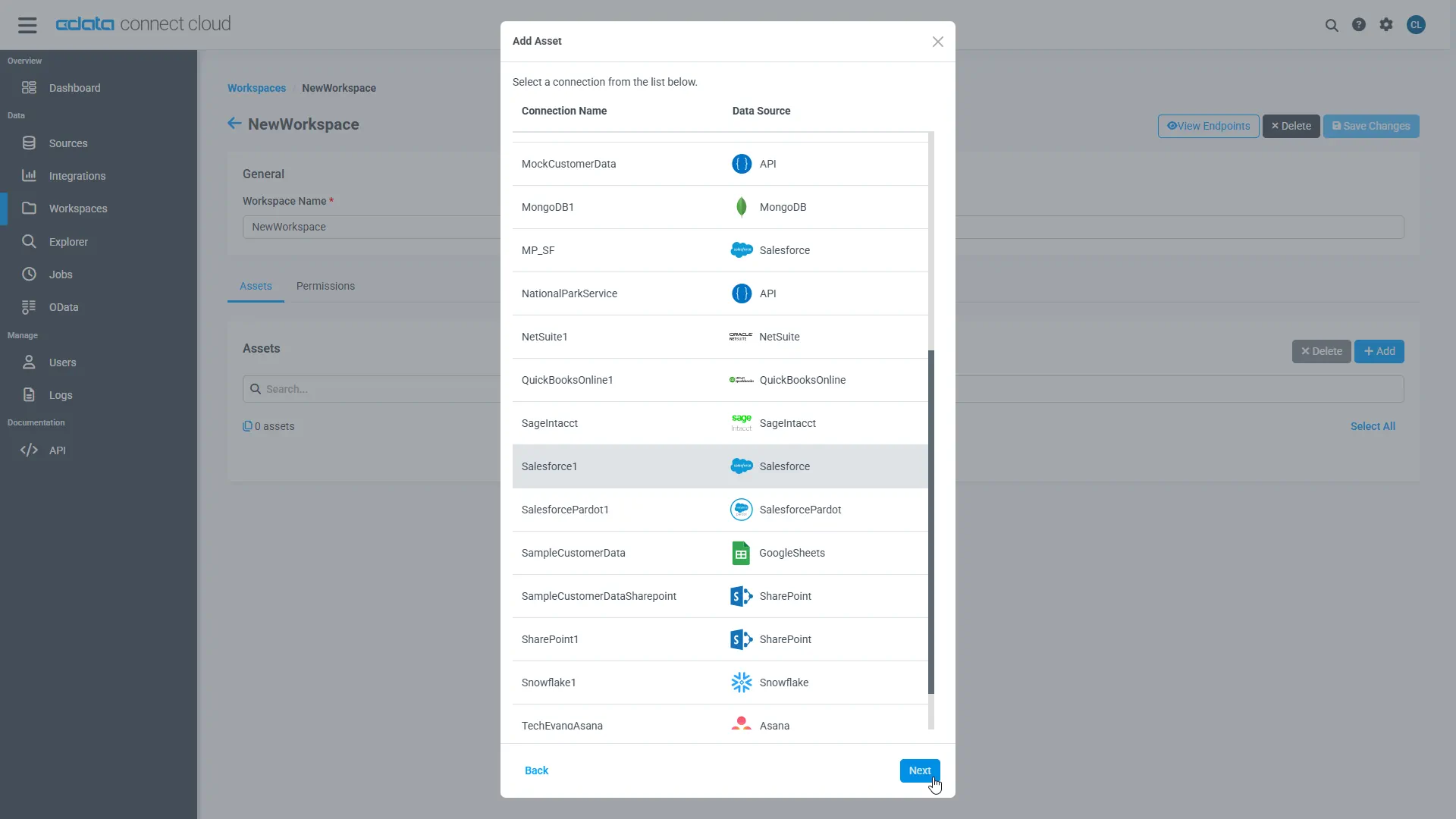
Select the HCL Domino connection (e.g. Domino1) and click Next.
-
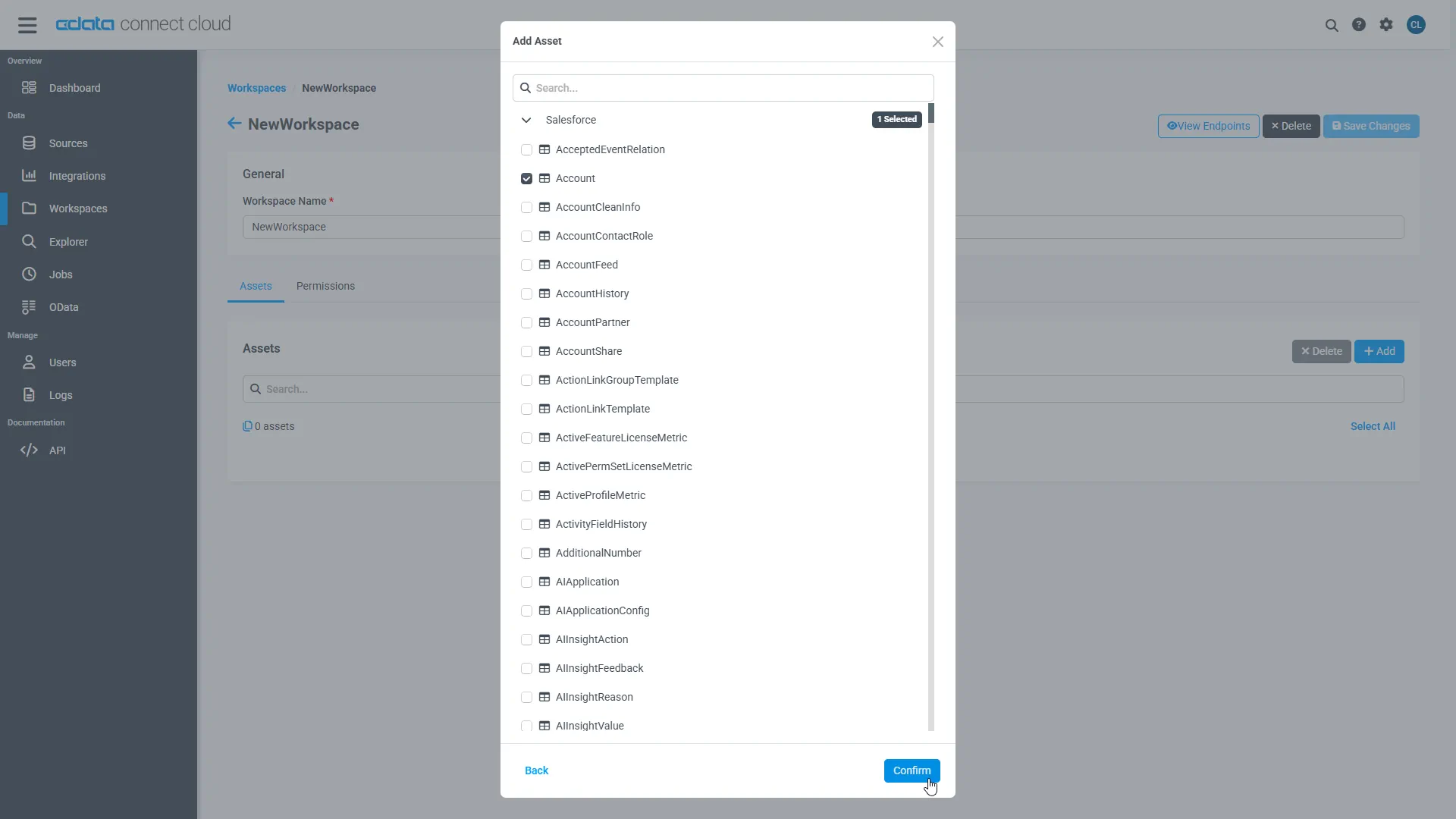
Select the table(s) you wish to work with and click Confirm.
- Make note of the OpenAPI URL or the Virtual SQL Server URL for your workspace, e.g. https://cloud.cdata.com/api/openapi/v3/{workspace_name}...
With the connection, PAT, and Workspace configured, you are ready to connect to HCL Domino data from Retool.
Connect Retool to HCL Domino in CData Connect Cloud
Now that you've configured your HCL Domino connection in CData Connect Cloud, it's time to integrate it with Retool.
Retool can be connected to HCL Domino in CData Connect Cloud via either OpenAPI or the Virtual SQL Server API. Choose the method that best suits your workflow:
Connect via OpenAPI
To connect using the OpenAPI specification, follow these steps:
- On CData Connect Cloud, from the left-hand side, go to Workspaces then select a Workspace.
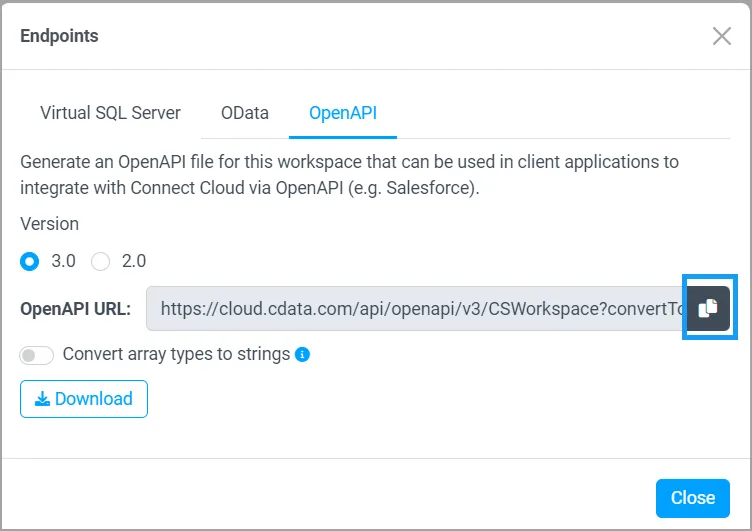
- Click the View Endpoints, and under the OpenAPI, copy the OpenAPI URL for the workspace. Keep the default options. See OpenAPI section for more information.
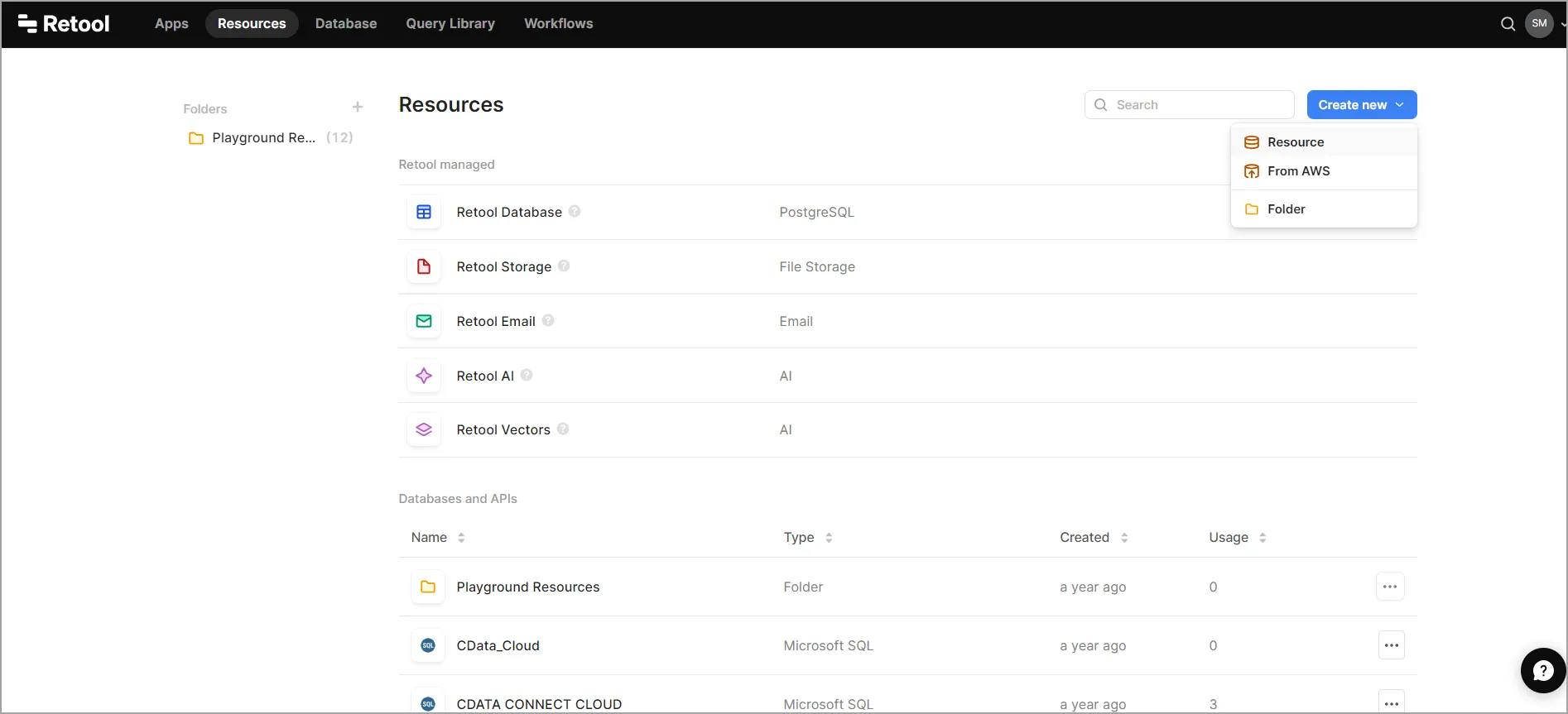
- Login to Retool and then go to the Resources tab, click Create new > Resource.
- In the Select a resource type search bar, and search for OpenAPI.
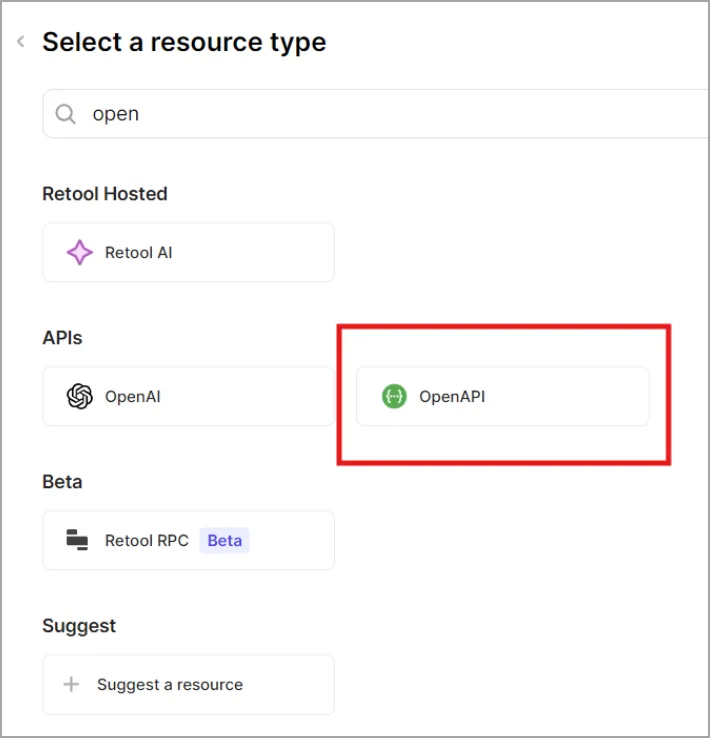
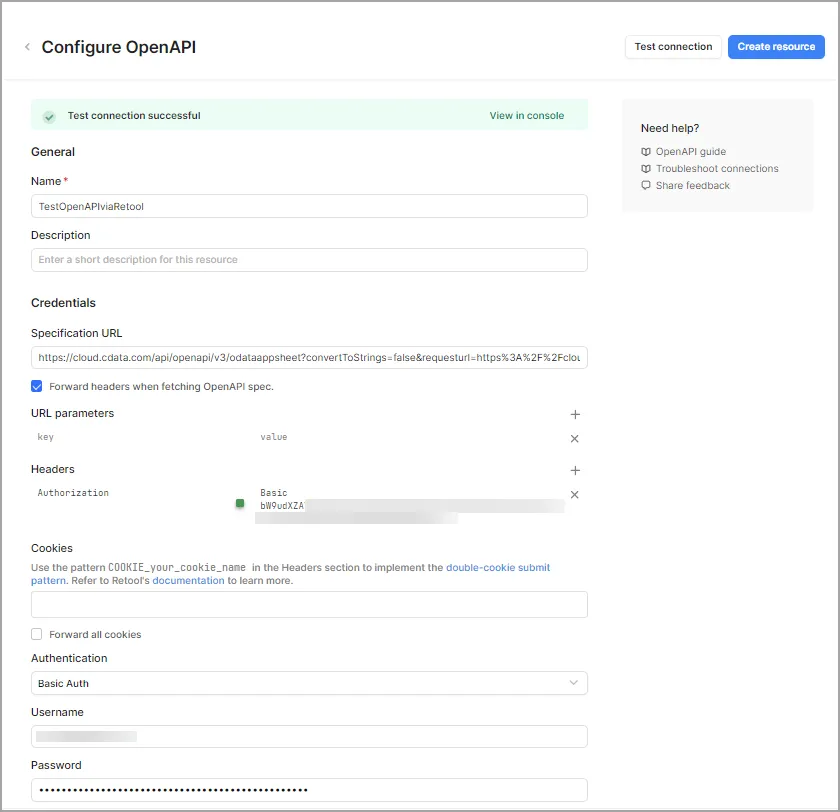
- Click OpenAPI. The Configure OpenAPI screen appears. Enter the following information to configure the OpenAPI connector:
- Name: The Connection Name to identify the connector on Retool.
- Specification URL: The OpenAPI URL you copied from the Workspace in CData Connect Cloud. Paste the URL here.
- Forward headers when fetching OpenAPI spec: Check this box.
- Under the URL parameters, keep the key-value pair unchanged.
- In the Headers section, write the key as Authorization and in the value, write Basic.
- For the Basic connection value, Retool requires a base64-encoded version of your CData Connect Cloud username:PAT combination (where PAT is the token you generated earlier). Use a tool like this to encode the value. For example, [email protected]:12345 encodes to dGVzdEBjZGF0YS5TIzNDU=. Copy this encoded value and paste it into the value field after Basic with a space.
- Username: Enter your CData Connect Cloud username. This is displayed in the top-right corner of the CData Connect Cloud interface. For example, [email protected].
- Password: Enter the PAT you generated on the Settings page.
- Click Test connection to test your connection configuration. Once you have a successful connection, click Create resource.
- Create the app in Retool in which to integrate your data.
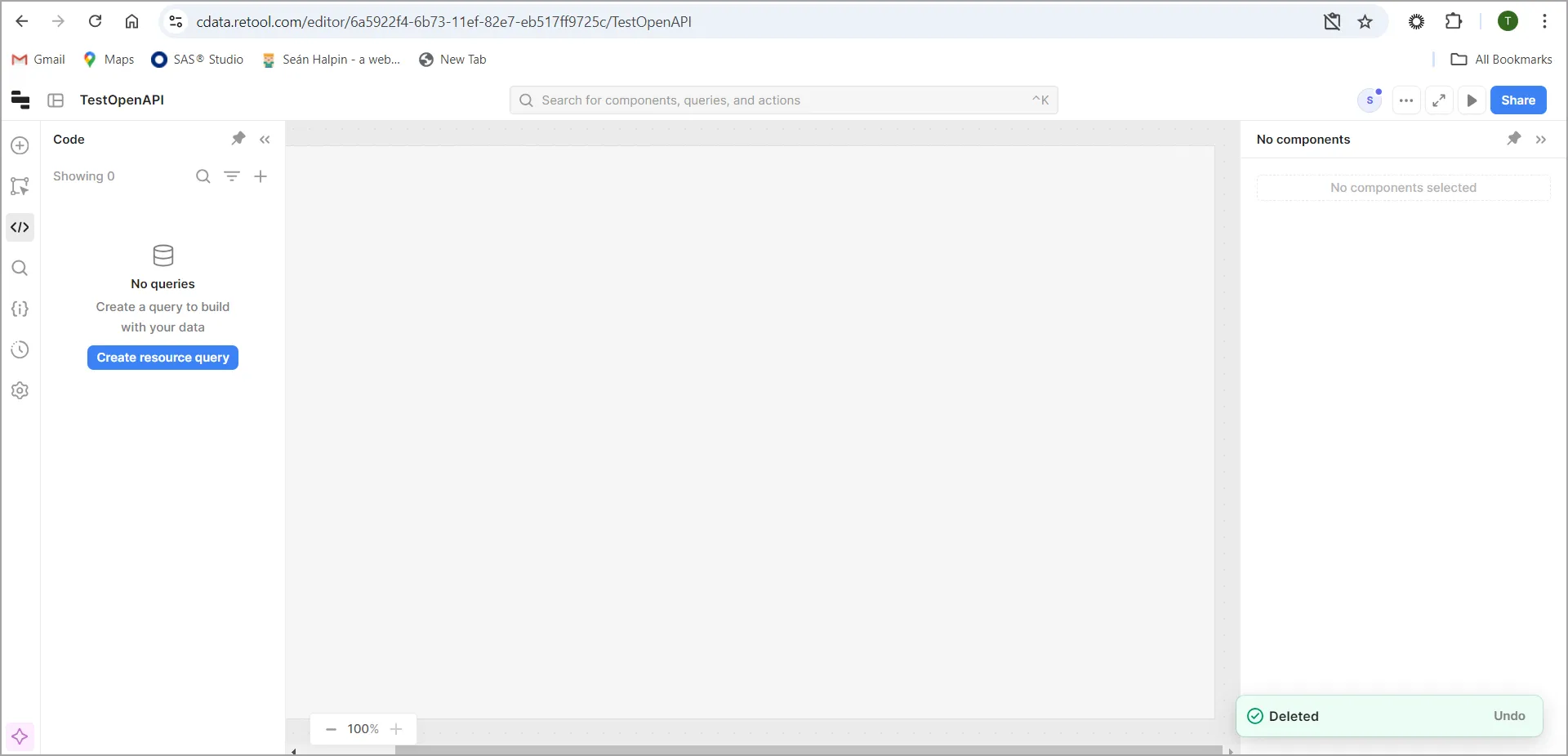
- Click Create resource query.
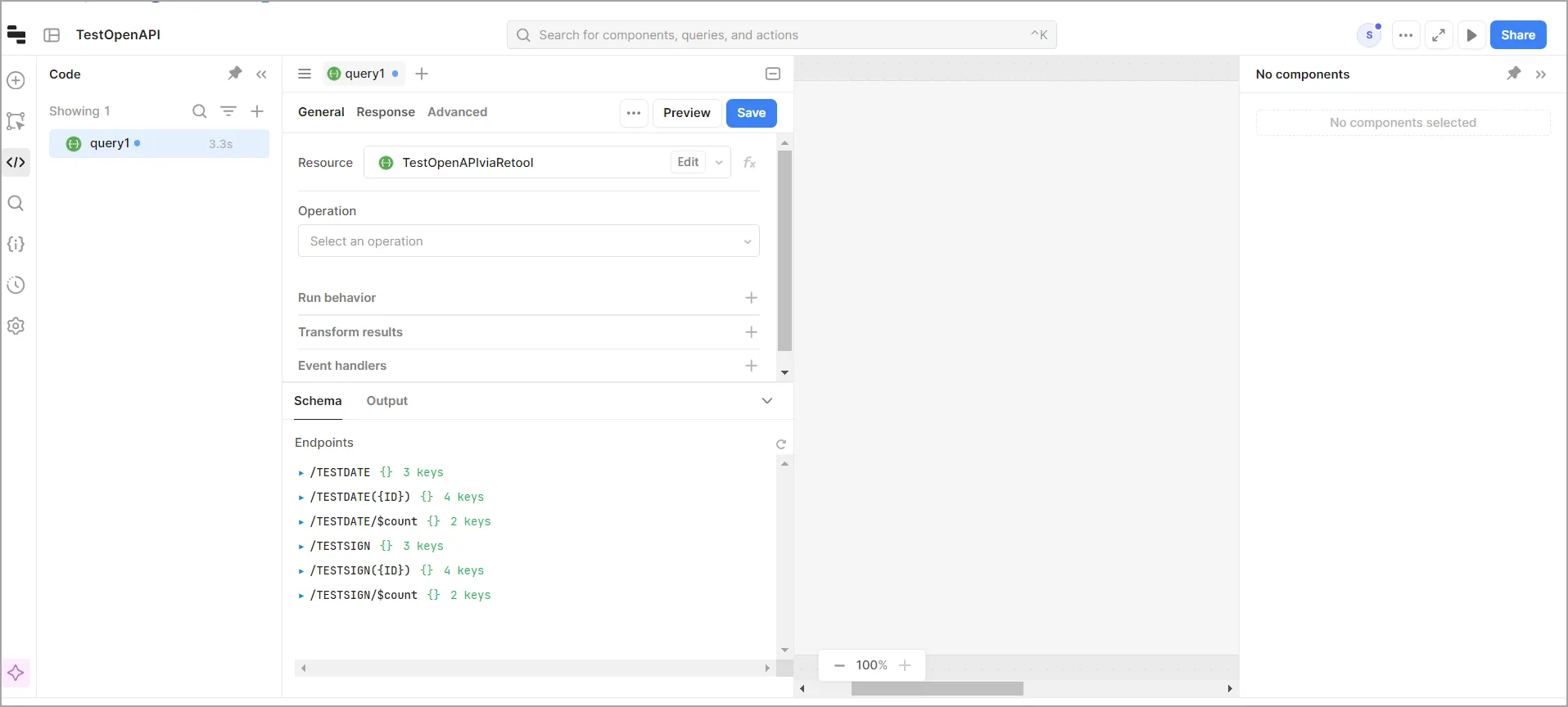
- Select the new resource you created, and view the endpoints that are available.
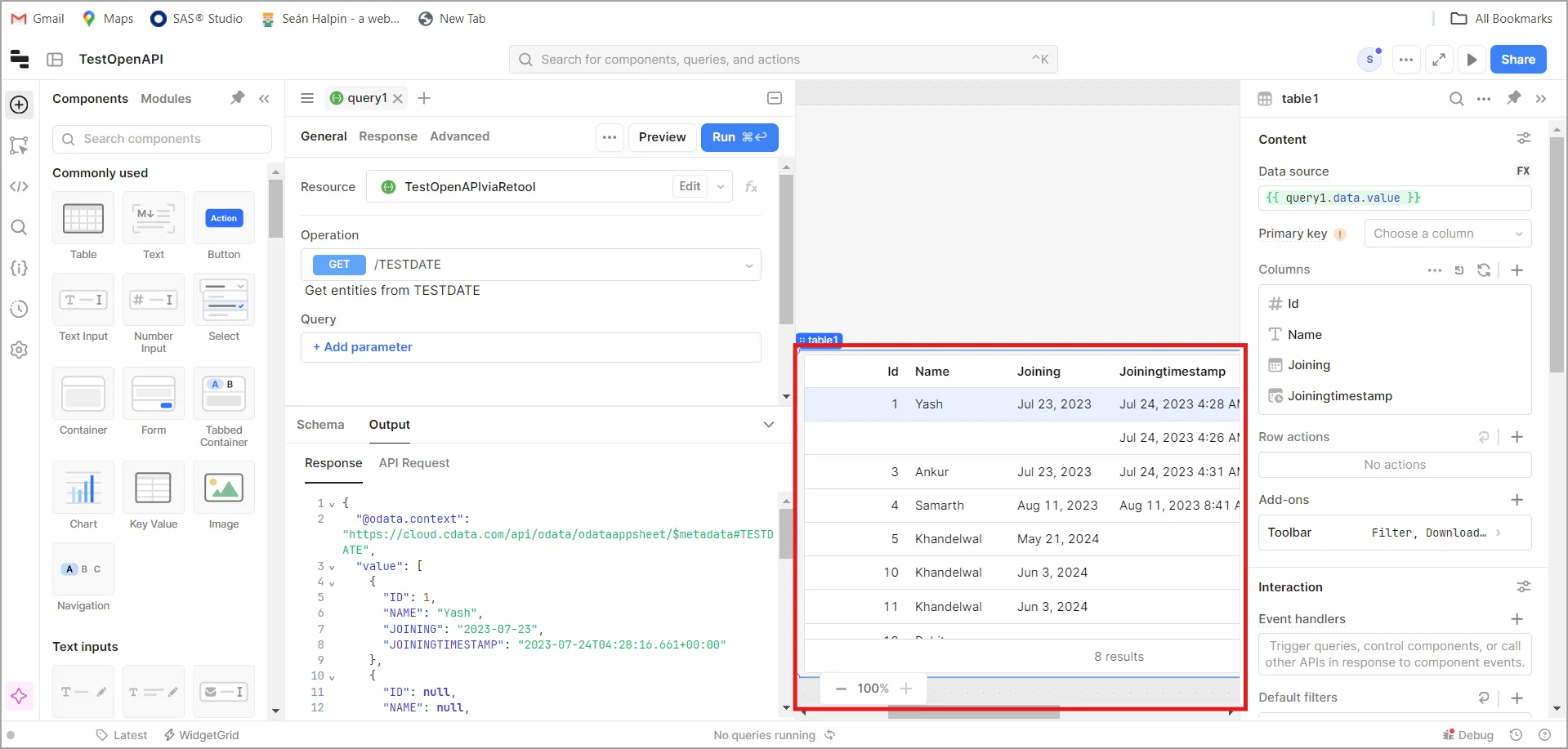
- You can now build your app with your live HCL Domino data.
Connect via Virtual SQL Server API
To connect using the Virtual SQL Server API, follow these steps:
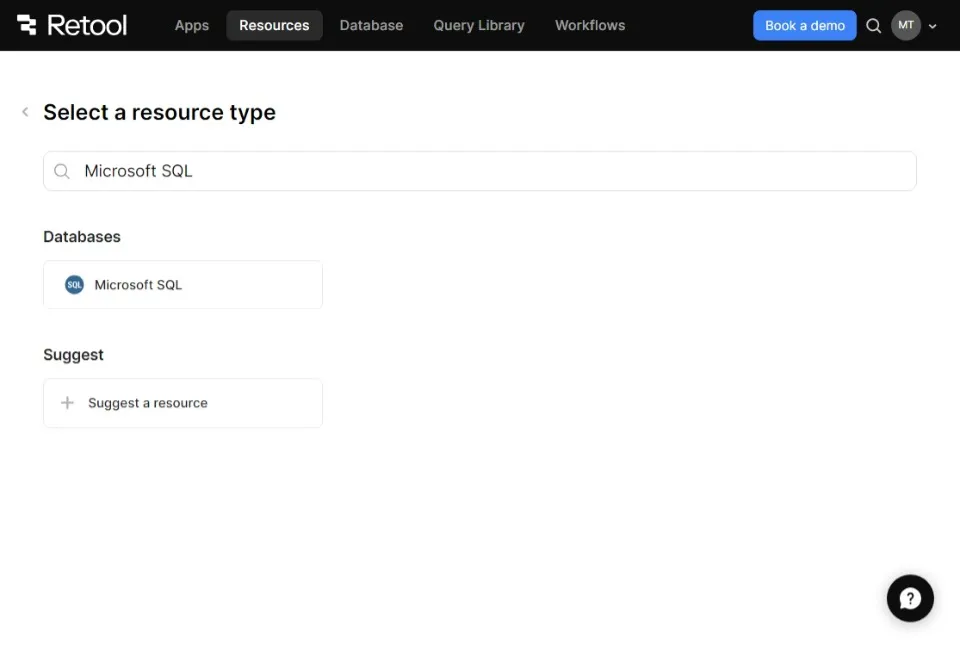
- Login to Retool, then go to Resources. Click Connect New at the top-right and select Resources.
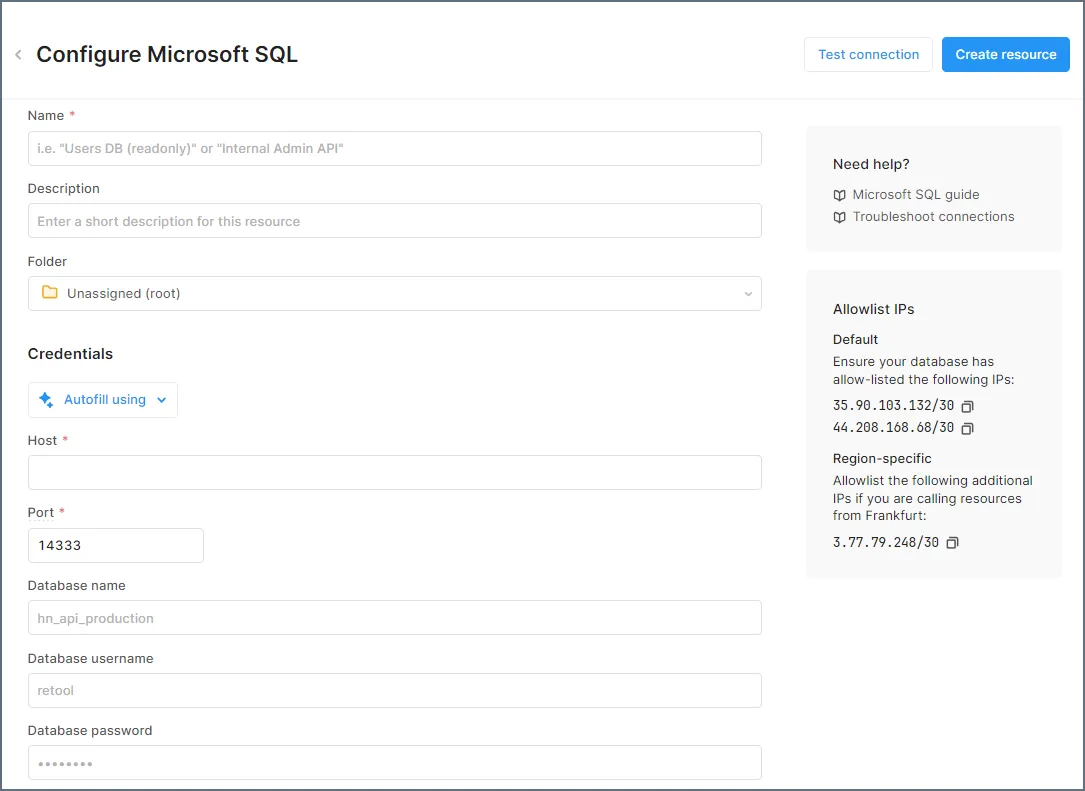
- Enter Microsoft SQL in the search bar, click the resulting option, and enter the following details:
- Name: A name for the connection to CData Connect Cloud.
- Host: tds.cdata.com.
- Port: 1433.
- Database Name: Enter the Connection Name of the CData Connect Cloud data source you want to connect to (for example, Salesforce1).
- Database Username: Enter your CData Connect Cloud username. This is displayed in the top-right corner of the CData Connect Cloud interface. For example, [email protected].
- Database Password: Enter the PAT you generated on the Settings page.
- Click Test Connection. If the connection fails, you might need to whitelist CData Connect Cloud IPs for Retool and other data sources. Check out the documentation here.
- If it succeeds, click Create Resource.
- Your connection is now set up, and you can build your app with live HCL Domino data.
Build Retool Apps with Your Live HCL Domino Data
Now that you have integrated HCL Domino with Retool using CData Connect Cloud, it's time to utilize your live data to its full potential. Let's build a simple app:
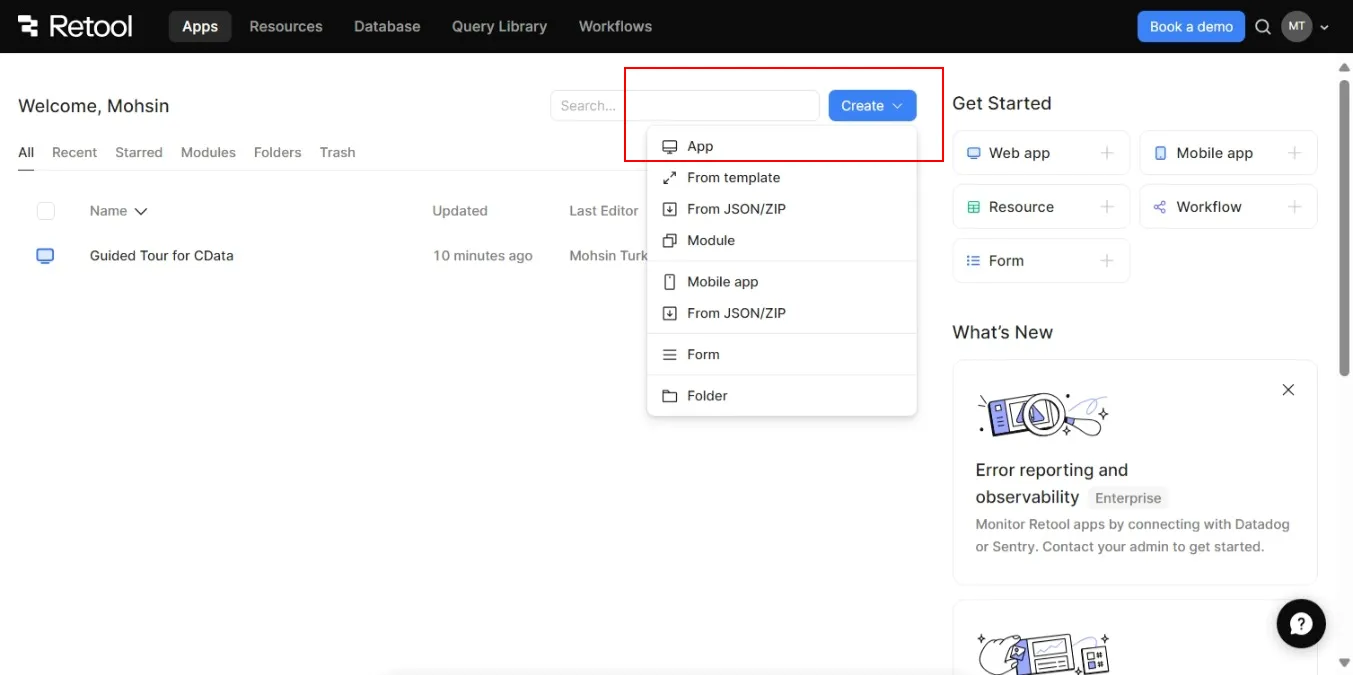
- Step 1: Set Up the Table (on home screen)
- Create a New App in Retool.
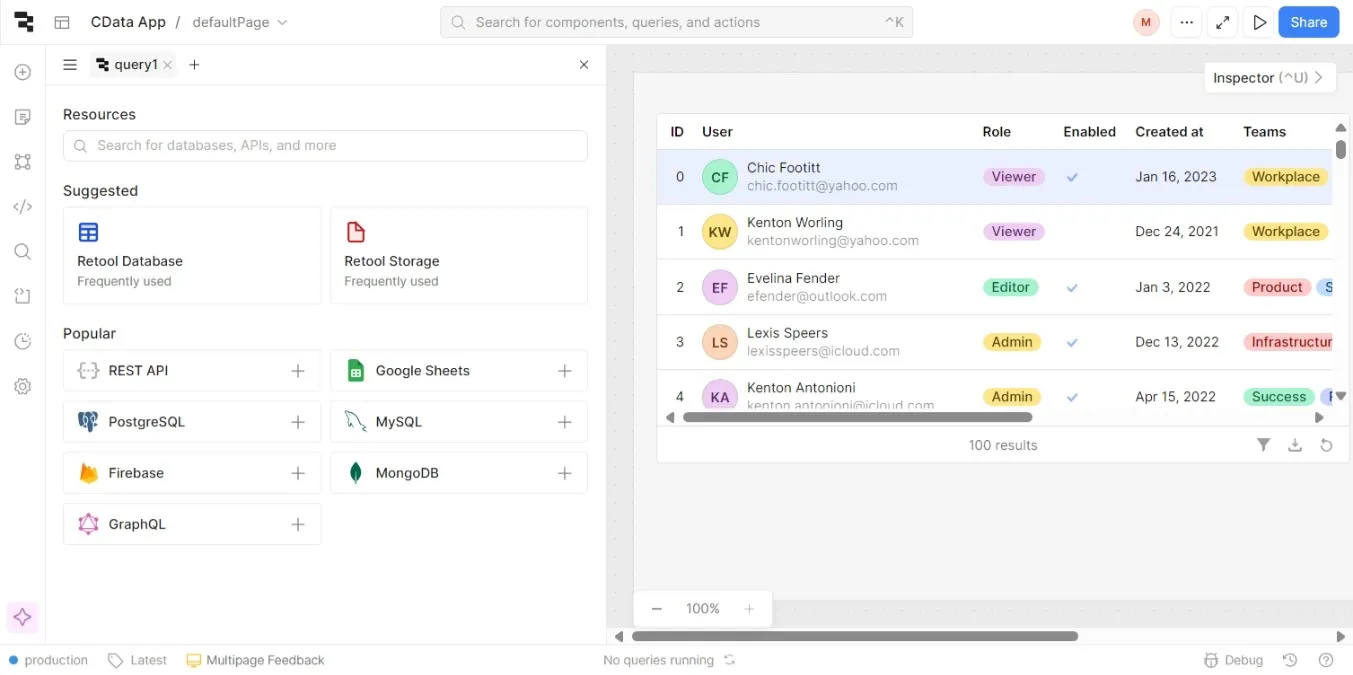
- Select your HCL Domino connection.
- Add a Table component and bind it to HCL Domino's data.
- Step 2: Add Filters (on top-right)
- Add a Dropdown to filter by Opportunity Stage.
- Add a Text Input for searching Account Name.
- Step 3: Display Key Metrics (below Table)
- Add a Text component to show Total Amount of filtered opportunities.
- Use a query to sum the Amount for filtered data.
- Step 4: Add Visuals (top-right or side panel)
- Add a Bar Chart to visualize opportunities by Stage.
- Add a Line Chart to show Expected Revenue over time.
- Step 5: Test and Deploy (top-right)
- Test filters, search, and charts.
- Deploy the app and share the link for access.
With these steps, you've successfully created a dynamic app to manage and visualize your Salesforce opportunities. Enjoy exploring your live data and leveraging it for better insights!
Try CData Connect Cloud Free for 14 Days
Experience real-time HCL Domino data access and enhanced app development with CData Connect Cloud in Retool. Start your free trial today!
